
Tag: professional baking results

A deep dive into the technical standards and refined processes that distinguish artisanal bakes from standard home recipes. This tag focuses on achieving excellence in texture, crumb structure, and visual presentation through advanced techniques and ingredient science. From mastering the nuances of hydration levels to perfecting the final glaze or finish, discover the professional protocols required to produce consistent, high-end results that meet commercial quality benchmarks.

  • Master the Batch: A Professional Guide to Getting Started with Cookies

    Master the Batch: A Professional Guide to Getting Started with Cookies

    Getting started with cookies like a professional requires a shift in mindset from casual baking to precise craftsmanship.

    Whether you are dreaming of launching a micro-bakery from your home in Maryville or simply want to elevate your weekend baking to a professional standard, the humble cookie is the perfect starting point. However, getting started with cookies that meet bakery-quality standards requires more than just a recipe; it requires an understanding of food science.

    While cookies are often seen as “entry-level,” achieving a consistent, bakery-quality result requires more than just following a recipe—it requires understanding the variables at play.
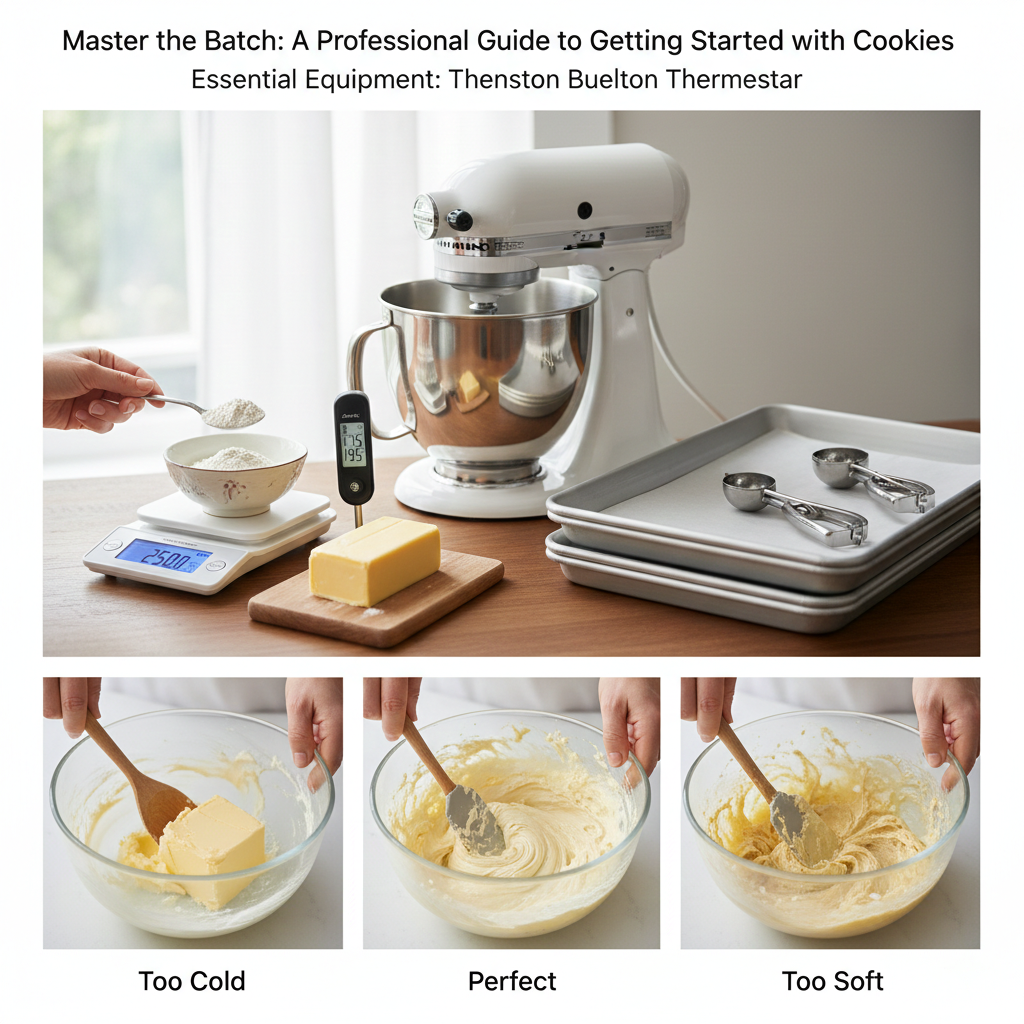
    Getting Started with Cookies: A well-organized professional baking station with a digital scale, mixer, and baking sheets, ready for precision cookie making.

    1. Technical Fundamentals for Getting Started with Cookies

    Before you cream your first bit of butter, ensure your kit is up to professional standards. High-end results for anyone getting started with cookies depend on accurate tools and a standardized environment.
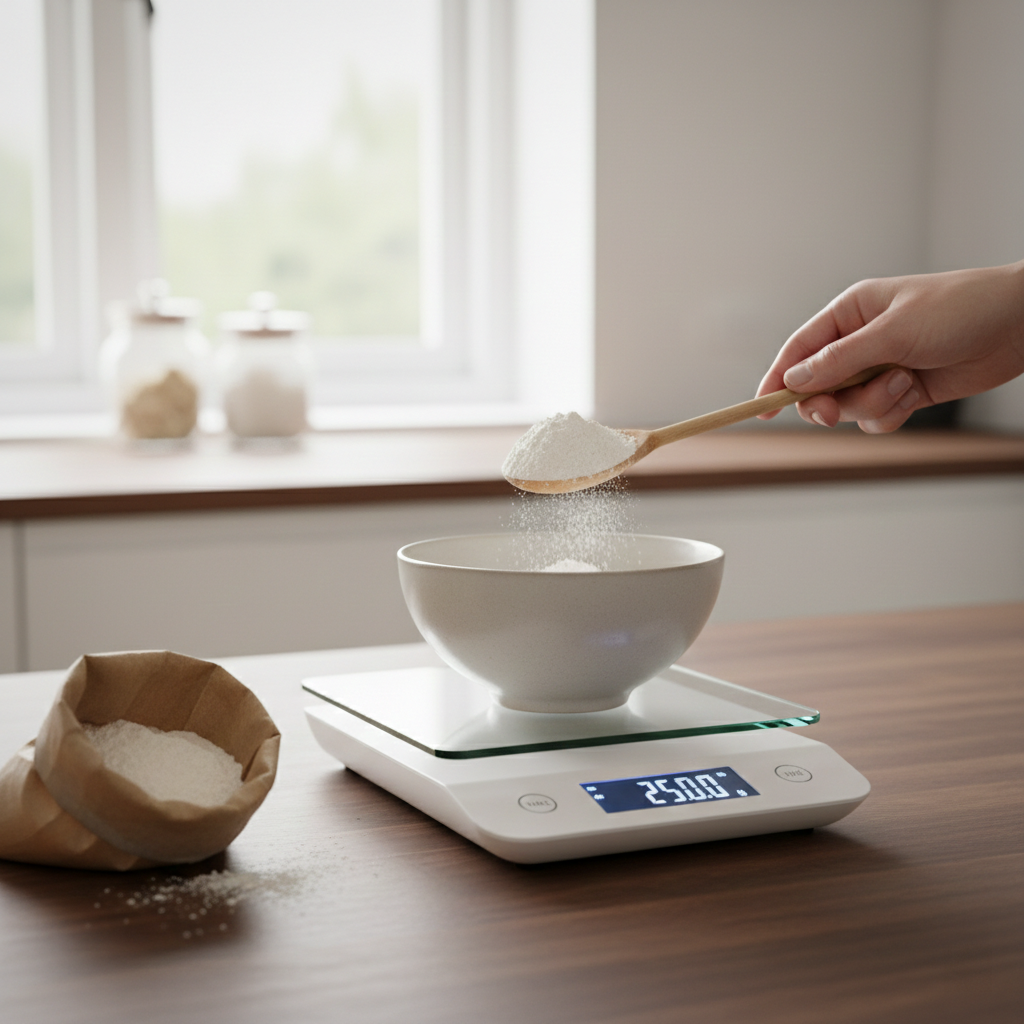
    A close-up of a digital kitchen scale accurately weighing flour, demonstrating the importance of precise measurements in professional baking.

    Essential Equipment for Getting Started with Cookies

    • Digital Kitchen Scale: When getting started with cookies, volume measurements are notoriously unreliable. For professional consistency, you must weigh ingredients in grams.
    • A Solid Internal Thermometer: Never trust your oven’s built-in dial. Verify that your oven reaches exactly 350°F (177°C), which is a non-negotiable step for getting started with cookies at scale.
    • Heavy-Duty Baking Sheets: Thin pans warp and hot-spot. Invest in rimmed aluminum half-sheets for even heat distribution.

    Weight Over Volume

    In a professional kitchen, accuracy is the foundation of consistency. A single “cup” of flour can vary by up to 20% depending on how it’s packed. To ensure every batch of cookies matches your highest standards, always weigh your dry ingredients in grams. This is the single most important step in transitioning from a home baker to a professional.

    2. Understanding Ingredient Science When Getting Started with Cookies

    Every ingredient in a cookie serves a structural or chemical purpose.
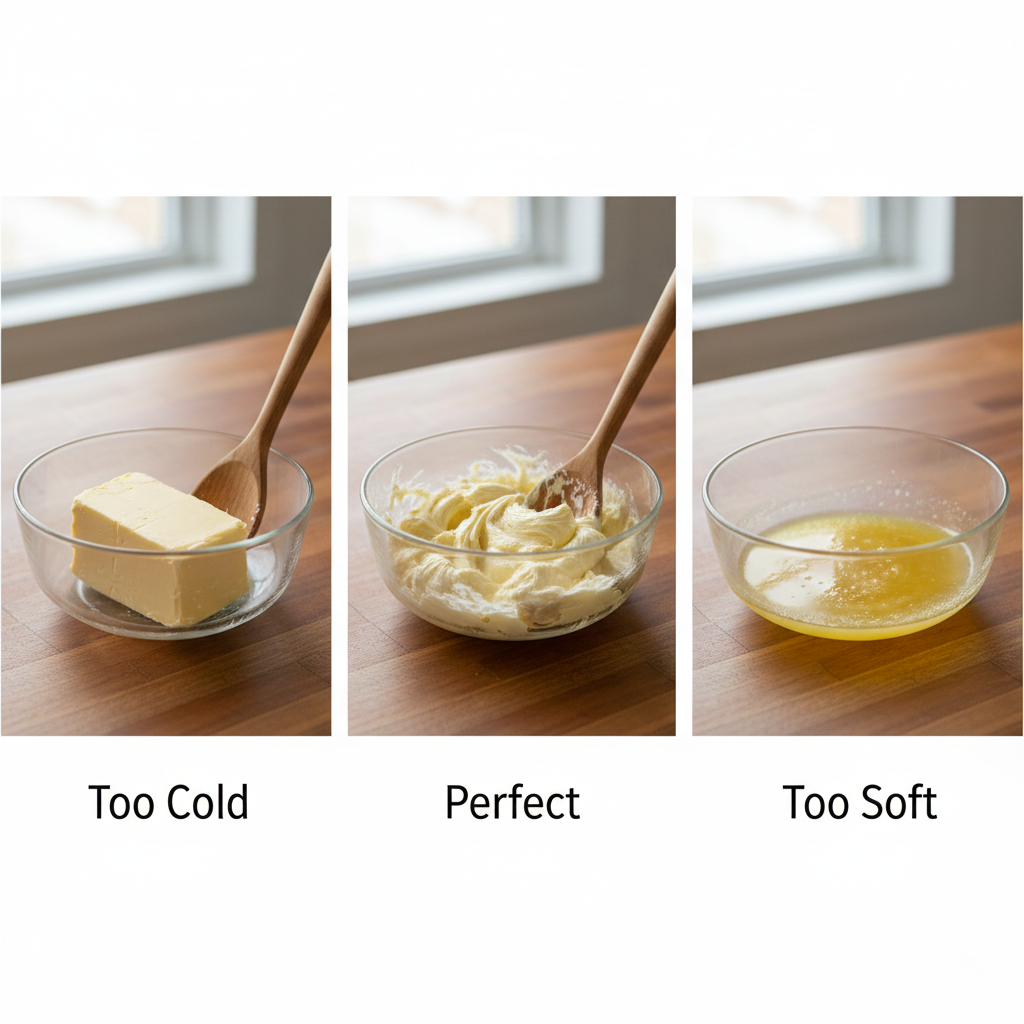
    A visual guide showing three states of butter (too cold, perfect room temperature, too soft) for optimal creaming in cookie dough.
    • Butter Temperature: For the classic “creaming method,” your butter should be cool room temperature (about 65°F (18°C)). If it’s too soft, your cookies will spread into puddles; too cold, and you won’t incorporate the air needed for leavening.
    • Sugar Ratios: White sugar provides crispness and encourages spread, while brown sugar adds moisture and chew due to the molasses content.
    • Flour Protein: Most professional cookies use All-Purpose flour, but the protein content can vary by brand. A higher protein count leads to a heartier, chewier bite.

    The 65°F Rule

    Butter temperature dictates the structural integrity of your cookie. Aim for “cool room temperature” (approx. 65°F / 18°C). The butter should be pliable enough to hold a fingerprint but firm enough to resist melting. If your butter is too warm during the creaming stage, your cookies will lose their height and over-spread in the oven.

    3. The Secret to Professional Texture: The Chill
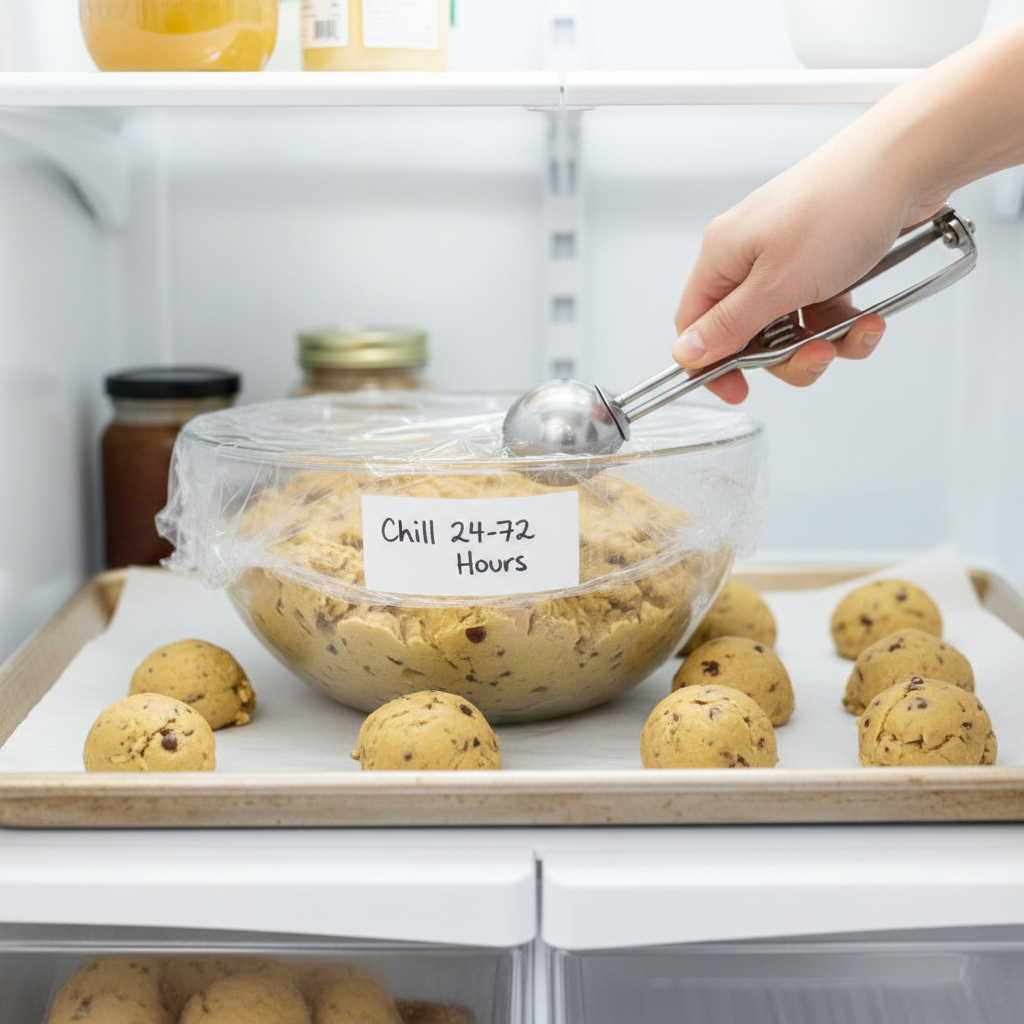
    Cookie dough chilling in a labeled bowl in the refrigerator, illustrating the recommended chilling process for enhanced flavor and texture.

    If you want that iconic “bakery ripple” and a deep, developed flavor, you must chill your dough. Resting the dough for 24 to 72 hours allows the flour to fully hydrate and the fats to solidify. This results in:

    1. Controlled Spread: The cold fat takes longer to melt in the oven.
    2. Enhanced Flavor: Enzymes break down the starches into simple sugars, leading to better browning (the Maillard reaction).

    The 24-Hour Flavor Bloom

    Professional results require time. Chilling your dough for at least 24 hours isn’t just about controlling spread; it’s a chemical necessity. This rest period allows the starch molecules in the flour to break down into simple sugars, resulting in a deeper, more complex caramelization and a superior, chewy texture that cannot be achieved with “bake-now” dough.

    For a deep dive into the molecular changes that occur during a 24-hour rest, King Arthur Baking offers an excellent breakdown of why chilling dough is a non-negotiable step for professionals.

    4. Precision Portioning
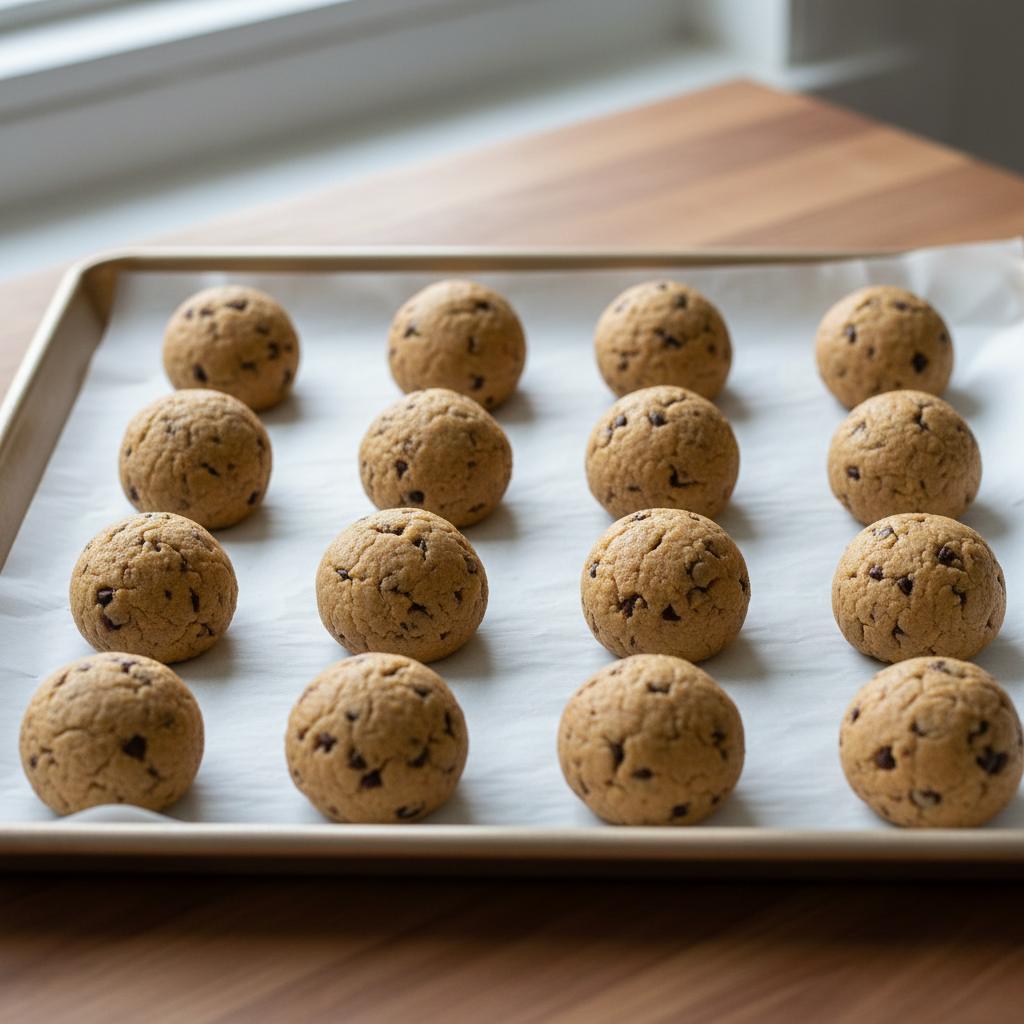
    Precisely portioned cookie dough balls arranged on a baking sheet, demonstrating the consistency achieved with a cookie scoop.

    Consistency is key when selling baked goods. Customers expect every cookie to be identical in size and bake. Use a spring-loaded cookie scoop to ensure every portion is exactly the same weight. This isn’t just about aesthetics—it ensures that every cookie on the tray finishes baking at the exact same second.
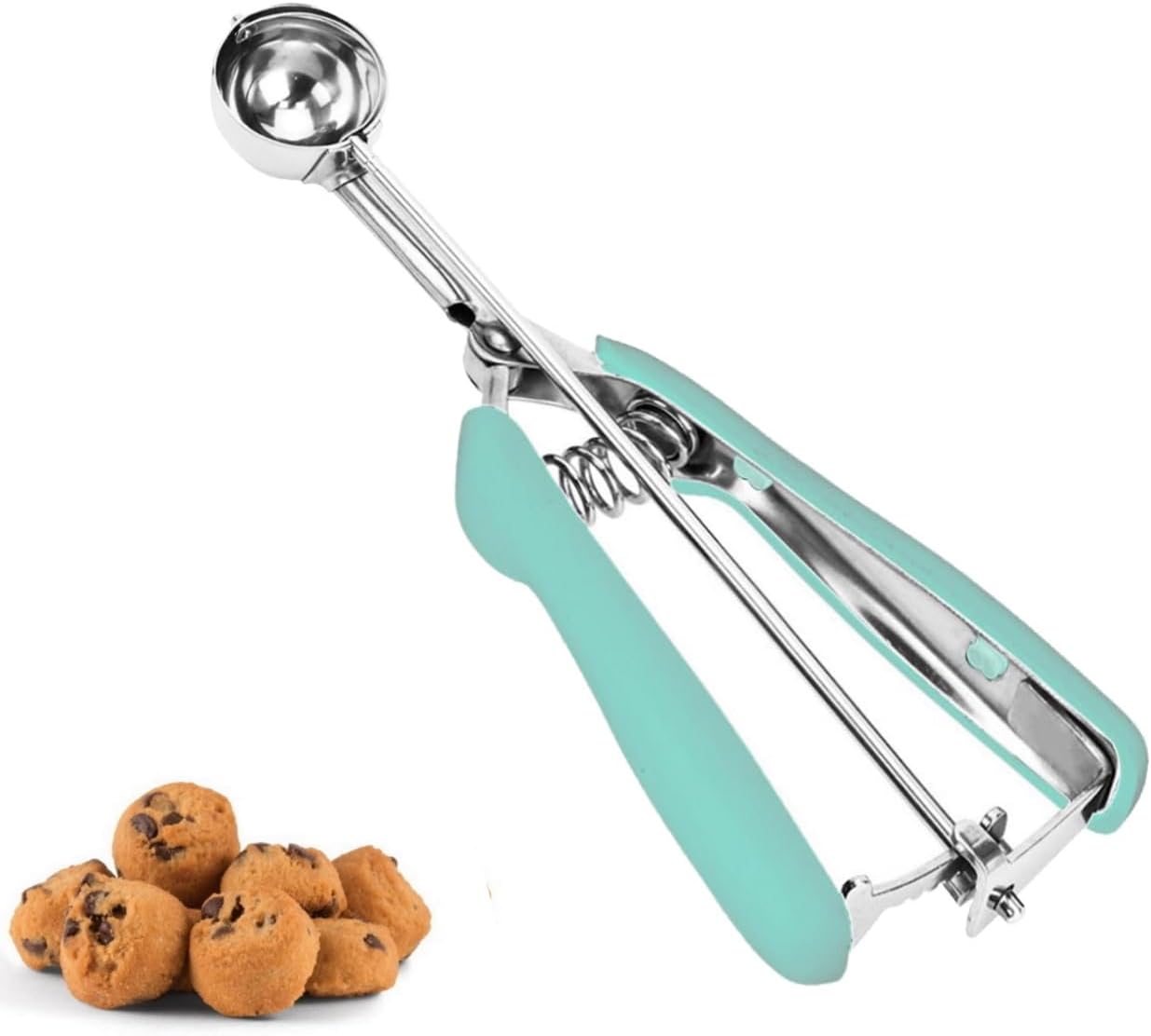
    1 tsp Extra Mini Cookie Scoop

    • The non-slip rubber handle makes it easy to grasp.
    • Just a simple squeeze makes the cookie scoop release the dough easily and neatly
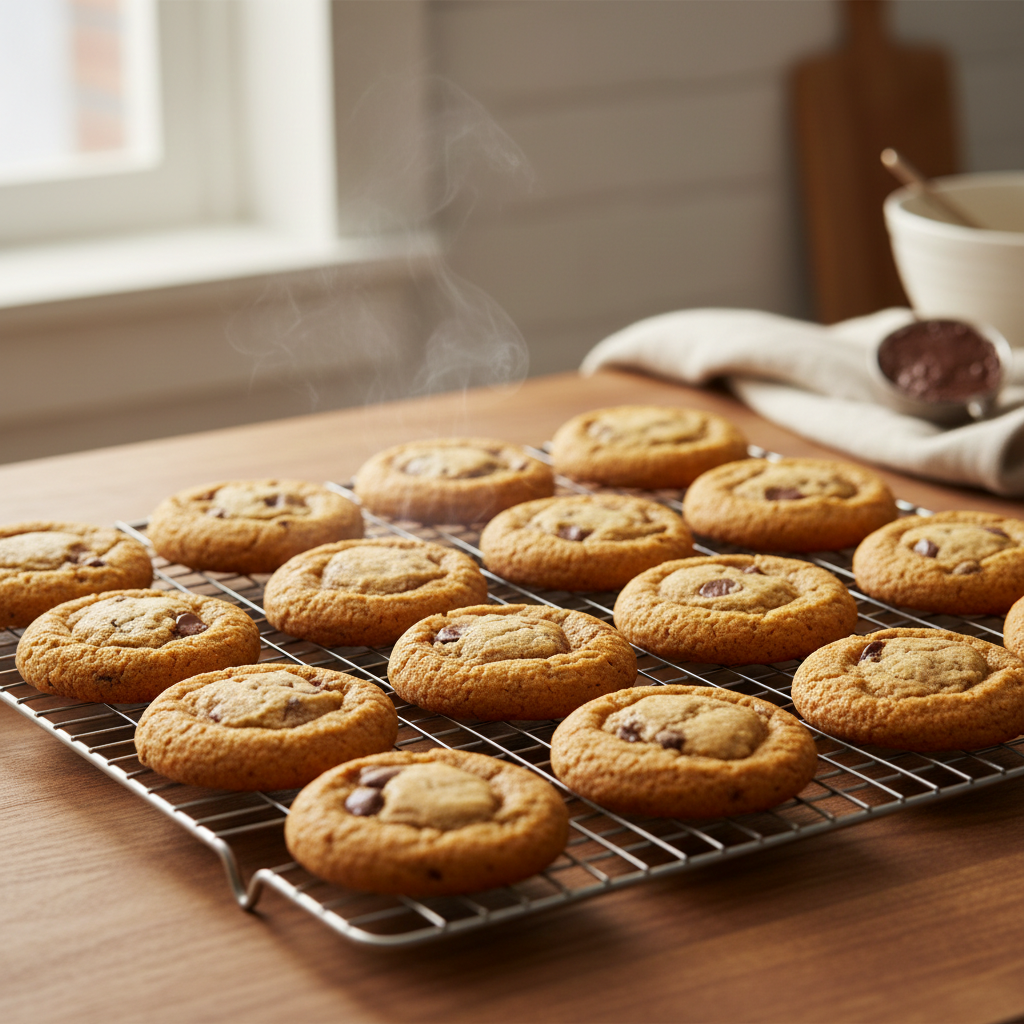
    A batch of uniformly baked, golden-brown chocolate chip cookies cooling on a wire rack, representing professional baking results.

    From Kitchen to Craft: Scaling Your Success

    Mastering the art of the cookie is a journey that moves from following a simple recipe to understanding the intricate dance of food science. By focusing on the technical pillars of precision measurement, specific temperature control—aiming for that perfect 65°F (18°C) butter—and the disciplined patience of a 24-hour chill, you elevate your baking from a casual hobby to a professional craft.

    These small, intentional adjustments are what create a consistent, high-quality product that stands out in a competitive market. As you continue to refine your workflow and experiment with these foundational techniques, you’ll find that the “perfect batch” isn’t a matter of luck, but a result of professional standards.

    Kitchen Tools I Use

  • Baking Perfect Mini Cookies: The Ultimate Guide for Home Bakers

    Baking Perfect Mini Cookies: The Ultimate Guide for Home Bakers

    Baking perfect mini cookies is more than just a hobby—it’s a game of precision, timing, and the right equipment. If you’ve ever pulled a tray of “bite-sized” treats out of the oven only to find they’ve spread into flat pancakes or turned into hard rocks, you know that smaller dough doesn’t always mean simpler baking.

    Don’t skip the chill time!

    It’s the most overlooked step in baking perfect mini cookies that don’t spread.

    To achieve that perfect balance of a soft center and crisp edge in a smaller format, you need to adjust your timing, temperature, and technique. Here is how to master the art of the mini cookie.

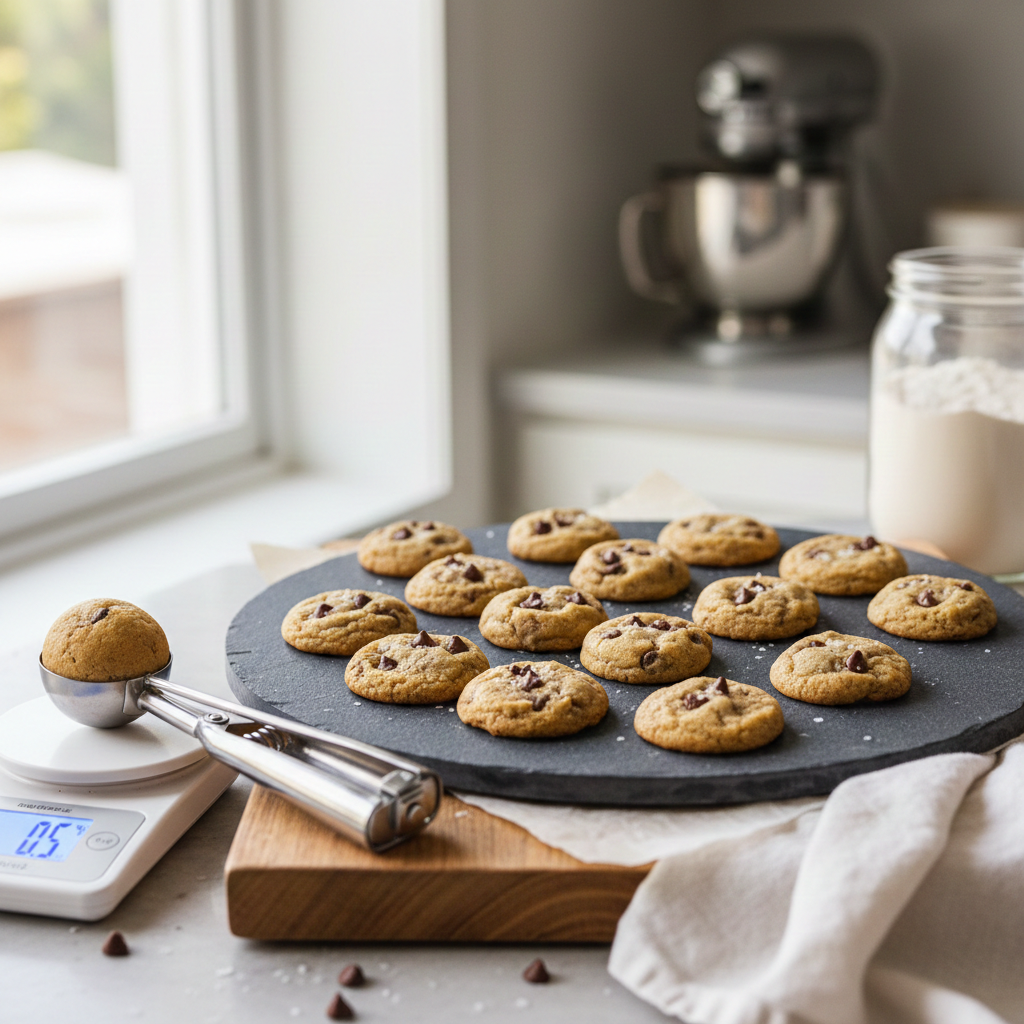
    A tray of uniform mini chocolate chip cookies next to a small dough scoop on a cooling rack.

    1. Adjusting Your Oven Temperature

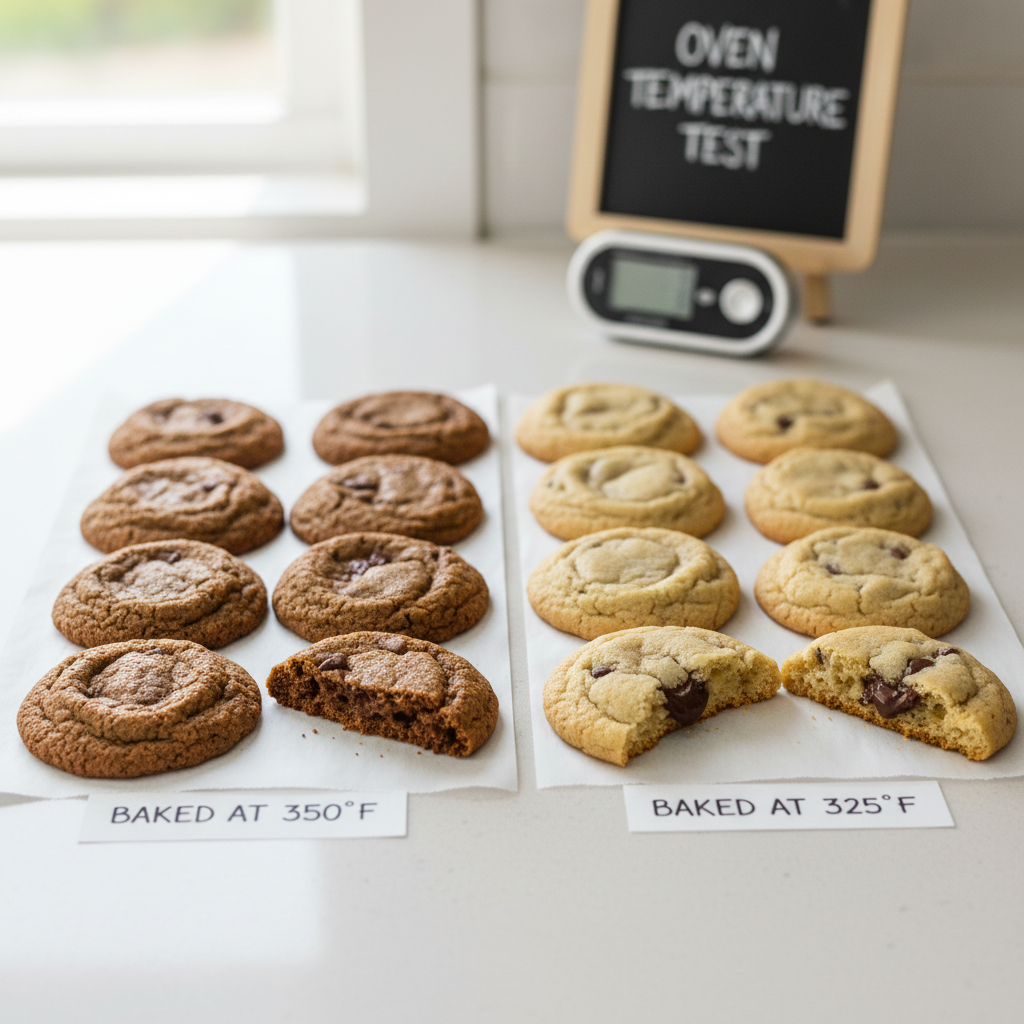
    When you reduce the size of the dough ball, the surface area changes relative to the volume. Most standard cookie recipes call for 350°F, but for mini cookies, this can lead to over-browning before the center is set.

    Two mini cookies side by side showing the difference between 350 degrees and 325 degrees Fahrenheit.
    • Lower the Heat: Try dropping your oven to 325°F. This slower bake allows the small amount of dough to rise and set without burning the bottoms.
    • Center Rack Only: Always bake minis on the center rack to ensure even heat distribution.

    🍪 Taylor Precision Oven Thermometer

    Ensures accurate oven temperature so mini cookies don’t overbake too quickly.

    🌡️ Small Size, Big Adjustments

    Lower the Heat: Dropping your oven to 325°F prevents the bottoms of mini cookies from burning before the centers set.

    Flash Bake: Minis bake fast! Start checking for doneness at the 5-minute mark to maintain a soft texture.

    Residual Heat: Remove cookies when they look slightly underbaked; they will finish firming up on the warm pan.


    2. Timing is Everything

    A standard cookie might take 10 to 12 minutes. A mini cookie often reaches perfection in just 5 to 7 minutes.

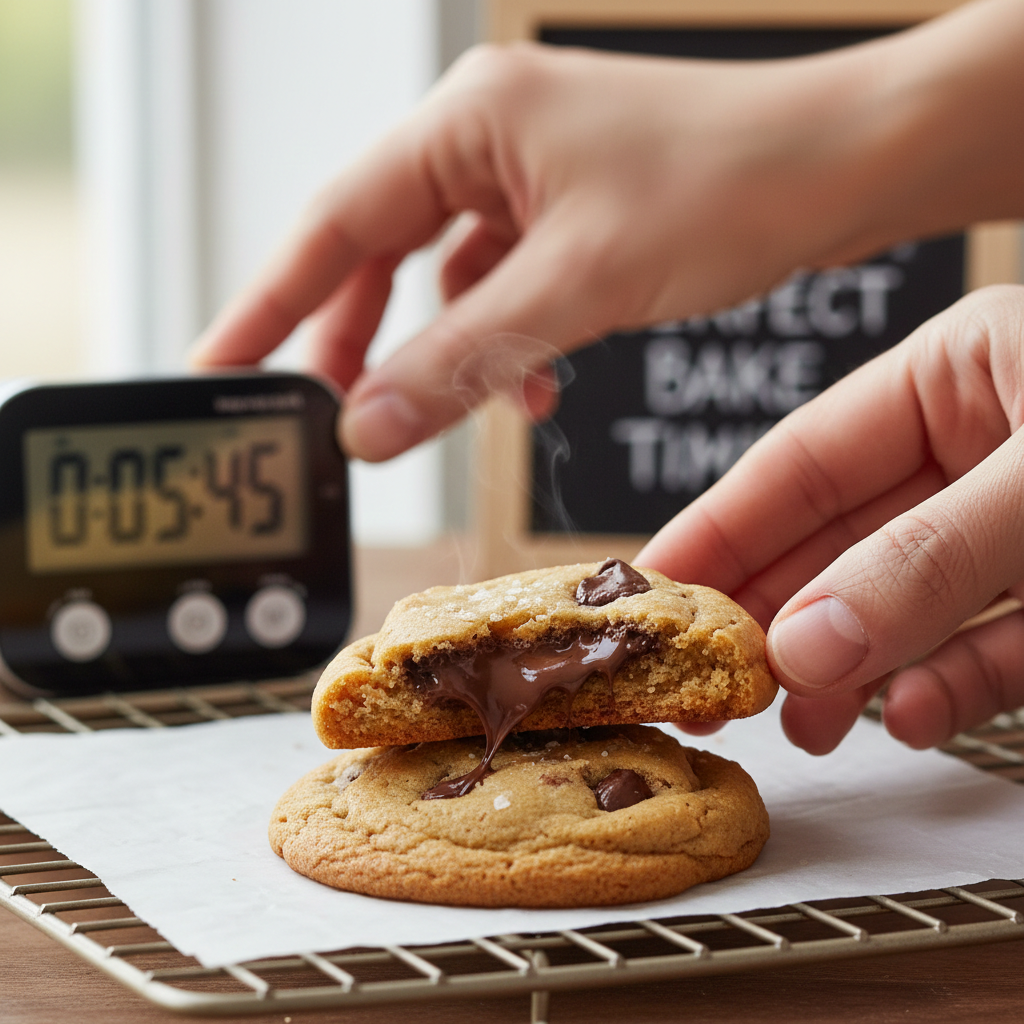
    A close up of a mini cookie being broken in half to show a soft gooey center and crisp exterior.
    • The “Carry-Over” Rule: Take them out when the edges are just barely golden and the centers still look slightly underdone. They will continue to firm up on the hot baking sheet.
    • Use a Timer: When a bake is only 6 minutes long, every 30 seconds counts. Use a digital timer to avoid accidental “crunchy” disasters.

    Digital Kitchen Timer

    This easy-to-read digital timer features a bright and clear LED display, making it perfect for quick glances while you’re busy baking in the kitchen


    3. Tooling for Consistency

    In a mini dessert, inconsistency stands out. If one cookie is 0.5 ounces and the other is 0.7 ounces, they will bake at different rates.

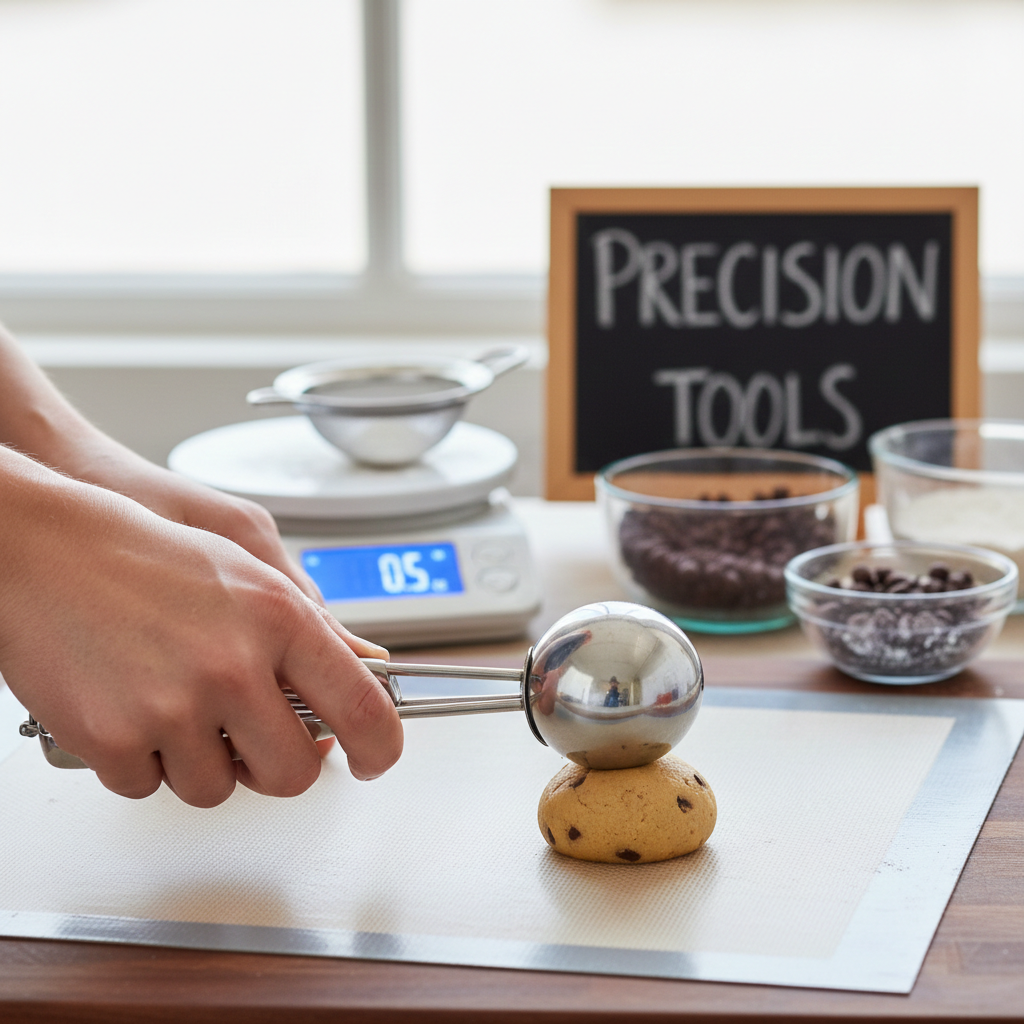
    A hand using a number 100 small cookie scoop to place dough on a silicone baking mat.
    • Use a #100 Scoop: This is the industry standard for “mini” cookies, yielding about 2 teaspoons of dough.
    • Weigh Your Dough: For the most professional results, use a kitchen scale to ensure every single cookie is identical.

    While the tools might seem small, they are the secret weapon for anyone serious about baking perfect mini cookies at scale.


    ⚖️ Consistency is Queen

    Use a Small Scoop: A #100 disher ensures every cookie is exactly the same size for even baking.

    Chill the Dough: Small dough balls warm up fast; keep them in the fridge until the second they go into the oven.


    Silicone Mats: These provide a buffered heat surface that is much gentler on small treats than bare metal pans.


    4. Flavor and Texture Tweaks

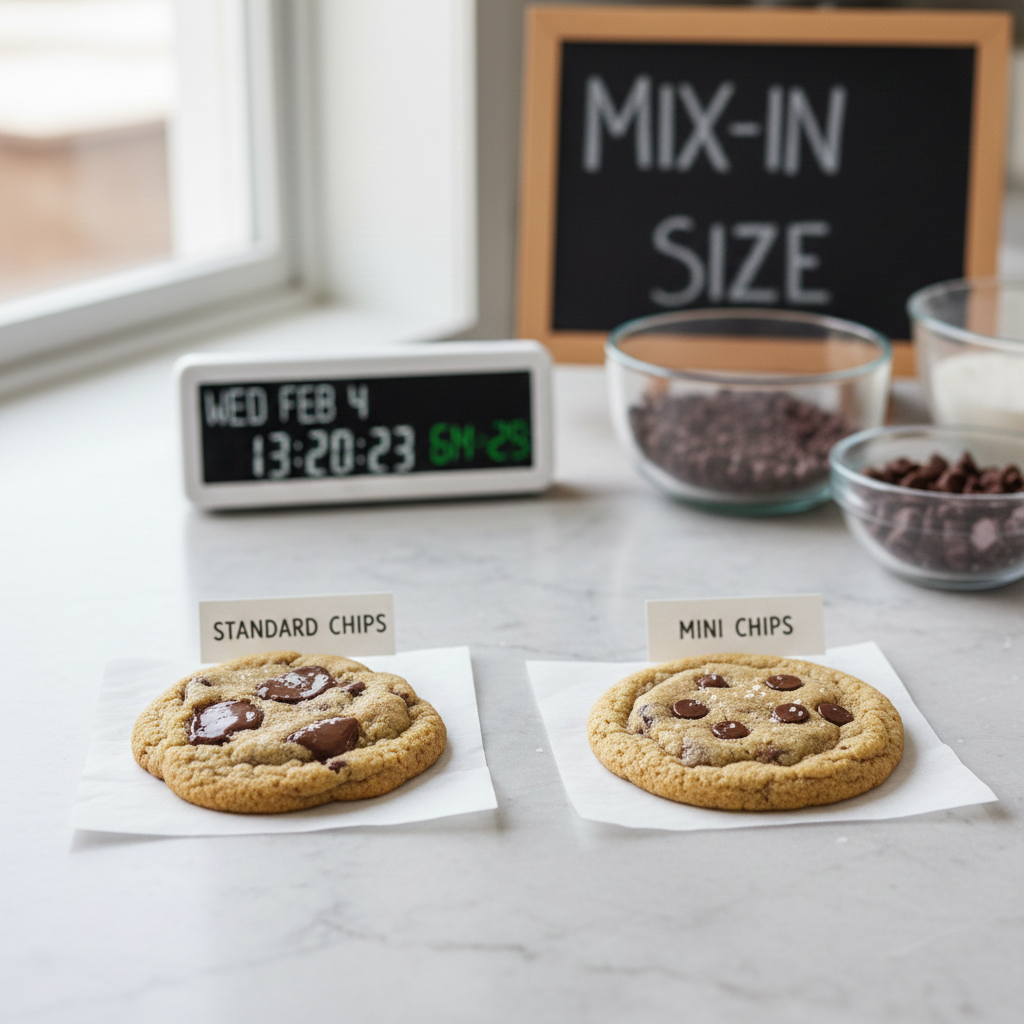
    A comparison of a mini cookie made with standard chocolate chips versus one made with mini chips.

    Because the cookie is smaller, the ratio of “edge” to “center” is much higher.

    • Mix-in Size: Swap standard chocolate chips for mini chips or finely chopped chocolate. Large chunks can cause a mini cookie to lose its shape or fall apart.
    • Salt Balance: Since each bite is smaller, be mindful of flaky salt toppings. A little goes a long way on a 1-inch surface.

    🍫 Scaling Your Mix-ins

    Mini Chips Only: Standard chocolate chips are too bulky for mini dough balls; stick to mini chips or fine shavings.

    Salt Ratio: If you top your cookies with flaky sea salt, use just a tiny pinch—flavor concentrates quickly on a small surface.


    Chill Time: Cold dough spreads less, helping your mini cookies maintain a thick, gourmet profile rather than flattening out.


    Final Thoughts on baking perfect mini cookies

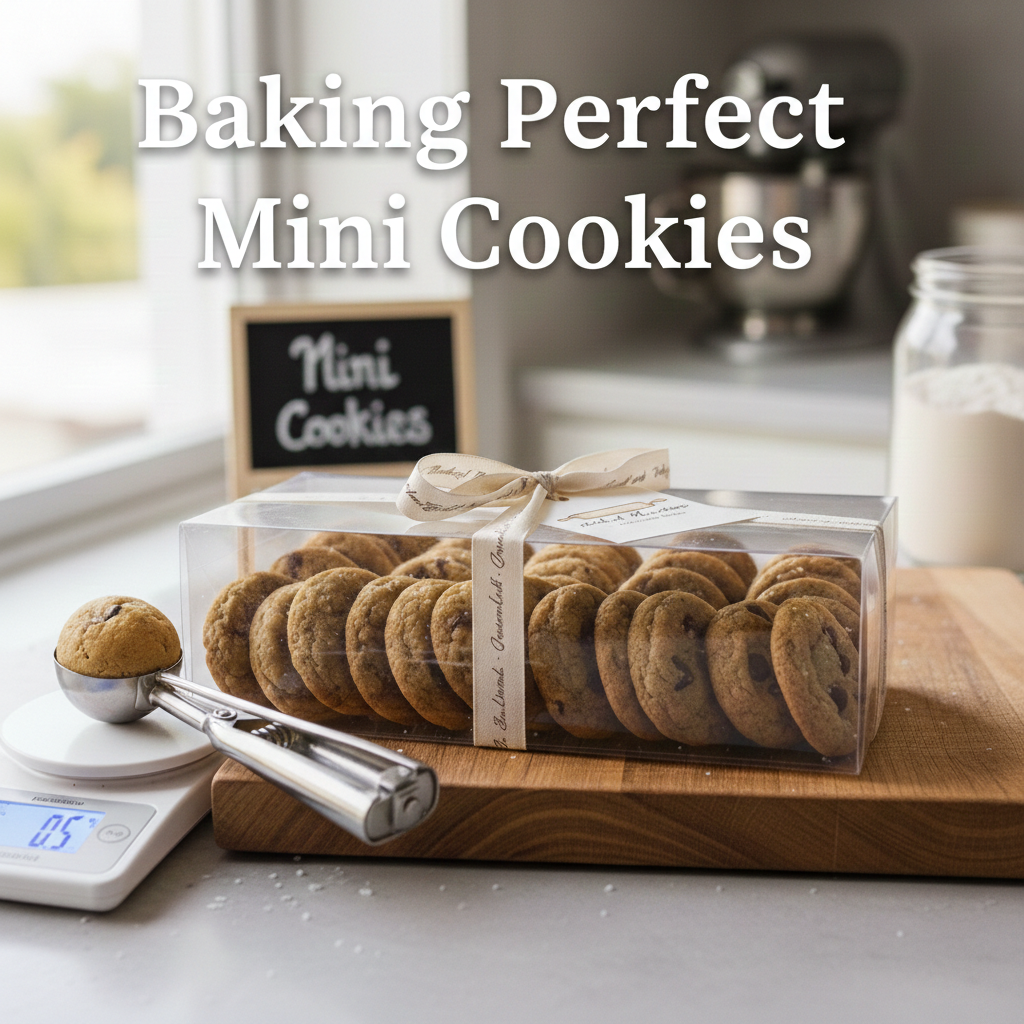
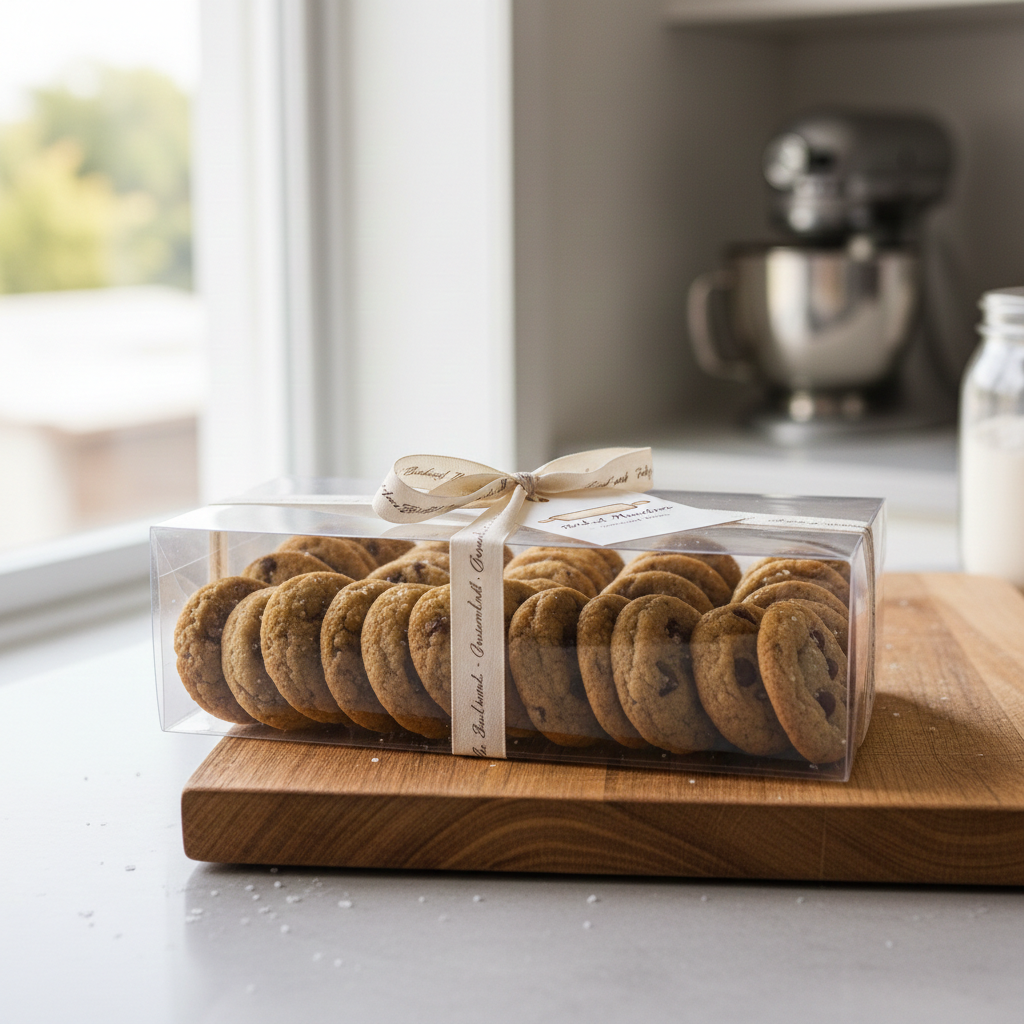
    Mini cookies packaged in a clear professional window box with a brand ribbon.

    Baking perfect mini cookies is a skill that pays off. Whether you are building a dessert charcuterie board or offering “snack packs” for local delivery, mastering the small-scale bake ensures your customers get the same gourmet experience in every tiny bite.

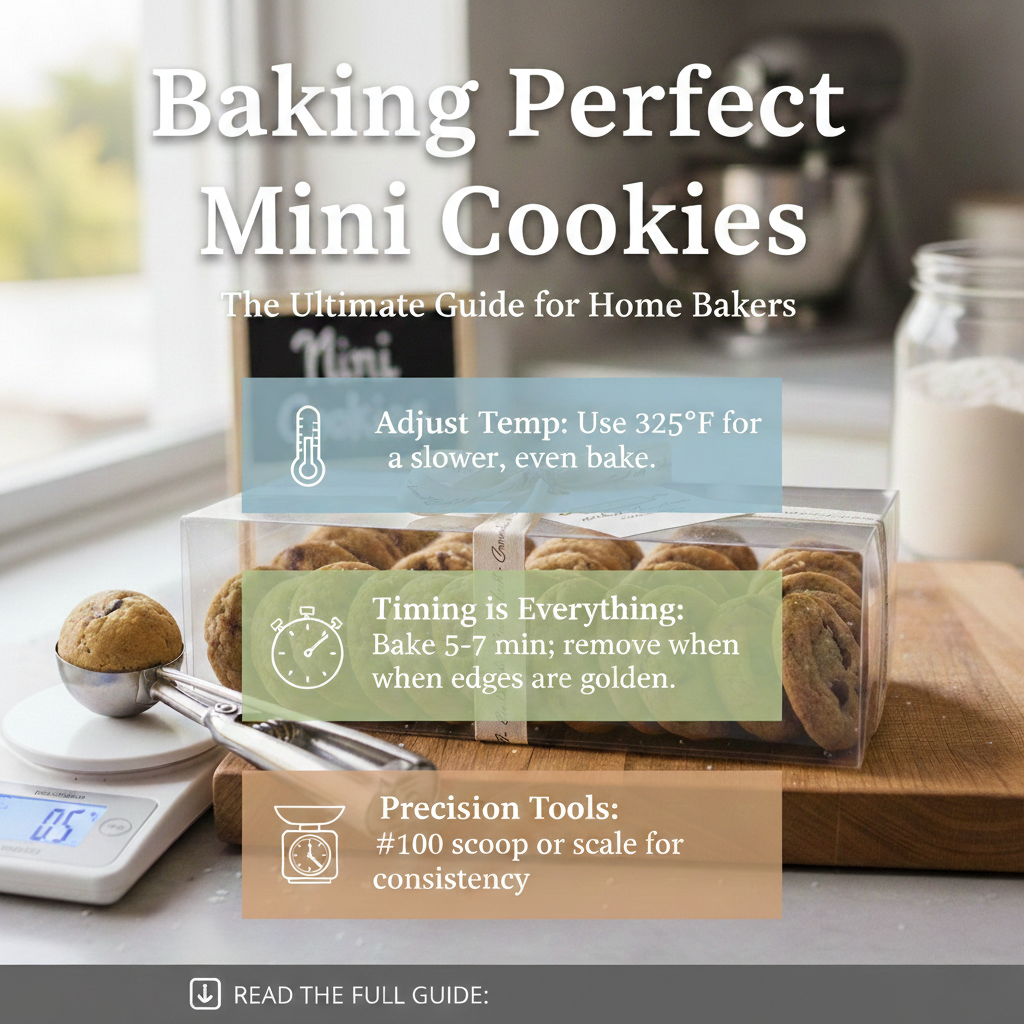
    An infographic titled Baking Perfect Mini Cookies showing tips for oven temperature, timing, and precision tools.

    Once you master these three pillars—temp, time, and tools—baking perfect mini cookies becomes a repeatable win for your home bakery or your next event.

    Cookie Tools I Use