
Tag: oven temperature

A technical examination of the most critical variable in the baking process. This tag provides professional guidance on oven calibration, understanding the difference between convection and conventional heat, and the impact of temperature fluctuations on leavening and Maillard reaction. Learn how to troubleshoot hot spots and use internal thermometers to ensure your cookies and pastries achieve the precise structural set and golden finish required for commercial quality.

  • Master the Batch: A Professional Guide to Getting Started with Cookies

    Master the Batch: A Professional Guide to Getting Started with Cookies

    Getting started with cookies like a professional requires a shift in mindset from casual baking to precise craftsmanship.

    Whether you are dreaming of launching a micro-bakery from your home in Maryville or simply want to elevate your weekend baking to a professional standard, the humble cookie is the perfect starting point. However, getting started with cookies that meet bakery-quality standards requires more than just a recipe; it requires an understanding of food science.

    While cookies are often seen as “entry-level,” achieving a consistent, bakery-quality result requires more than just following a recipe—it requires understanding the variables at play.
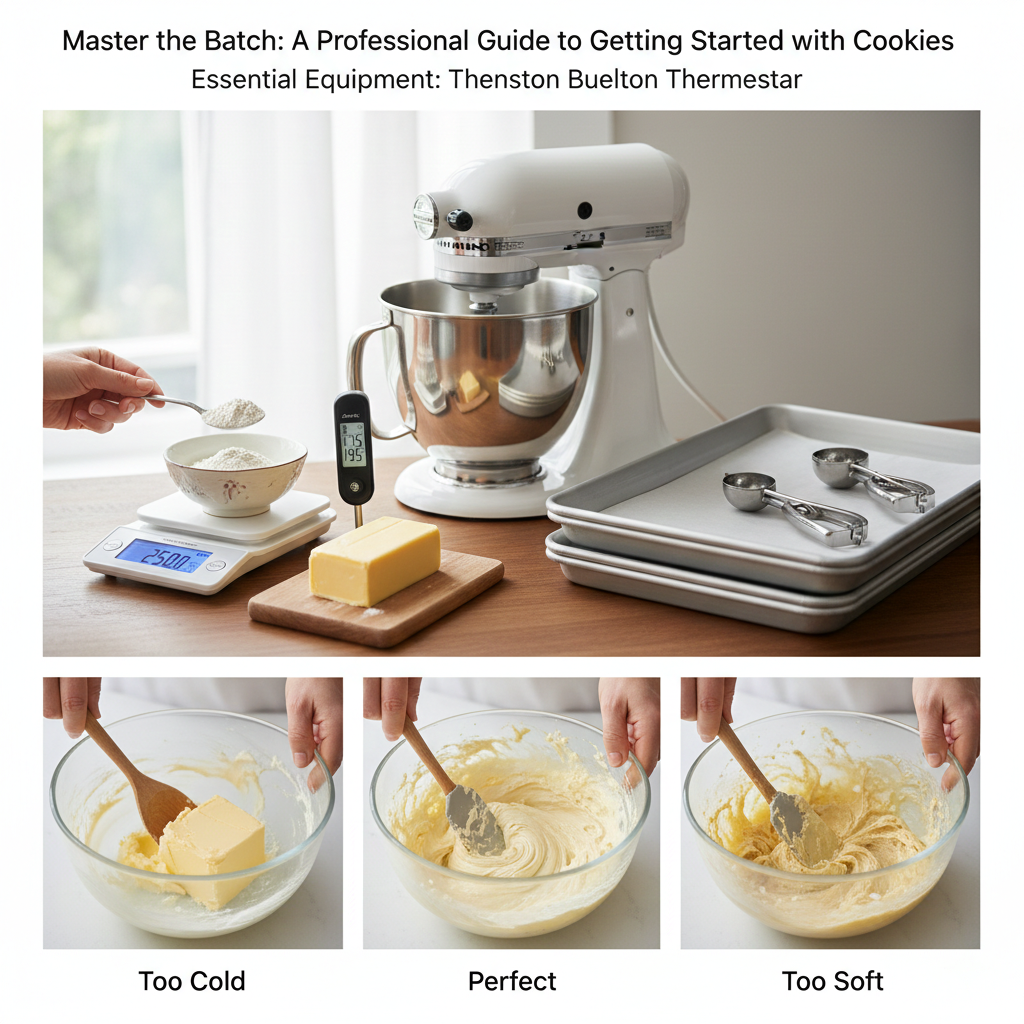
    Getting Started with Cookies: A well-organized professional baking station with a digital scale, mixer, and baking sheets, ready for precision cookie making.

    1. Technical Fundamentals for Getting Started with Cookies

    Before you cream your first bit of butter, ensure your kit is up to professional standards. High-end results for anyone getting started with cookies depend on accurate tools and a standardized environment.
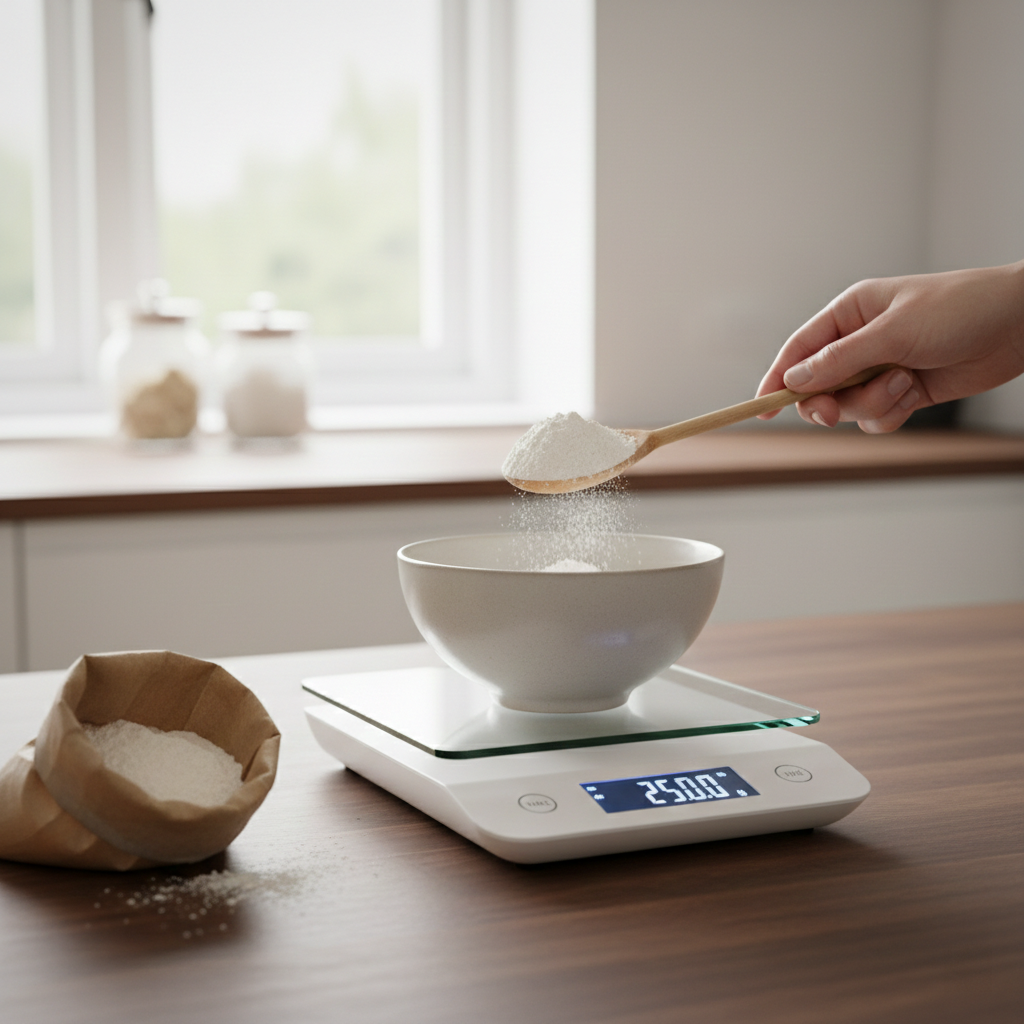
    A close-up of a digital kitchen scale accurately weighing flour, demonstrating the importance of precise measurements in professional baking.

    Essential Equipment for Getting Started with Cookies

    • Digital Kitchen Scale: When getting started with cookies, volume measurements are notoriously unreliable. For professional consistency, you must weigh ingredients in grams.
    • A Solid Internal Thermometer: Never trust your oven’s built-in dial. Verify that your oven reaches exactly 350°F (177°C), which is a non-negotiable step for getting started with cookies at scale.
    • Heavy-Duty Baking Sheets: Thin pans warp and hot-spot. Invest in rimmed aluminum half-sheets for even heat distribution.

    Weight Over Volume

    In a professional kitchen, accuracy is the foundation of consistency. A single “cup” of flour can vary by up to 20% depending on how it’s packed. To ensure every batch of cookies matches your highest standards, always weigh your dry ingredients in grams. This is the single most important step in transitioning from a home baker to a professional.

    2. Understanding Ingredient Science When Getting Started with Cookies

    Every ingredient in a cookie serves a structural or chemical purpose.
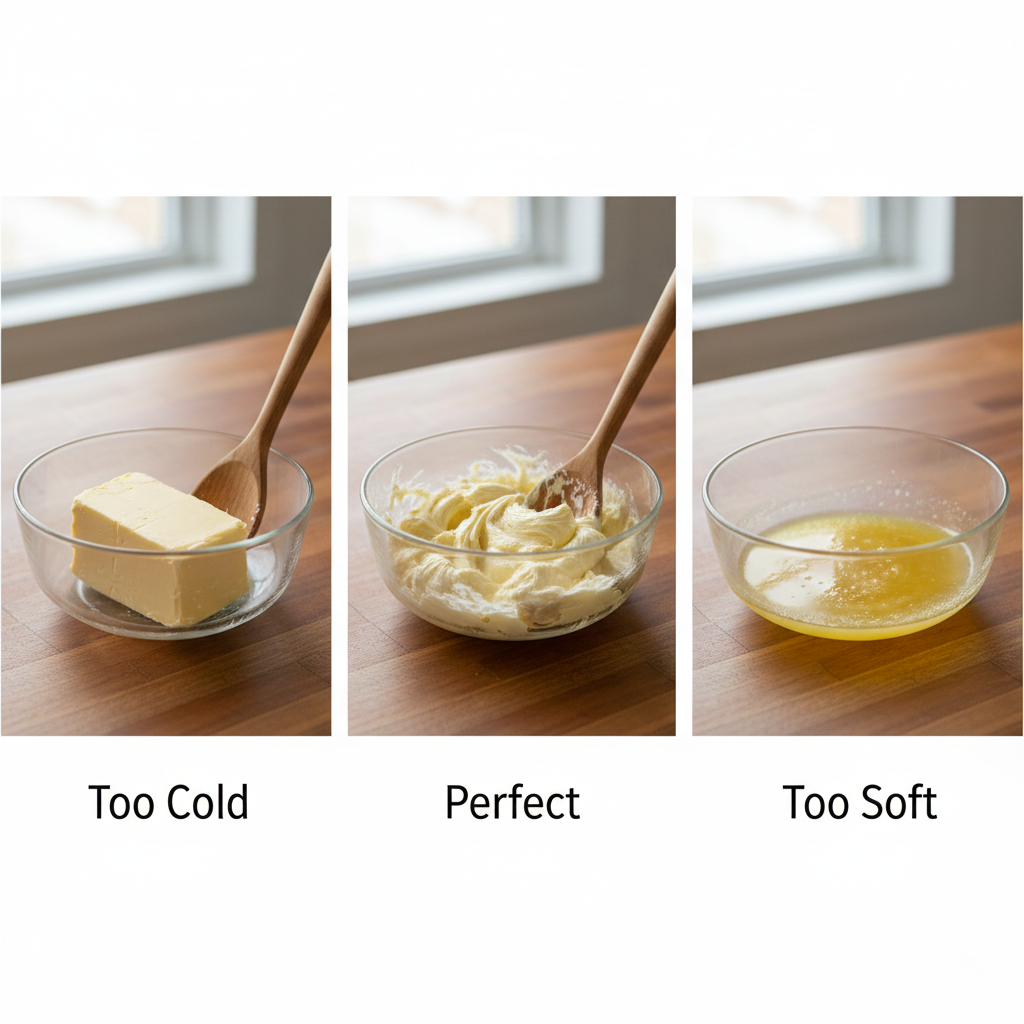
    A visual guide showing three states of butter (too cold, perfect room temperature, too soft) for optimal creaming in cookie dough.
    • Butter Temperature: For the classic “creaming method,” your butter should be cool room temperature (about 65°F (18°C)). If it’s too soft, your cookies will spread into puddles; too cold, and you won’t incorporate the air needed for leavening.
    • Sugar Ratios: White sugar provides crispness and encourages spread, while brown sugar adds moisture and chew due to the molasses content.
    • Flour Protein: Most professional cookies use All-Purpose flour, but the protein content can vary by brand. A higher protein count leads to a heartier, chewier bite.

    The 65°F Rule

    Butter temperature dictates the structural integrity of your cookie. Aim for “cool room temperature” (approx. 65°F / 18°C). The butter should be pliable enough to hold a fingerprint but firm enough to resist melting. If your butter is too warm during the creaming stage, your cookies will lose their height and over-spread in the oven.

    3. The Secret to Professional Texture: The Chill
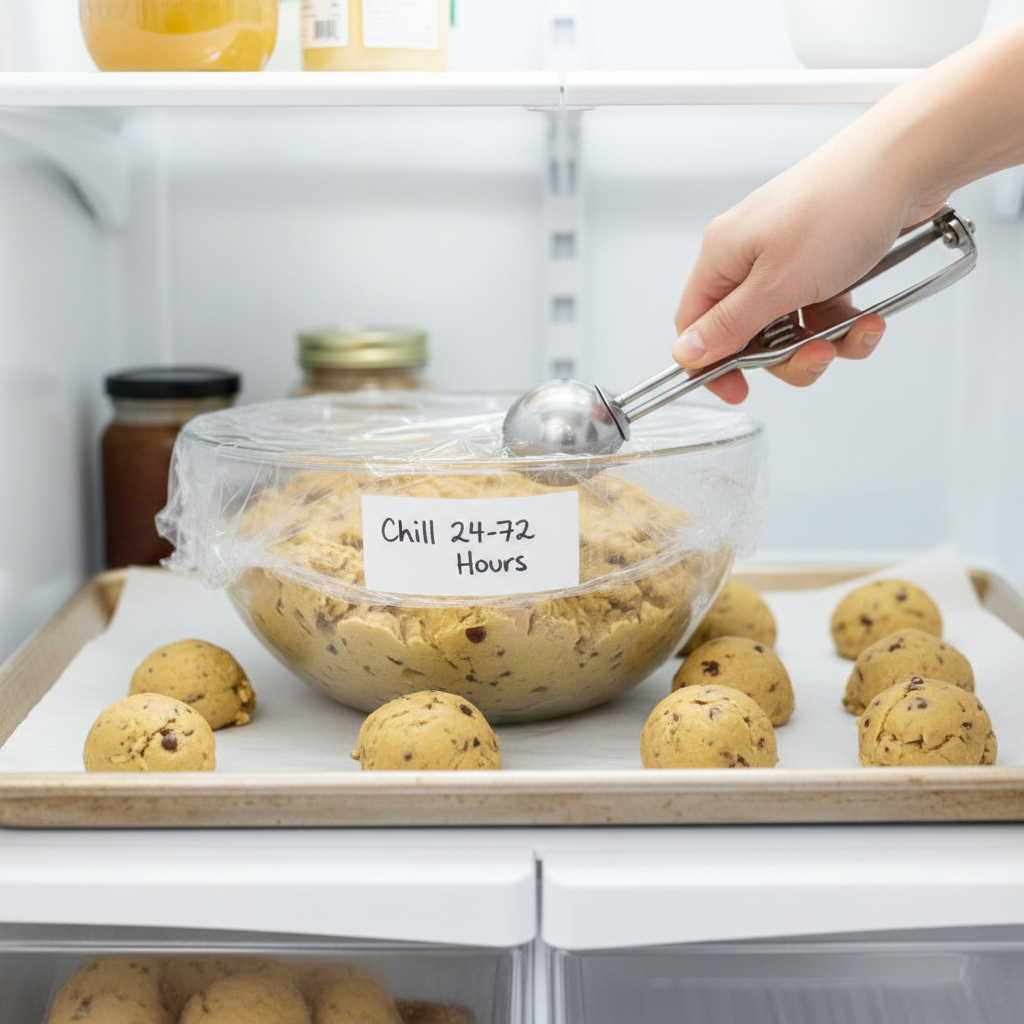
    Cookie dough chilling in a labeled bowl in the refrigerator, illustrating the recommended chilling process for enhanced flavor and texture.

    If you want that iconic “bakery ripple” and a deep, developed flavor, you must chill your dough. Resting the dough for 24 to 72 hours allows the flour to fully hydrate and the fats to solidify. This results in:

    1. Controlled Spread: The cold fat takes longer to melt in the oven.
    2. Enhanced Flavor: Enzymes break down the starches into simple sugars, leading to better browning (the Maillard reaction).

    The 24-Hour Flavor Bloom

    Professional results require time. Chilling your dough for at least 24 hours isn’t just about controlling spread; it’s a chemical necessity. This rest period allows the starch molecules in the flour to break down into simple sugars, resulting in a deeper, more complex caramelization and a superior, chewy texture that cannot be achieved with “bake-now” dough.

    For a deep dive into the molecular changes that occur during a 24-hour rest, King Arthur Baking offers an excellent breakdown of why chilling dough is a non-negotiable step for professionals.

    4. Precision Portioning
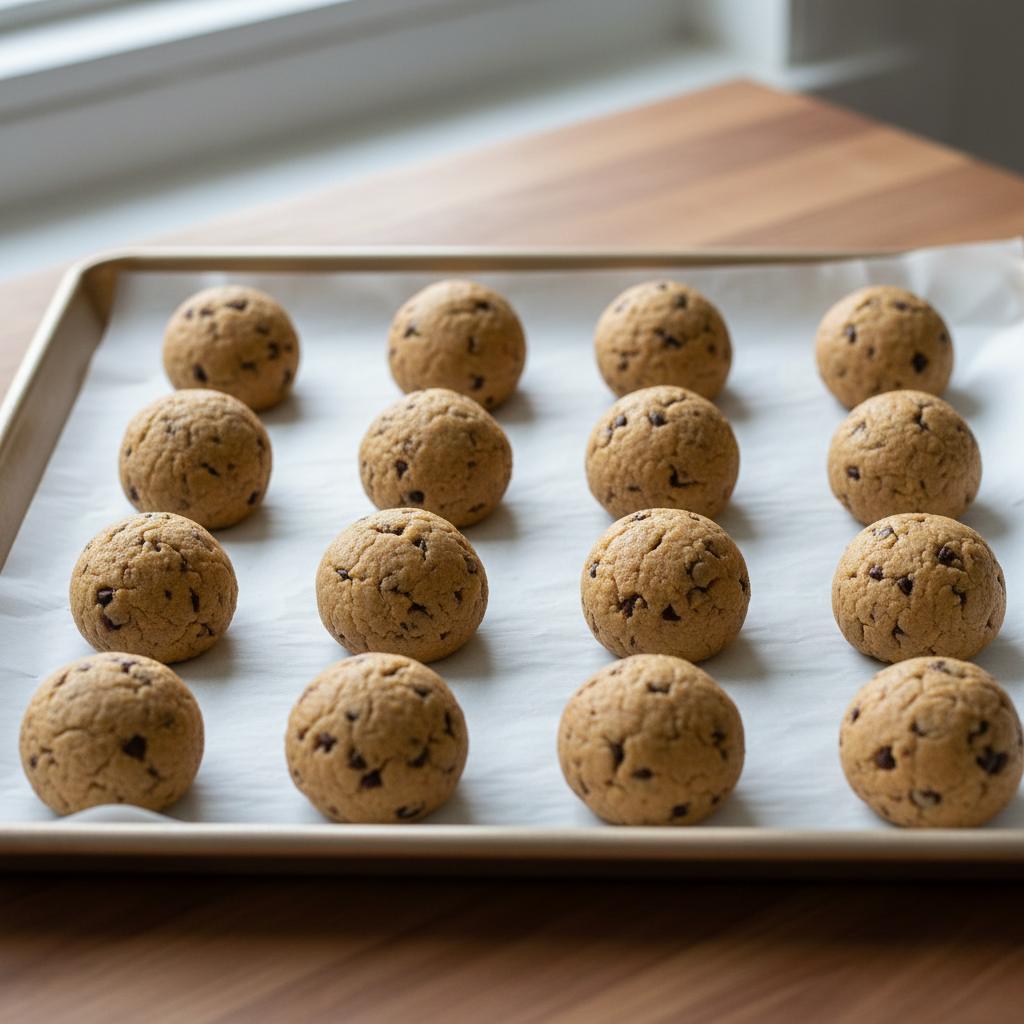
    Precisely portioned cookie dough balls arranged on a baking sheet, demonstrating the consistency achieved with a cookie scoop.

    Consistency is key when selling baked goods. Customers expect every cookie to be identical in size and bake. Use a spring-loaded cookie scoop to ensure every portion is exactly the same weight. This isn’t just about aesthetics—it ensures that every cookie on the tray finishes baking at the exact same second.
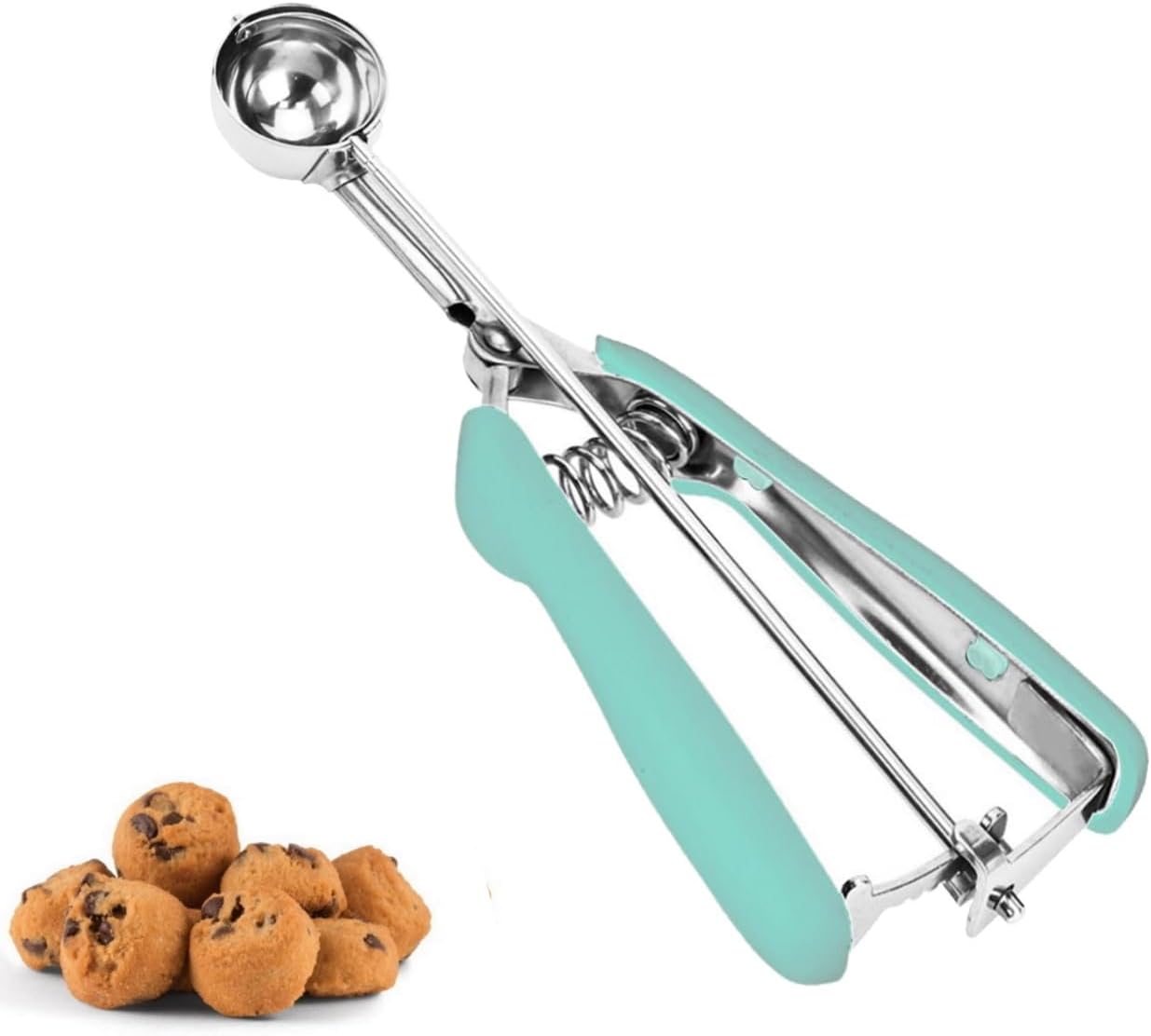
    1 tsp Extra Mini Cookie Scoop

    • The non-slip rubber handle makes it easy to grasp.
    • Just a simple squeeze makes the cookie scoop release the dough easily and neatly
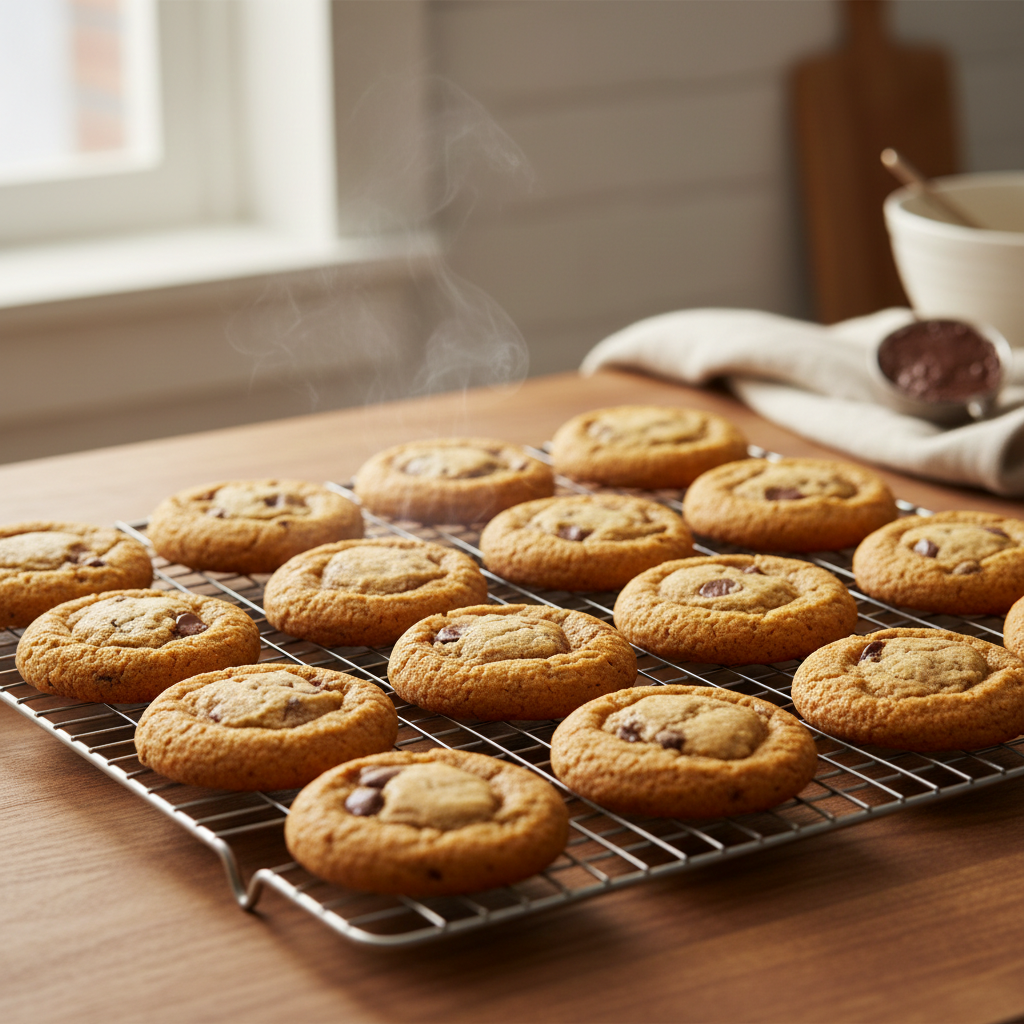
    A batch of uniformly baked, golden-brown chocolate chip cookies cooling on a wire rack, representing professional baking results.

    From Kitchen to Craft: Scaling Your Success

    Mastering the art of the cookie is a journey that moves from following a simple recipe to understanding the intricate dance of food science. By focusing on the technical pillars of precision measurement, specific temperature control—aiming for that perfect 65°F (18°C) butter—and the disciplined patience of a 24-hour chill, you elevate your baking from a casual hobby to a professional craft.

    These small, intentional adjustments are what create a consistent, high-quality product that stands out in a competitive market. As you continue to refine your workflow and experiment with these foundational techniques, you’ll find that the “perfect batch” isn’t a matter of luck, but a result of professional standards.

    Kitchen Tools I Use

  • Oven Temperature & Baking Time for Mini Cookies

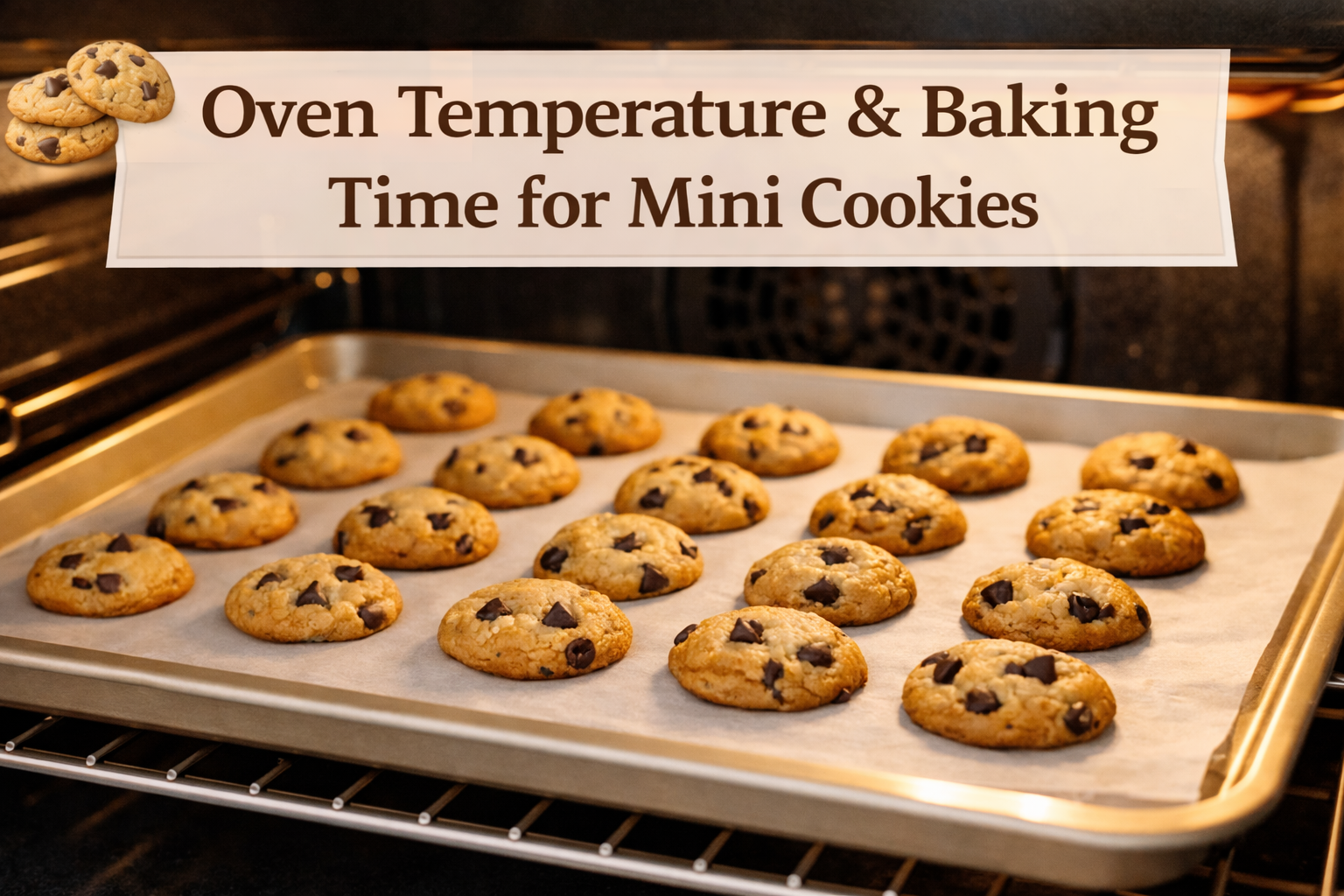
    Oven Temperature & Baking Time for Mini Cookies

    Oven temperature for mini cookies plays a bigger role in texture and doneness than most bakers realize.

    Mini cookies are small, but they’re unforgiving. A difference of 30 seconds or a few degrees can mean the difference between soft and chewy… or dry and crumbly.

    That’s why oven temperature and baking time matter more for mini cookies than full-size cookies. Once you understand how heat works at a smaller scale, mini cookies become easy and reliable.

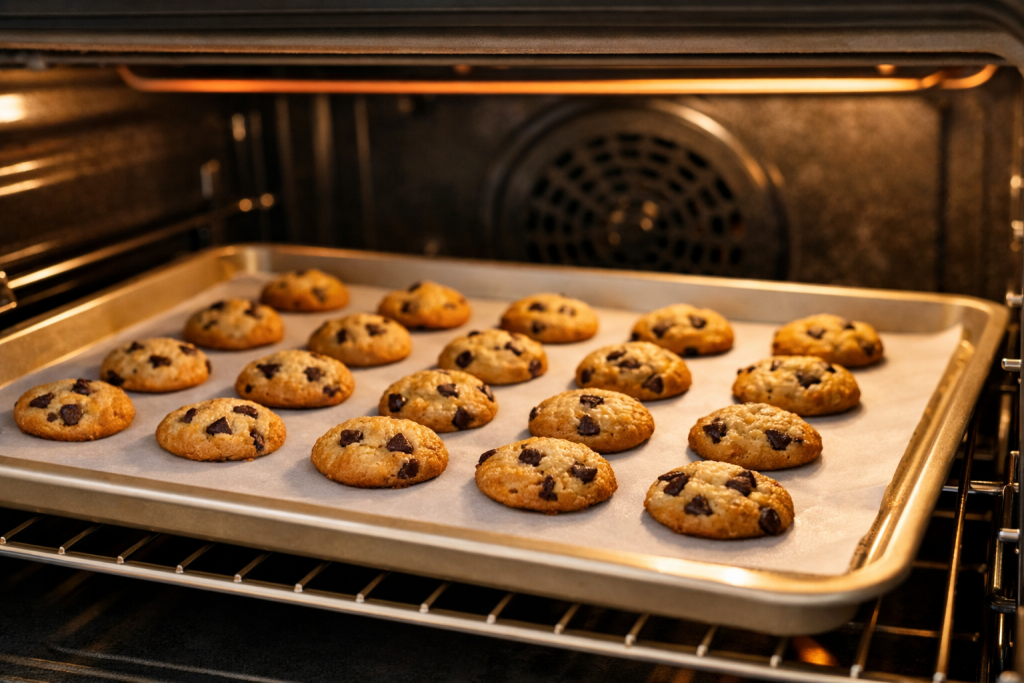
    Good oven temperature for mini cookies baking evenly on a light-colored baking sheet in an oven

    Why Mini Cookies Bake Differently

    Getting the oven temperature for mini cookies right prevents dry edges, pale centers, and uneven baking.

    Mini cookies:

    • Have less mass
    • Heat up faster
    • Finish baking quickly
    • Continue baking after leaving the oven

    1 tsp Extra Mini Cookie Scoop

    • The non-slip rubber handle makes it easy to grasp.
    • Just a simple squeeze makes the cookie scoop release the dough easily and neatly

    This means they don’t follow the same timing rules as standard cookies. You can’t just “bake until golden” and walk away.

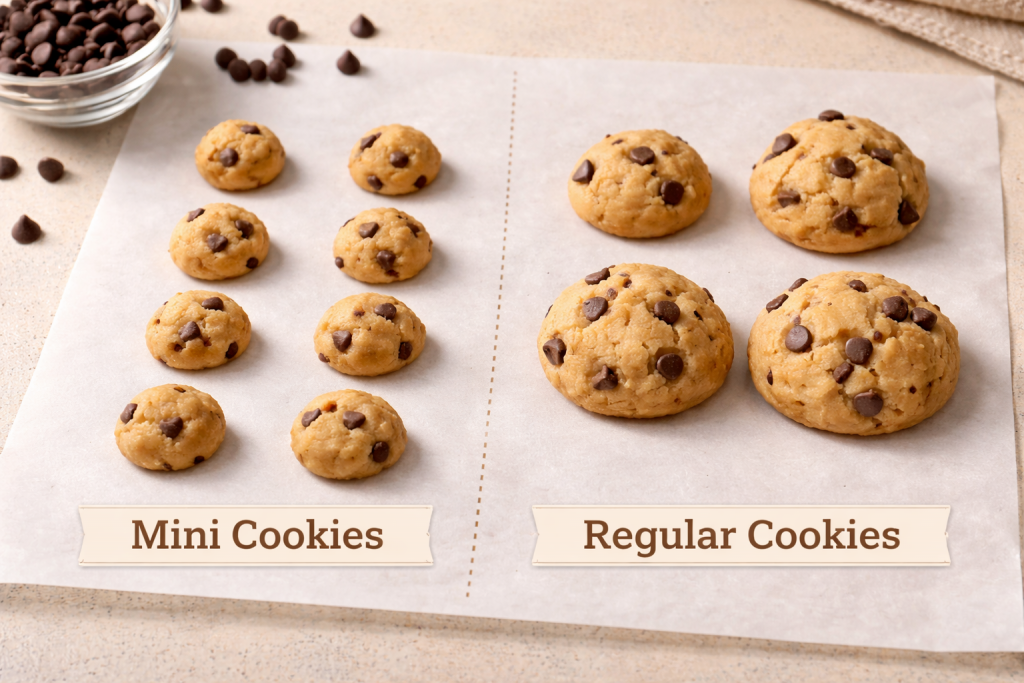
    Mini cookie dough balls compared to regular-sized cookie dough balls

    The Best Oven Temperature for Mini Cookies Explained

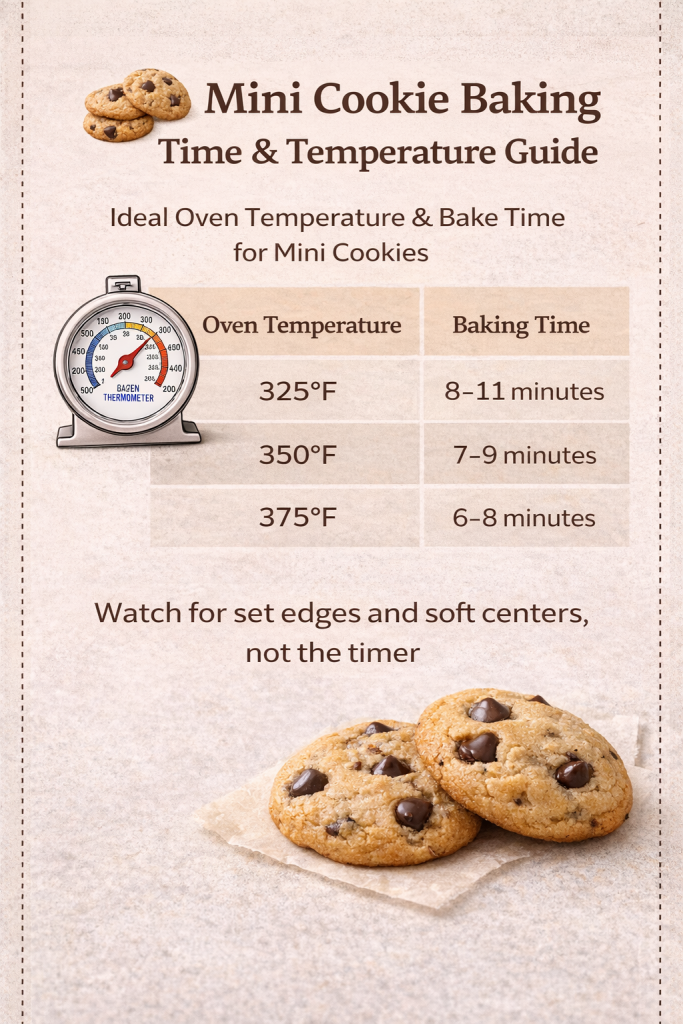
    350°F (175°C) is the sweet spot

    🍪 Taylor Precision Oven Thermometer

    Ensures accurate oven temperature so mini cookies don’t overbake too quickly.

    Most mini cookies bake best at 350°F, which allows:

    • Even spreading
    • Controlled browning
    • Enough time to catch doneness

    Oven Temperature & Timing is Key!

    Understanding oven temperature and timing is key to baking consistently perfect mini cookies.

    Lower temperatures can cause excess spreading. Higher temperatures can brown the bottoms too fast before the centers set.

    When to Adjust the Temperature

    • Try 325°F if your oven runs hot or cookies brown too quickly
    • Avoid 375°F+ unless a recipe specifically calls for it

    Typical Baking Time for Mini Cookies

    Perfect Batches for Mini Cookies

    Mini cookies pair perfectly with small batch baking, where timing and temperature control matter most.

    Mini cookies usually bake in 6–9 minutes, depending on:

    • Dough type
    • Cookie size
    • Pan material
    • Oven accuracy

    General Timing Guide

    • Very small (½–1 tsp dough): 6–7 minutes
    • Standard mini (1–1½ tsp): 7–9 minutes

    Always start checking early. Mini cookies don’t give much warning before overbaking.


    Why Bake Time Is Only a Guideline

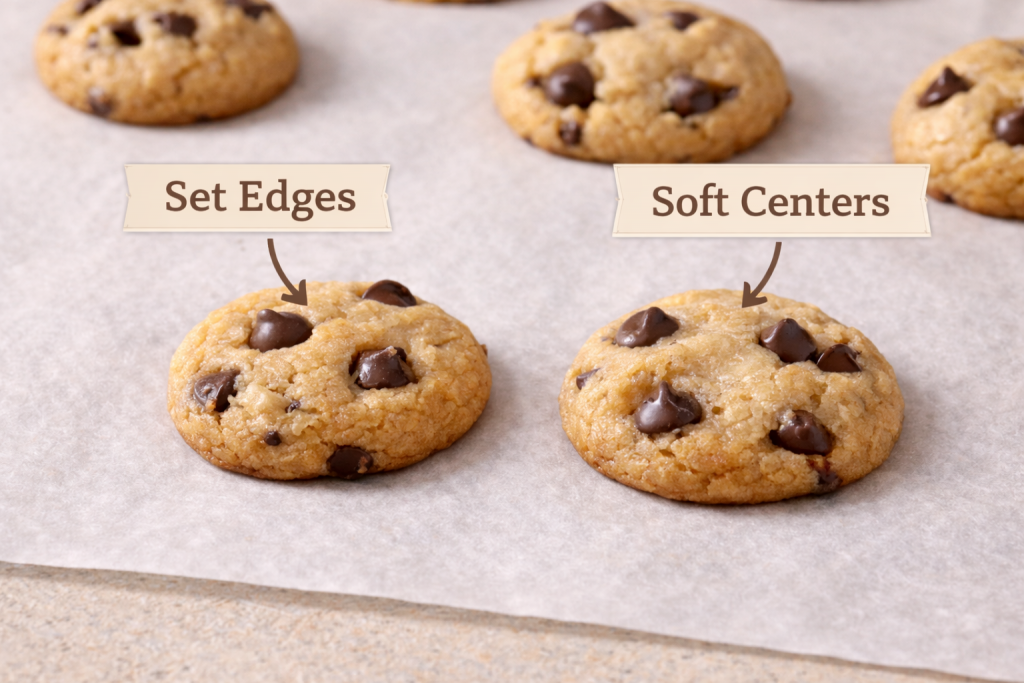
    Mini cookies showing set edges and soft centers indicating proper doneness

    Bake time is helpful — but visual cues matter more, especially with mini cookies.

    Mini cookies are usually done when:

    • The edges look set
    • The centers look slightly underbaked
    • The tops lose their raw shine

    How to Tell When Mini Cookies Are Done

    Visual cues matter more than the clock when deciding when mini cookies are done.

    They should look almost done when you pull them from the oven.


    Carryover Baking: The Step Everyone Misses

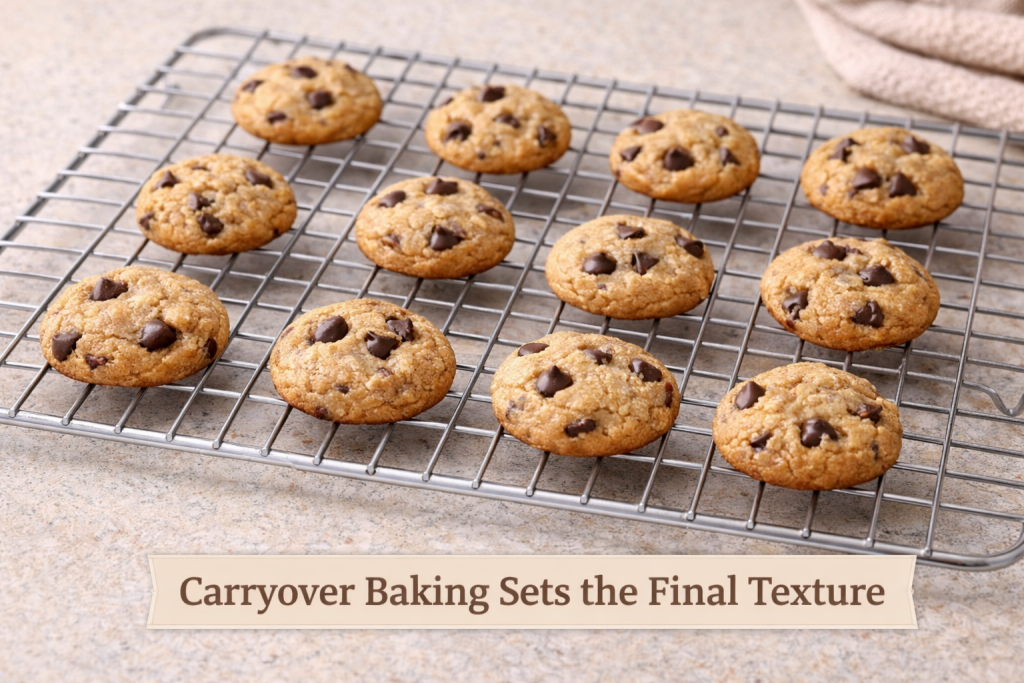
    Mini cookies cooling on a wire rack after being removed from the oven

    Mini cookies continue baking from residual heat after you remove them from the oven.

    That means:

    • Waiting until they look fully baked = overbaked cookies
    • Pulling them slightly early = soft, chewy centers

    Reduce Waste Costs

    Efficient baking processes help keep costs predictable when pricing mini desserts.

    This carryover effect is stronger in mini cookies because they’re so small. Cookies continue cooking from residual heat after being removed from the oven.


    How Pan Choice Affects Baking Time

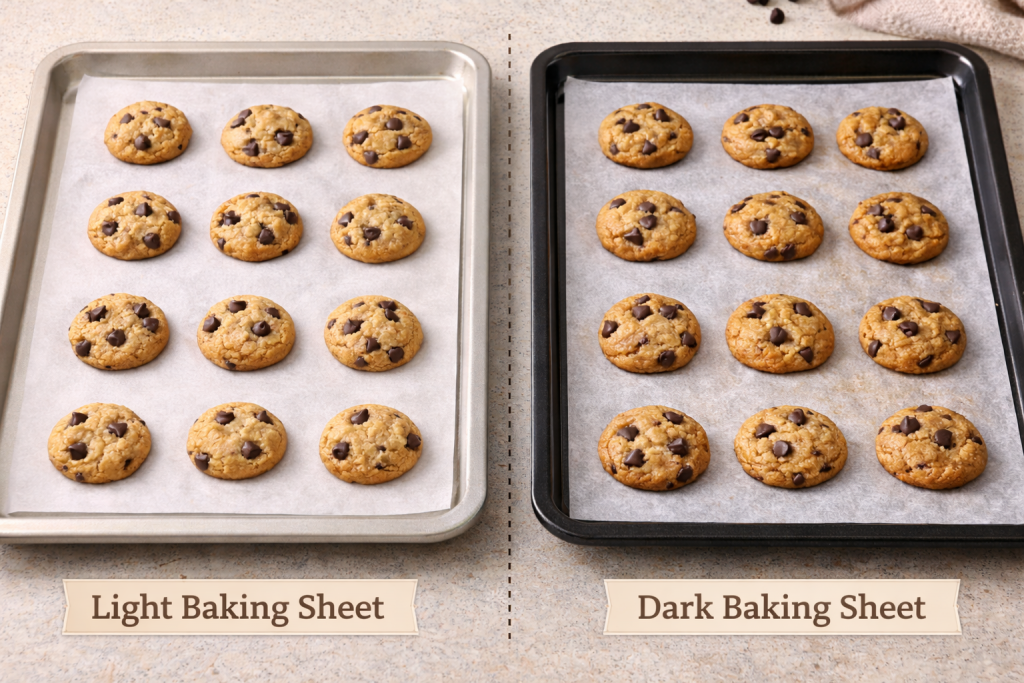
    Mini cookies baked on light and dark baking sheets showing different browning

    Your baking sheet changes how fast mini cookies bake.

    • Light-colored pans: Even baking, more forgiving
    • Dark pans: Faster browning, higher risk of overbaking
    • Thin pans: Heat up quickly
    • Insulated pans: Slow baking slightly

    Martha Stewart Gallen 3-Piece Cookie Sheet Set

    Complete bakeware set with nonstick sheets for cookies.

    If your cookies brown too fast on the bottom, your pan is likely the issue — not the recipe.


    Why Oven Accuracy Matters More for Minis

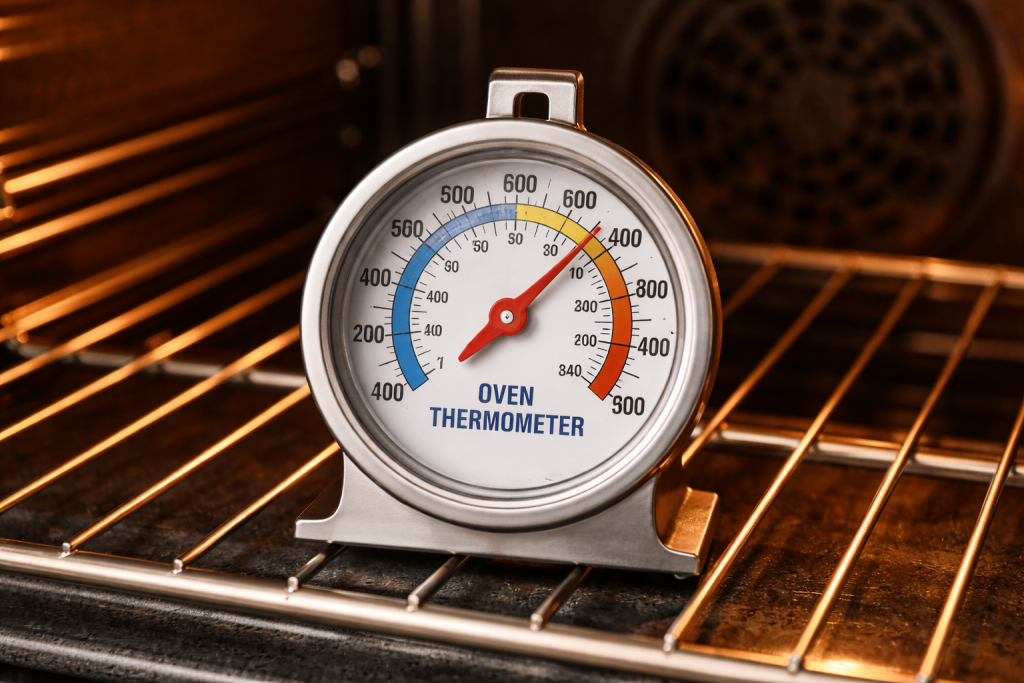
    Oven thermometer showing the true temperature inside a home oven

    Many home ovens run 10–25°F off from what the dial says.

    That difference barely matters for a 12-minute cookie… but it matters a lot for a 7-minute mini cookie.

    Best Tools for Mini Cookies

    Tools like oven thermometers and light-colored pans make mini cookie timing much easier to manage.

    An oven thermometer helps you:

    • Confirm your true temperature
    • Adjust bake time accurately
    • Avoid dry or burnt cookies

    Gluten Free?

    Gluten-free mini cookies are especially sensitive to oven temperature and baking time.

    Many home ovens run hotter or cooler than the dial indicates, which affects baking results.


    Rack Placement for Mini Cookies

    Always bake mini cookies on the center rack.

    • Too high → tops brown too fast
    • Too low → bottoms overbake

    Even small rack shifts can change results when bake times are short.


    Common Mini Cookie Timing Mistakes

    Overbaking is one of the most common mini cookie mistakes and is usually caused by timing issues.

    Avoid these:

    • Waiting for golden color
    • Baking minis as long as full-size cookies
    • Ignoring pan color
    • Trusting the oven dial blindly
    • Leaving cookies on the hot pan too long

    Most mini cookie failures come down to timing, not ingredients. Oven temperature for mini cookies affects bake time more than most bakers expect.

    Mini cookie baking time and temperature guide chart

    A Simple Mini Cookie Timing Routine

    For consistent results:

    1. Preheat fully to 350°F
    2. Use a light-colored pan with parchment
    3. Start checking cookies at the minimum time
    4. Pull when edges are set but centers look soft
    5. Let cool briefly on the pan, then transfer to a rack

    This routine works for most mini cookie recipes.

    Are You Baking Vegan?

    Vegan mini desserts bake quickly and benefit from careful temperature and timing control.


    The Big Takeaway

    Mastering oven temperature for mini cookies makes baking faster, easier, and more consistent. Mini cookies reward attention with their delicious taste!

    When you control oven temperature and baking time, mini cookies become:

    • Softer
    • Chewier
    • More consistent
    • Less stressful

    Once you dial this in, you’ll stop guessing — and start baking mini cookies with confidence.

    Cookie Tools I Use

  • 🍪Common Mini Cookie Mistakes (And How to Fix Them)

    🍪Common Mini Cookie Mistakes (And How to Fix Them)

    Mini cookies are adorable, fast-baking, and incredibly satisfying — but they’re also less forgiving than full-size cookies. A mistake that barely matters in a regular cookie can completely change the texture of a mini one. These mini cookie mistakes are easy to make, but even easier to fix once you know what to watch for.

    If your mini cookies have ever spread too much, baked too fast, or turned out dry, you’re not alone. These are the most common mini cookie mistakes — and exactly how to fix each one.

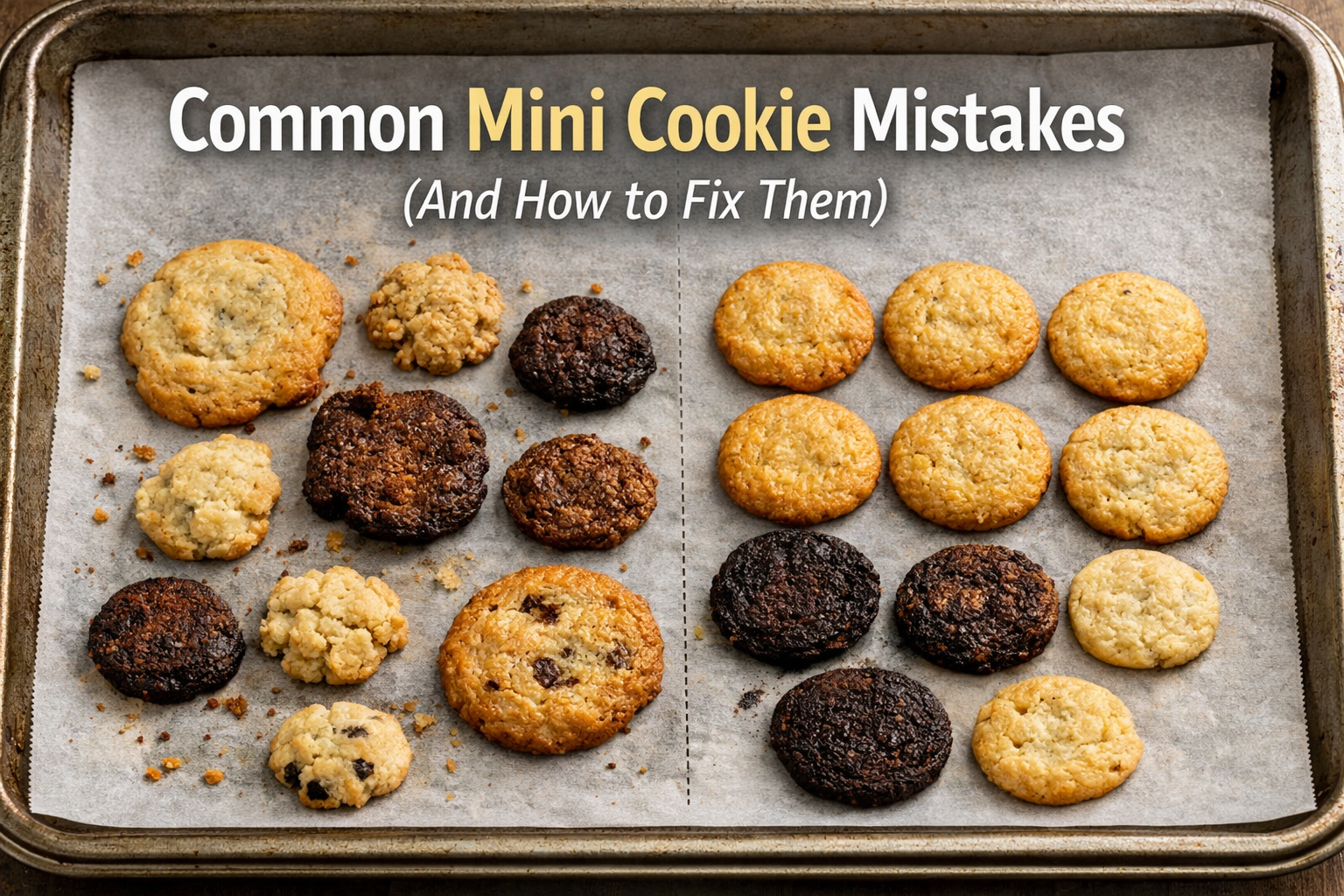
    common Mini cookie mistakes on a baking sheet showing uneven sizes and baking results

    New to Baking?

    This guide to baking perfect mini cookies walks through the techniques that help avoid the most common mistakes.

    The 10 Most Common Mini Cookie Mistakes

    Most mini cookie mistakes come down to size, timing, and temperature.

    • Making Them Too Big
    • Overbaking
    • Baking at the Wrong Temperature
    • Skipping Dough Chilling
    • Crowding the Baking Sheet
    • Using the Wrong Baking Surface
    • Not Letting Cookies Cool Properly
    • Expecting Minis to Behave Like Full-Size Cookies
    • Inconsistent Dough Mixing
    • Not Adjusting for Dietary Doughs

    Small batch baking makes it easier to spot and correct these mistakes before they ruin a full batch.


    Mistake #1: Making Them Too Big

    What Happens

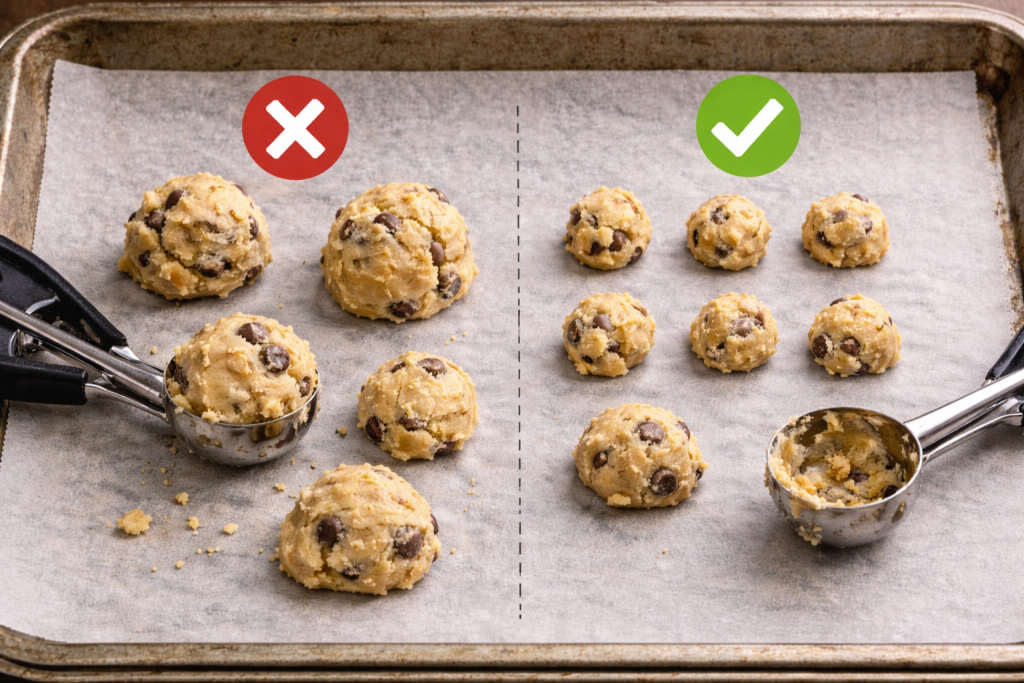
    Oversized “mini” cookies spread too much, bake unevenly, and lose their soft centers.

    Mini cookie dough scoops of different sizes on a baking sheet

    1 tsp Extra Mini Cookie Scoop

    • The non-slip rubber handle makes it easy to grasp.
    • Just a simple squeeze makes the cookie scoop release the dough easily and neatly

    Using the right tools makes portioning and baking mini cookies much more consistent.

    🍪 Size Matters More Than You Think

    Mini cookies need consistent, small portions to bake evenly and stay soft.

    How to Fix It

    • Use a teaspoon or small cookie scoop
    • Aim for 1–1½ teaspoons of dough per cookie
    • Keep dough portions consistent

    Mini cookies rely on size control more than any other factor.


    Mistake #2: — One of the Most Common Mini Cookie Mistakes

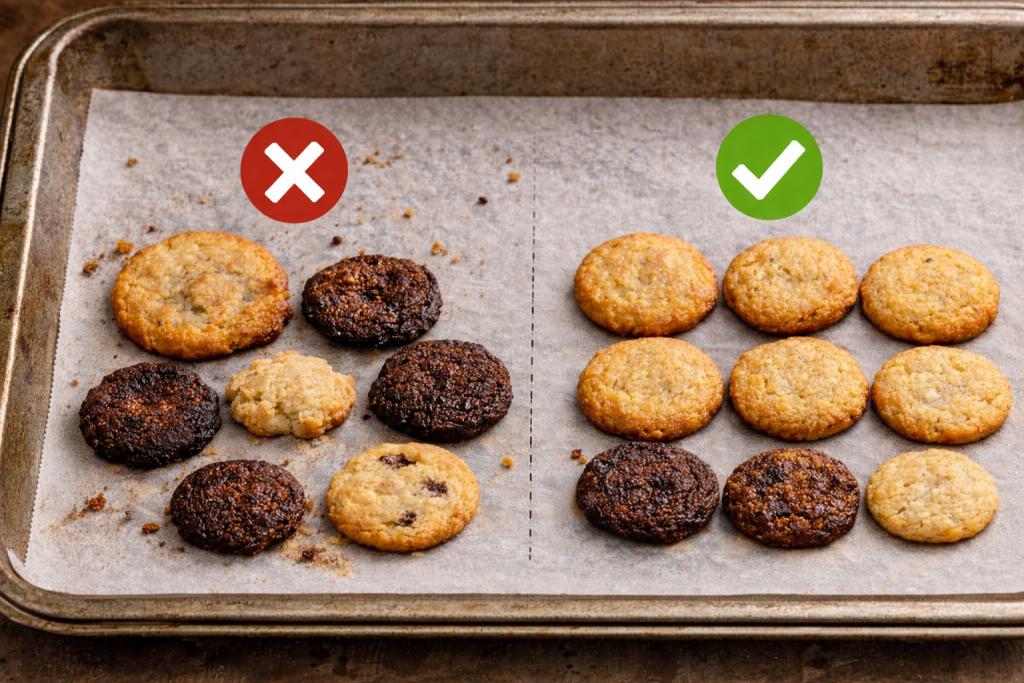
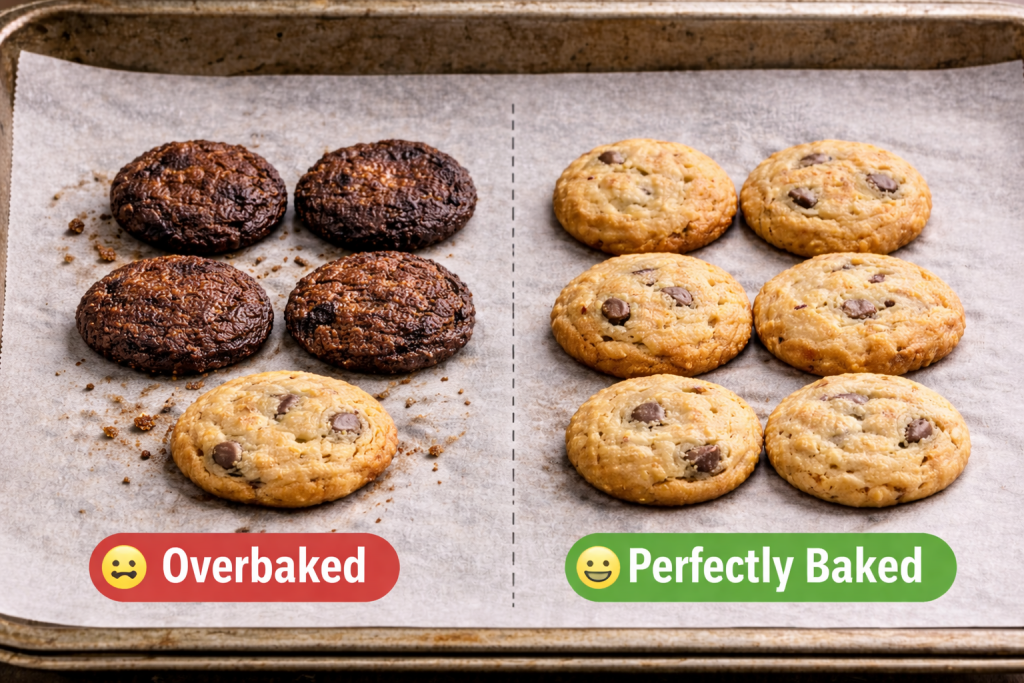
    Comparison of overbaked and properly baked mini cookies showing texture differences

    What Happens

    Mini cookies go from soft to dry in minutes — sometimes seconds.

    ⏱️ Key Takeaway: Overbaking Happens Fast

    Mini cookies can go from perfect to dry in minutes — start checking early.

    🔥 Trust Visual Doneness, Not the Timer

    Look for set edges and soft centers. The oven clock isn’t enough for minis.

    How to Fix It

    • Start checking cookies 2–3 minutes earlier than recipes suggest
    • Look for set edges and soft centers
    • Remember cookies continue baking on the hot pan

    Visual cues are more reliable than bake time when it comes to knowing when mini cookies are done.

    When in doubt, pull them early.

    Avoid Mistakes When Possible

    Many of these mini cookie mistakes can be avoided by using the right baking tools.


    Mistake #3: Baking at the Wrong Temperature

    What Happens

    Too hot: cookies spread and brown too fast
    Too cool: cookies dry out before setting

    Pay Attention to Your Oven Temp & Time

    Oven temperature and bake time play a huge role in mini cookie results, especially since they bake so quickly.

    How to Fix It

    • Bake most mini cookies at 350°F (175°C)
    • Use an oven thermometer if possible
    • Avoid baking multiple trays at once early on

    🌡️ Oven Accuracy Is Critical

    Even small temperature differences can ruin mini cookies — use an oven thermometer if possible.

    Consistent heat matters more with small cookies. Butter temperature and dough warmth play a major role in how cookies spread during baking.


    Mistake #4: Skipping Dough Chilling

    What Happens

    Warm dough spreads too quickly, especially in mini form.

    ❄️ Chilling Dough Is Not Optional

    Chilled dough helps mini cookies hold their shape and bake evenly.

    How to Fix It

    • Chill dough 20–30 minutes minimum
    • Chill scooped dough for even better control
    • Especially important for butter-heavy or gluten-free doughs

    Chilling gives mini cookies structure before baking.


    Mistake #5: Crowding the Baking Sheet

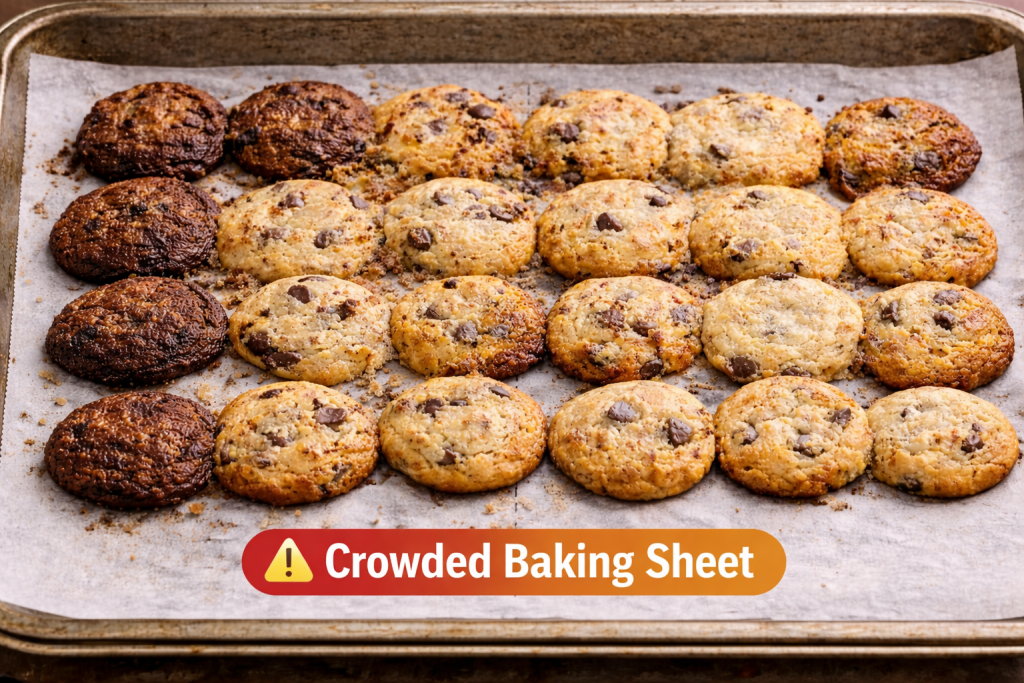
    Mini cookies baked too close together on a crowded baking sheet

    What Happens

    Cookies bake unevenly and steam instead of setting.

    🍽️ Give Cookies Space

    Crowded baking sheets lead to uneven baking and poor texture.

    How to Fix It

    • Leave 1½–2 inches between cookies
    • Bake fewer cookies per tray
    • Rotate the pan halfway through if needed

    Mini cookies still need breathing room.


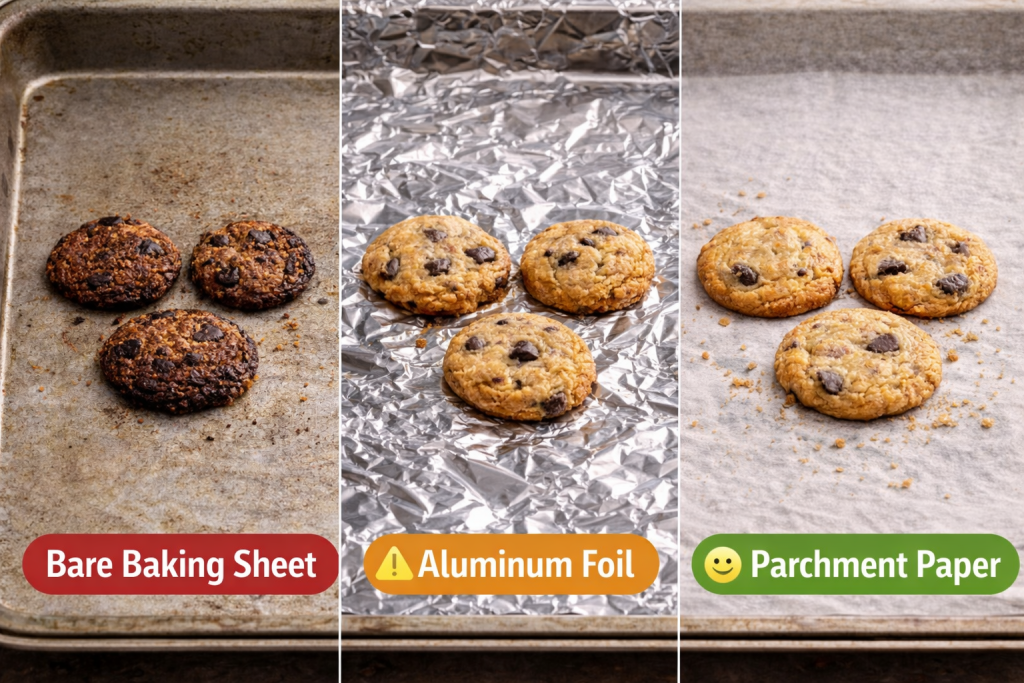
    Mistake #6: Using the Wrong Baking Surface

    Mini cookies baked on dark pan versus light pan showing different browning

    What Happens

    Cookies burn on the bottom or bake unevenly.

    🧈 Baking Surfaces Matter

    Light-colored pans with parchment or silicone mats work best for mini cookies.

    How to Fix It

    • Use light-colored metal baking sheets
    • Line with parchment paper or a silicone mat
    • Avoid dark or insulated pans for minis

    Surface choice has a bigger impact on small cookies.

    Different baking surfaces affect browning and heat transfer in cookies.


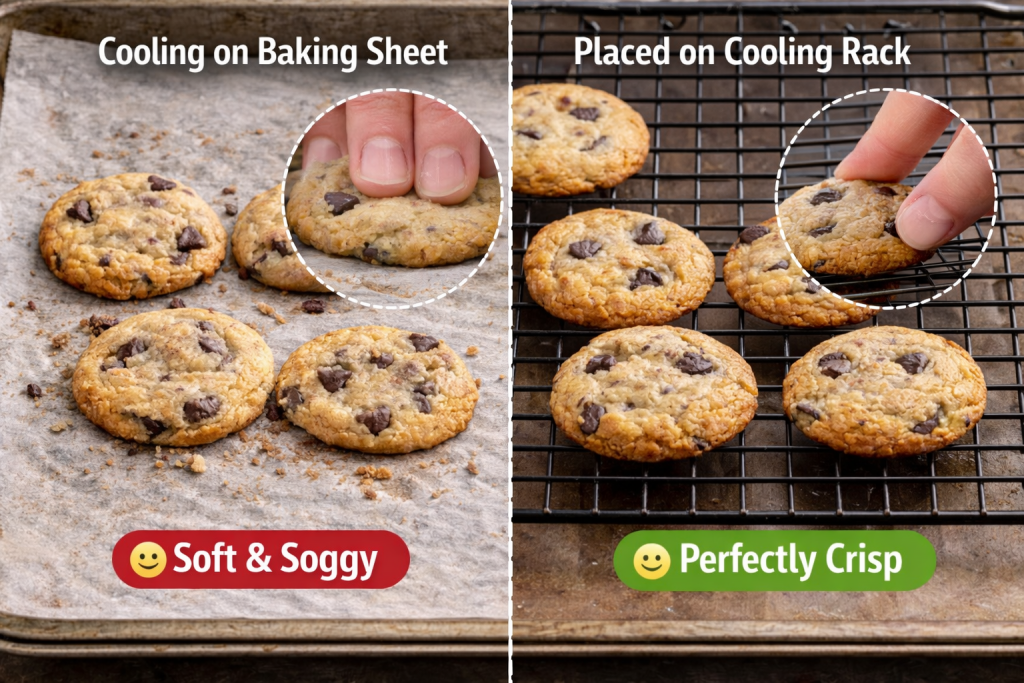
    Mistake #7: Not Letting Cookies Cool Properly

    Mini cookies cooling on a wire rack after baking

    What Happens

    Cookies seem underbaked or crumbly when they’re actually still setting.

    🕒 Cooling Is Part of Baking

    Mini cookies often finish setting as they cool. Don’t judge texture too soon.

    How to Fix It

    • Let cookies rest 5 minutes on the pan
    • Transfer to a rack to cool completely
    • Judge texture after cooling, not immediately

    Mini cookies often firm up as they cool.


    Mistake #8: Expecting Minis to Behave Like Full-Size Cookies

    What Happens

    Recipes adapted directly from large cookies don’t always work.

    🧠 Minis Play by Different Rules

    Mini cookies aren’t just smaller cookies — they require different timing and attention.

    How to Fix It

    • Reduce bake time significantly
    • Watch doneness cues instead of the clock
    • Adjust expectations — minis are their own thing

    Mini cookies follow different rules.

    Mini cookies pair perfectly with small batch baking, which makes testing and adjustments easier.

    Remember to Account for Mistakes When Pricing

    Underpricing often happens when bakers underestimate how much effort mini desserts really take.


    Mistake #9: Inconsistent Dough Mixing

    What Happens

    Some cookies bake perfectly while others spread or dry out.

    How to Fix It

    • Mix dough just until combined
    • Scrape the bowl thoroughly
    • Scoop dough from evenly mixed areas

    Consistency starts before the oven.

    5 Pieces Silicone Spatula Set

    Useful set of mini spatulas for mixing, folding, and scraping small batches.


    Mistake #10: Not Adjusting for Dietary Doughs

    What Happens

    Gluten-free or vegan mini cookies dry out faster.

    New to Gluten-free?

    Gluten-free doughs are especially sensitive to these mini cookie mistakes and benefit from shorter bake times.

    How to Fix It

    • Reduce bake time even further
    • Add moisture-supporting ingredients
    • Chill dough longer
    • Pull cookies earlier than traditional dough

    Mini + dietary baking requires extra care.

    These same mini cookie principles also apply to vegan doughs, which can dry out quickly if overbaked.


    The One Rule That Fixes Most Mini Cookie Problems

    If there’s one takeaway, it’s this:

    Mini cookies should look slightly underbaked when you remove them from the oven.

    That single adjustment fixes:

    • Dry cookies
    • Crumbly texture
    • Overbrowning
    • Loss of chew
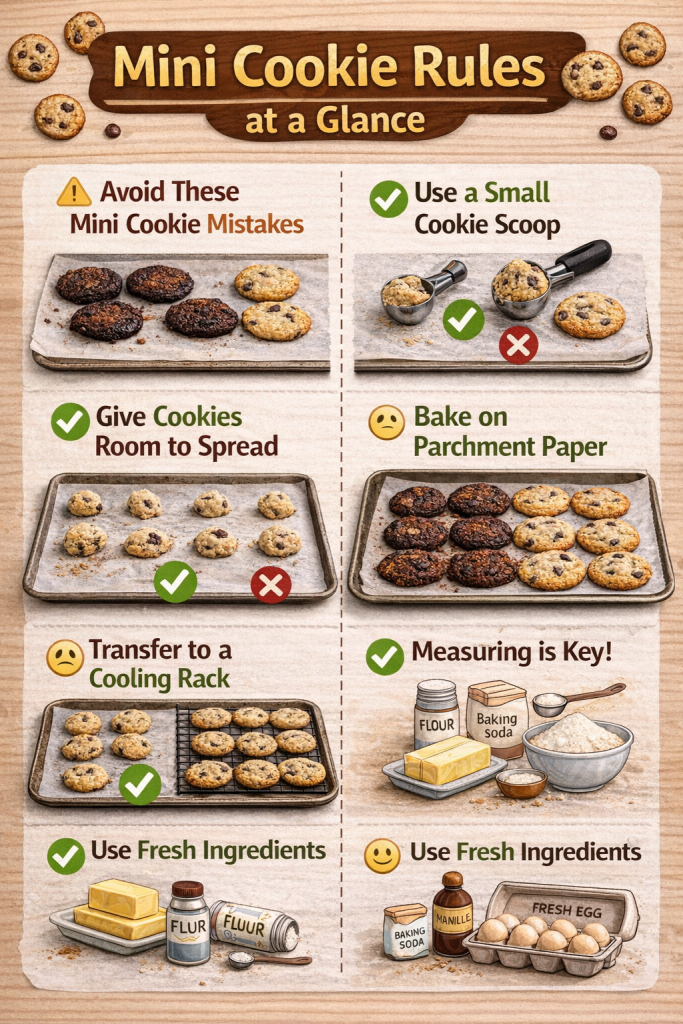
    Mini cookie baking rules infographic showing portion size, spacing, baking surfaces, and cooling tips

    Bake Smaller, Bake Smarter

    🎯 One Rule to Remember

    If mini cookies look perfect in the oven, they’re probably overbaked. Pull them slightly early.

    Mini cookies aren’t harder — they’re just more precise. Once you understand how size affects baking time, temperature, and texture, mini cookies become incredibly reliable.

    Avoiding these mini cookie mistakes makes baking smaller cookies faster, easier, and more reliable.

    Fix these common mistakes, and your mini cookies will bake faster, softer, and more consistently every time.

    Cookie Tools I Use