
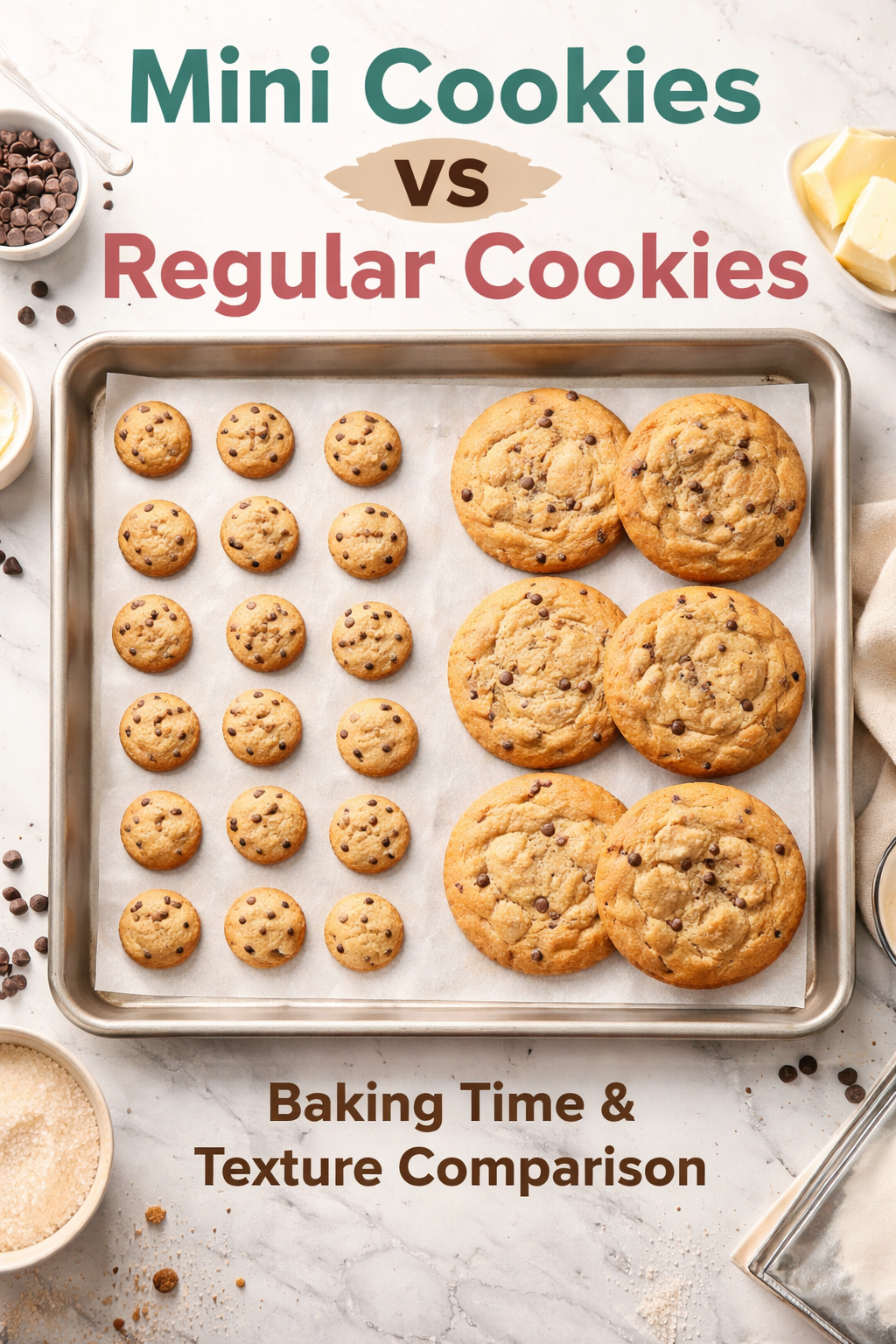
If you’ve ever wondered why mini cookies bake so differently than regular cookies, you’re not imagining it. Size plays a huge role in both baking time and final texture, and understanding those differences can help you get better results every time.
These cookie baking tips break down exactly how mini cookies vs regular cookies compare—and how to adjust your baking approach so your cookies come out soft, evenly baked, and never overdone. If you’re new to baking smaller cookies, our ultimate guide to baking perfect mini cookies explains the techniques that make bite-sized cookies bake differently.
This comparison of mini cookies vs regular cookies focuses on baking time, texture, and key differences that affect results.
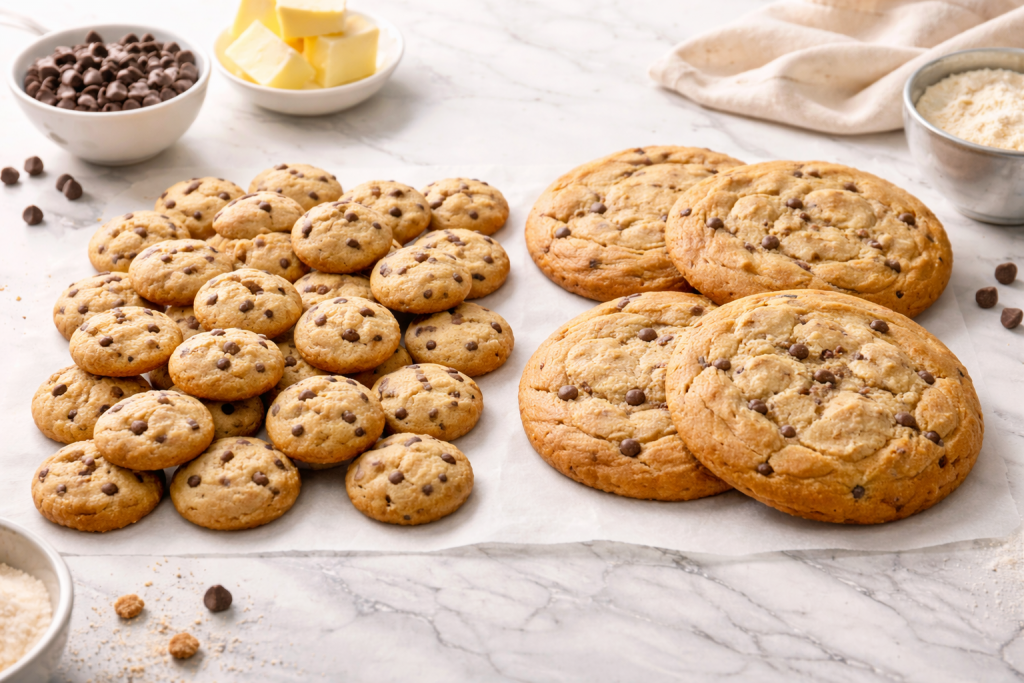
What Makes Mini Cookies Different?
Mini cookies aren’t just smaller versions of regular cookies. Their size affects:
- How quickly heat reaches the center
- How moisture evaporates during baking
- How fast edges set compared to the middle
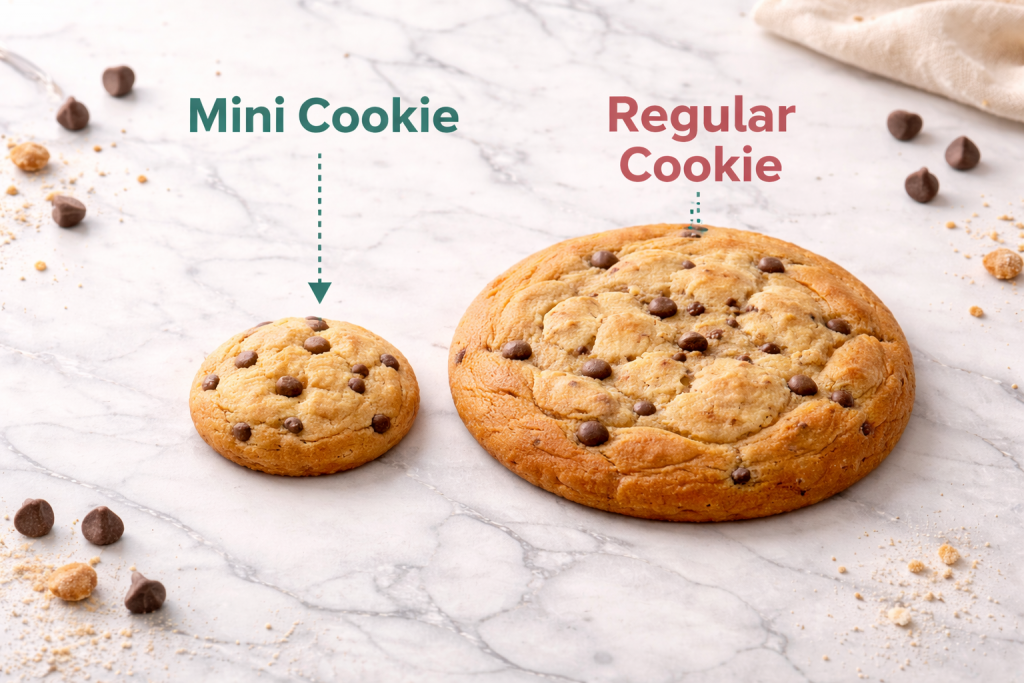
Because bite-sized cookies bake faster, small changes in time or temperature matter more than they do with larger cookies.
Baking Time: Mini Cookies vs Regular Cookies
One of the biggest differences between mini cookies and regular cookies is baking time.
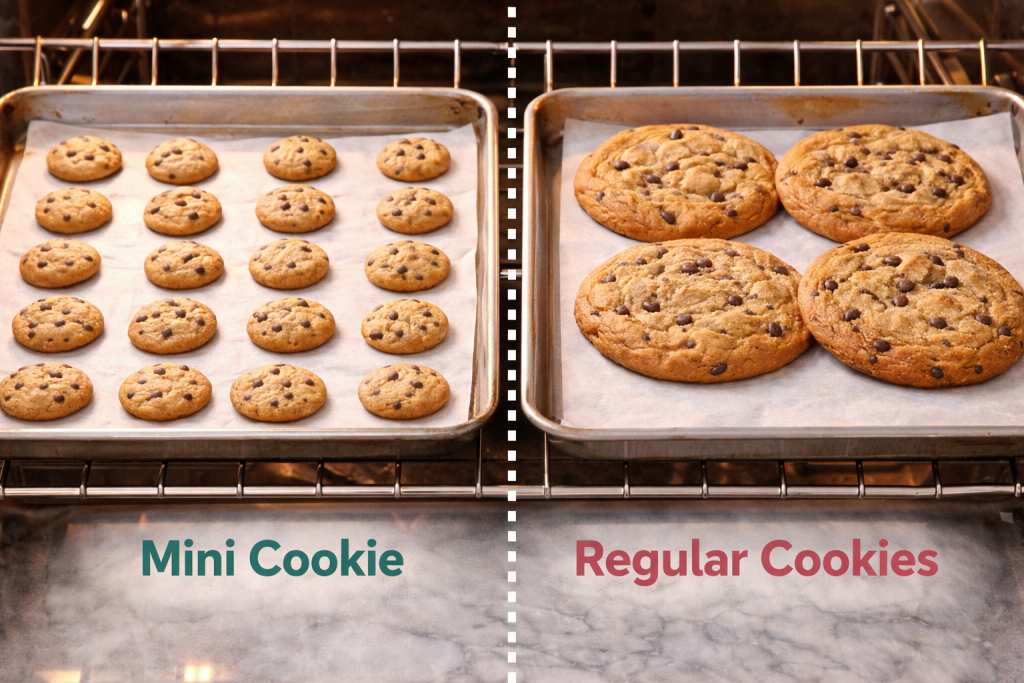
Typical Baking Times
- Mini cookies: 6–9 minutes
- Regular cookies: 10–14 minutes
For more detailed timing guidance, this breakdown of oven temperature and baking time for mini cookies shows how small changes affect results.
Bite-sized cookies can go from underbaked to overbaked very quickly, so staying close to the oven during the final minutes is important.
According to baking science experts, smaller cookies bake faster because heat reaches the center more quickly than in larger cookies.
How Texture Changes with Size
Cookie size directly impacts texture.
Mini Cookies Tend to Be:
- Slightly crisper on the outside
- Softer in the center when baked correctly
- More consistent across the batch
Regular Cookies Tend to Have:
- Thicker, softer centers
- More contrast between edges and middle
- Longer bake times that allow flavors to develop more slowly
Neither is better—it just depends on the texture you’re aiming for.
Cookie texture depends on baking time, sugar ratios, and moisture loss during baking.
Temperature Tips for Baking Bite-Sized Cookies
Lowering the oven temperature slightly can help bite-sized cookies bake more evenly.

🍪 Taylor Precision Oven Thermometer
Ensures accurate oven temperature so mini cookies don’t overbake too quickly.
Baked Munchies earns a small commission on these links at no cost to you.
Helpful cookie baking tips:
- Use the same temperature as regular cookies, but watch closely
- If edges brown too fast, lower oven temp by 10–15°F
- Always preheat fully before baking
Even a small temperature difference can affect mini cookies more than regular ones.
How to Tell When Mini Cookies Are Done
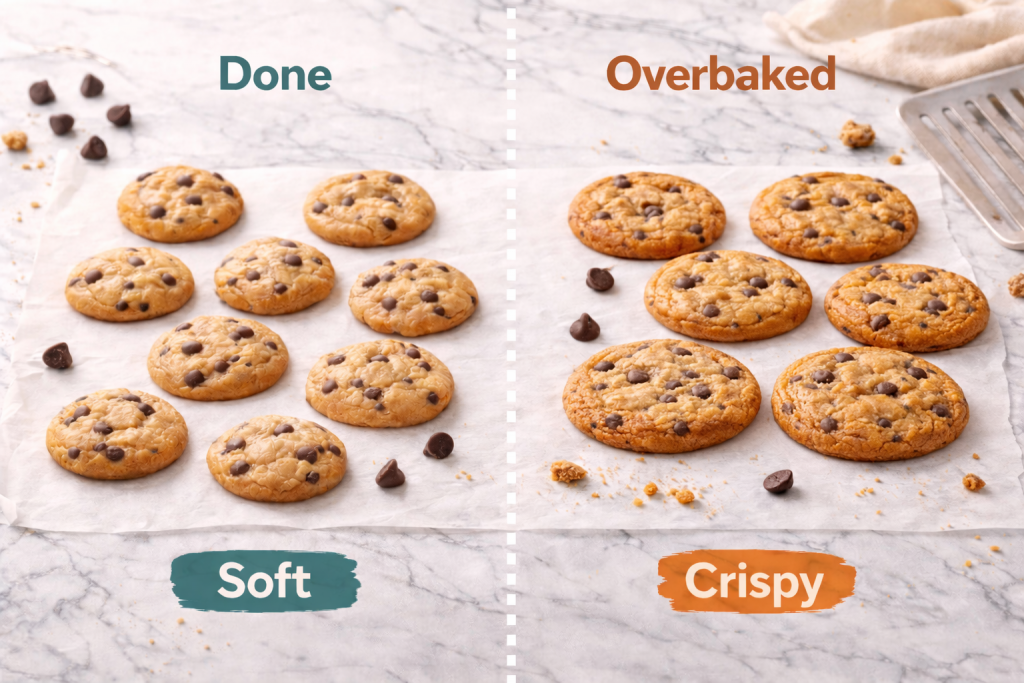
Because bite-sized cookies bake quickly, visual cues matter more than time alone.
Look for:
- Set edges with a light golden color
- Slight softness in the center
- Cookies that stop spreading
If you wait until bite-sized cookies look fully baked on top, they’re often already overdone. Visual cues matter more than the clock with smaller cookies. This guide on how to tell when mini cookies are done walks through what to look for.
Oven temperature and pan material play a major role in how cookies spread and brown.
Why Pan Choice Matters More for Mini Cookies
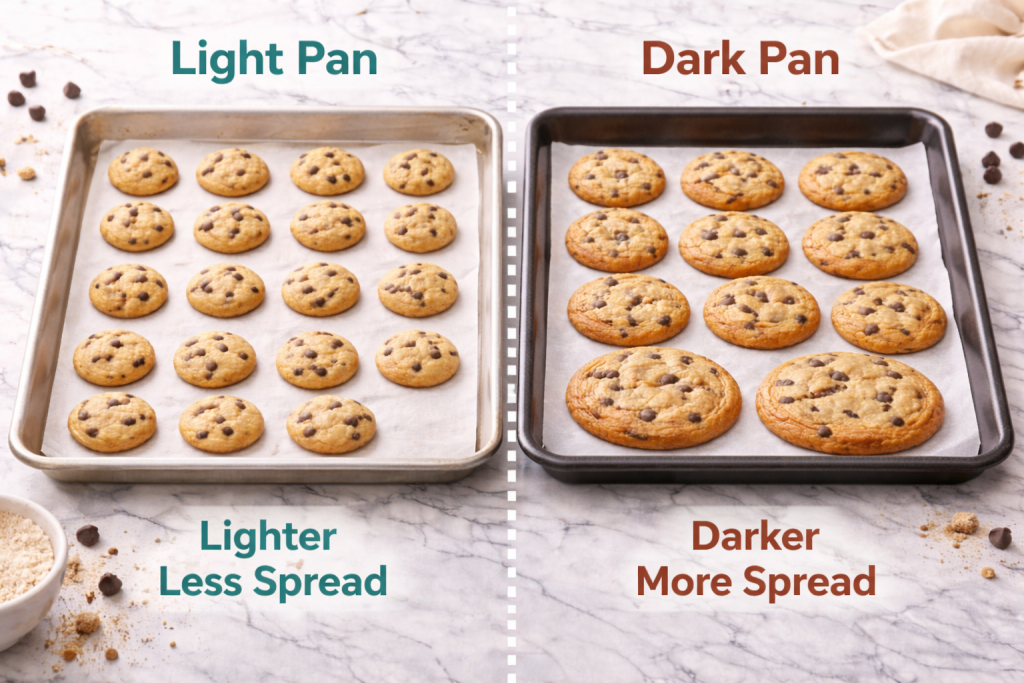
Smaller cookies respond faster to heat from the pan.
For best results:
- Use light-colored baking sheets to help bite-sized cookies bake evenly without overbrowning.
- Avoid dark pans that brown too quickly
- Let pans cool between batches
This helps bite-sized cookies bake evenly without overbrowning the bottoms.
Dough Portioning Makes a Bigger Difference
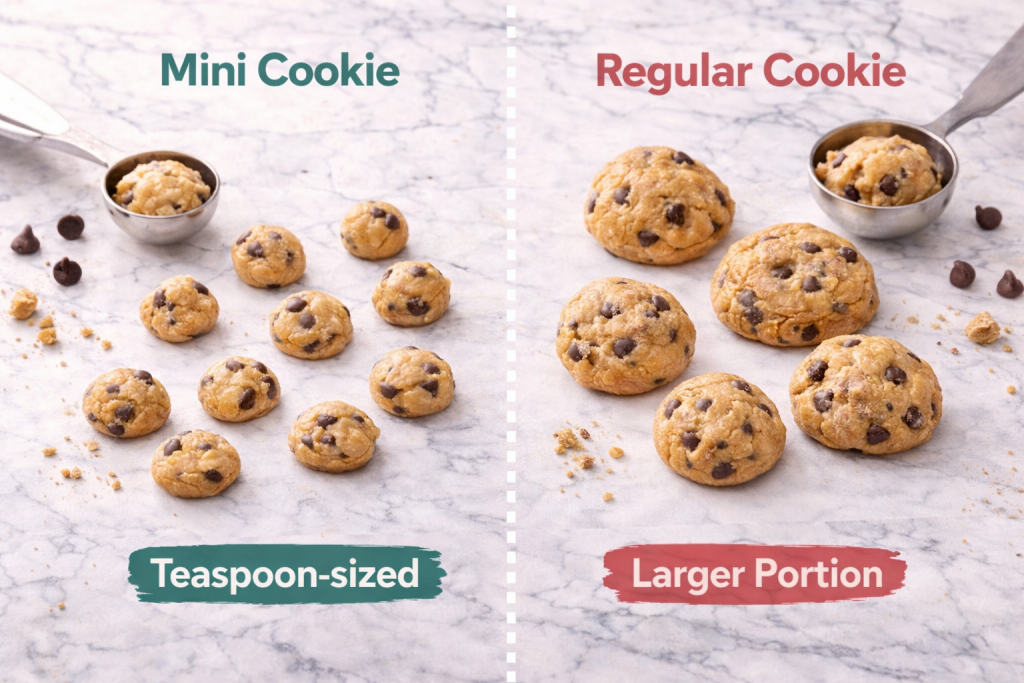
With mini cookies vs regular cookies, consistency is key.
Portioning tips:
- Use a small scoop or teaspoon
- Keep dough portions uniform
- Space cookies evenly on the baking sheet
Uneven portions can cause some bite-sized cookies to overbake while others stay underdone.
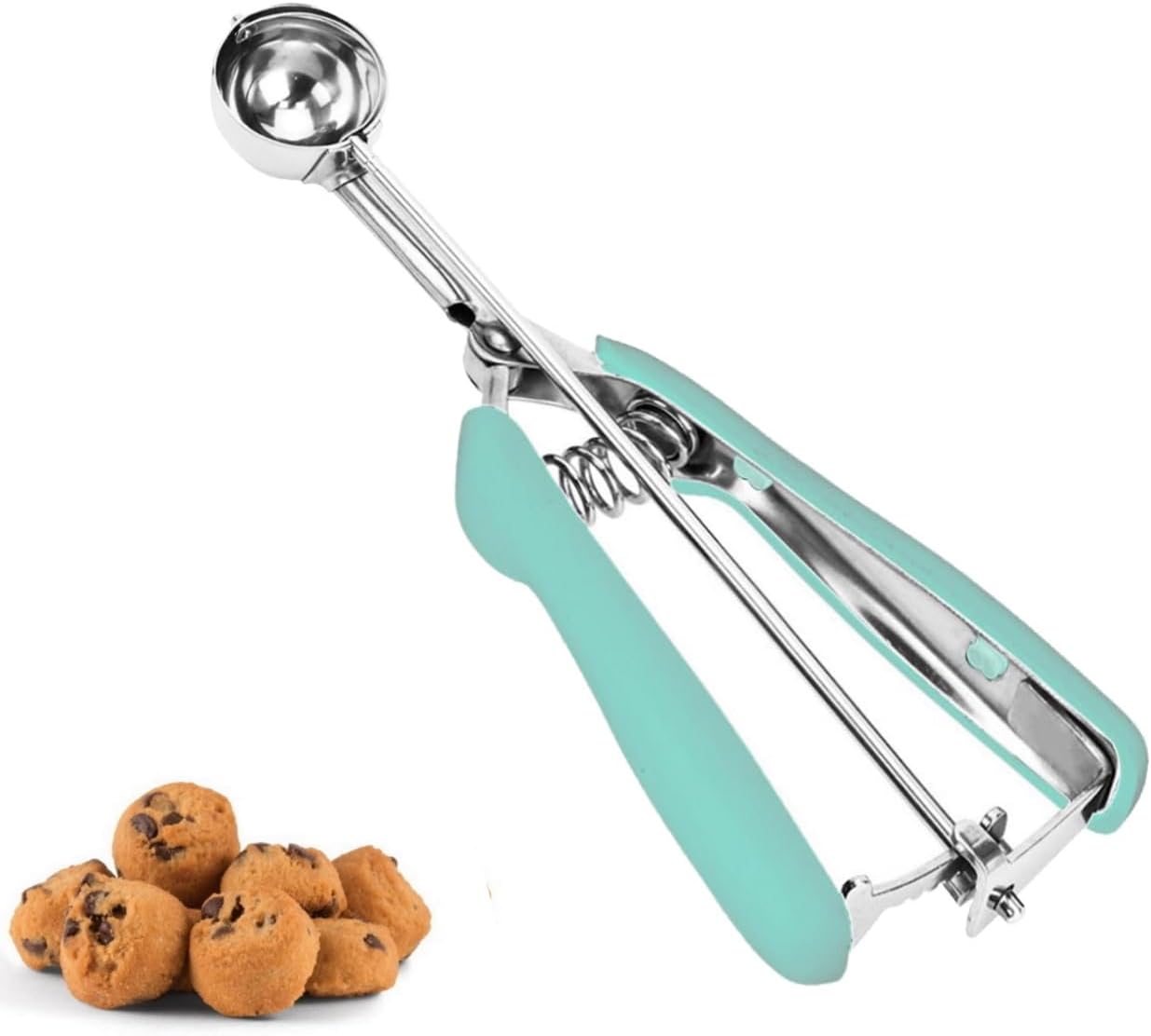
1 tsp Extra Mini Cookie Scoop
- The non-slip rubber handle makes it easy to grasp.
- Just a simple squeeze makes the cookie scoop release the dough easily and neatly
Baked Munchies earns a small commission on these links at no cost to you.
Can You Use Regular Cookie Recipes for Mini Cookies?
Yes—but with adjustments.
When making mini cookies from regular recipes:
- Reduce baking time significantly
- Watch the first batch closely
- Don’t rely solely on the recipe’s bake time
Most cookie doughs adapt well to mini sizes once timing is adjusted. This technique works especially well with soft doughs, like these mini chocolate chip cookies (soft & bakery-style).
Final Thoughts
Mini cookies and regular cookies may use the same ingredients, but they bake very differently. By understanding how size affects baking time and texture, you can use these cookie baking tips to get consistently great results—especially when working with bite-sized cookies.
If you enjoy baking smaller treats or want more control over texture, mini cookies are well worth mastering. Once baked, proper storage helps preserve texture. This guide on how to store and freeze mini cookies without drying them out explains best practices. Understanding mini cookies vs regular cookies makes it easier to adjust baking time and achieve the texture you want.
Explore more baking techniques and comparisons in our mini desserts collection.
Cookie Tools I Use


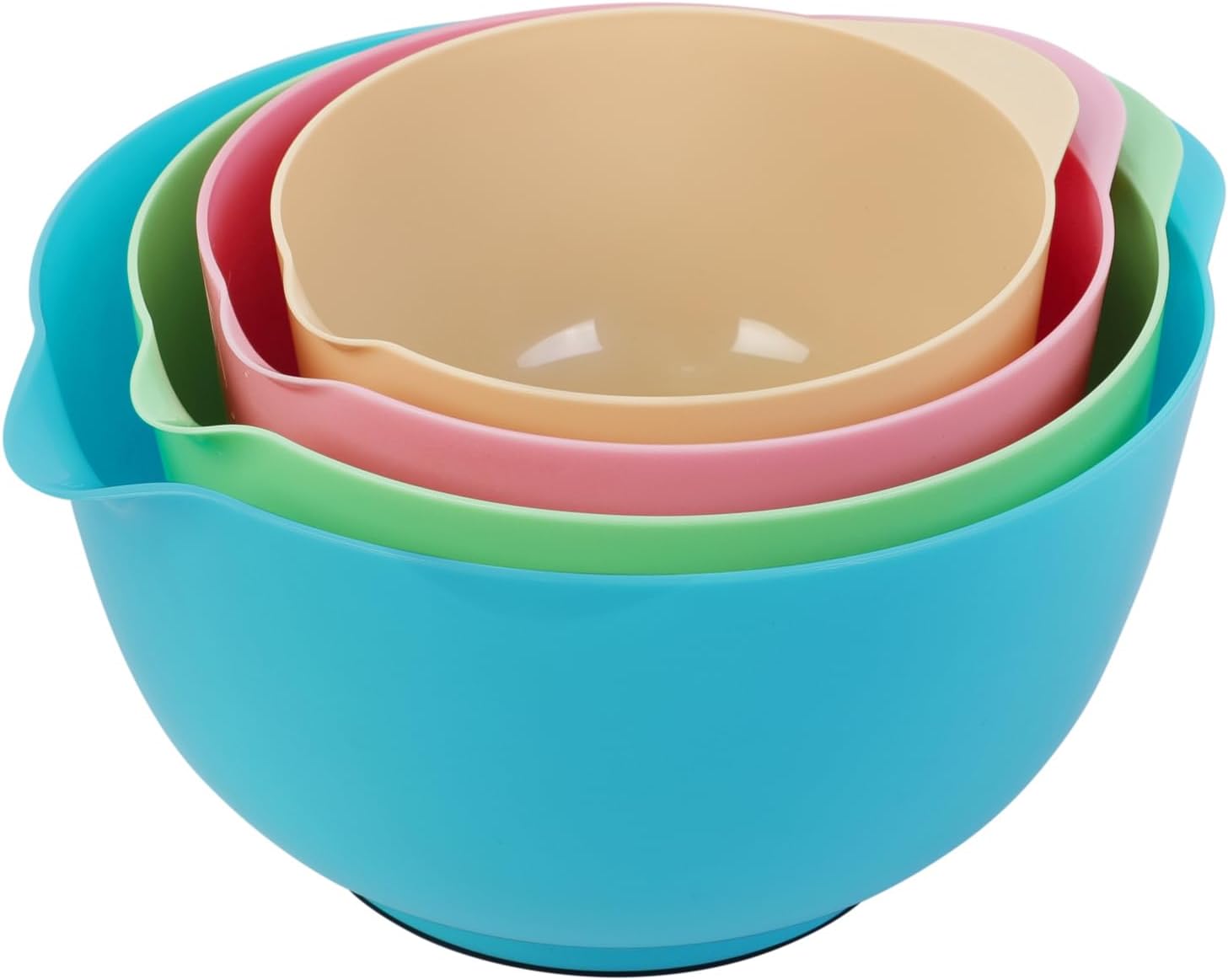
Baked Munchies earns a small commission on these links at no cost to you.