Tag: cookie baking tips

Helpful cookie baking tips covering dough preparation, oven temperature, baking time, and techniques for better cookie results.

  • Small Batch Baking Basics

    Small Batch Baking Basics

    Small batch baking is exactly what it sounds like: baking fewer treats at a time — intentionally. But it’s more than just scaling down recipes. When done right, baking smaller portions leads to better texture, less waste, and more consistent results, especially for cookies and mini desserts.

    The Right Tools Matter

    Small batch baking works best when you use tools designed for precision and control.

    If you’ve ever wanted freshly baked treats without leftovers (or pressure to eat a dozen cookies), small batch baking is the solution.
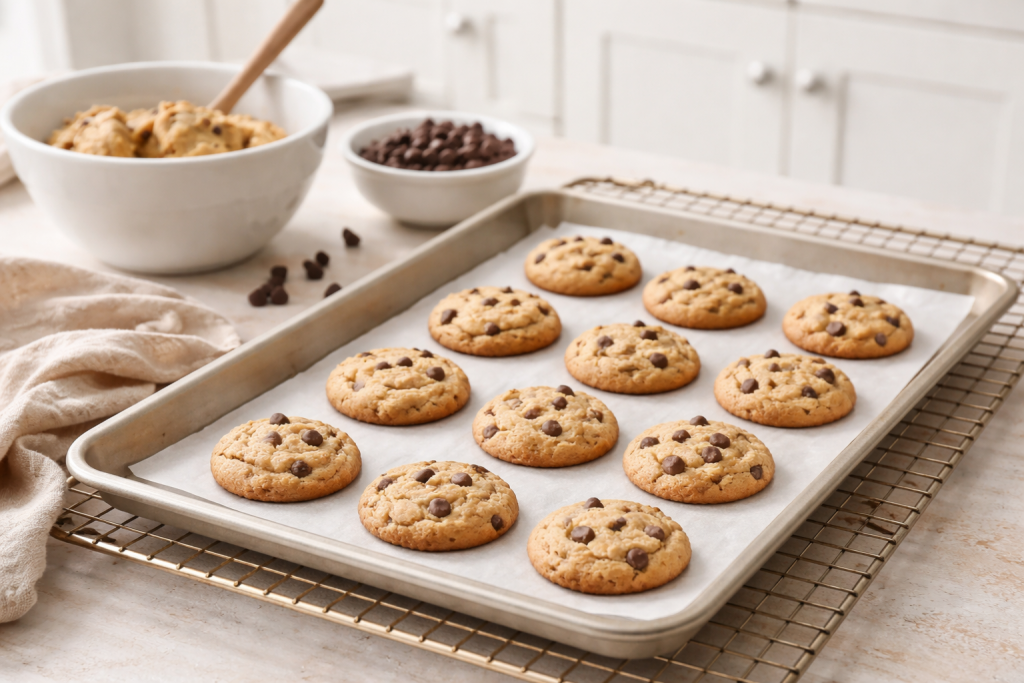
    Small batch baking setup with a few cookies cooling on a baking sheet

    What Is Small Batch Baking?

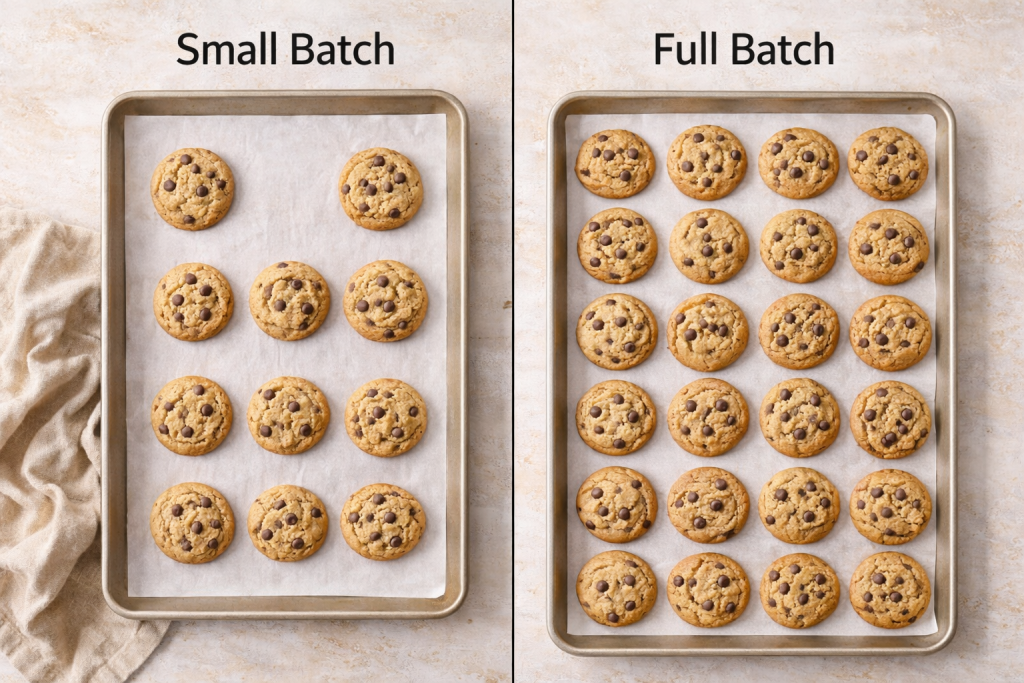
    Side-by-side comparison of a small batch of cookies versus a full batch

    Small batch baking focuses on making just enough — typically:

    • 4–8 cookies
    • A single small pan of brownies
    • A handful of mini desserts

    🍪 Smaller Batch Baking = Better Control

    Smaller batches make it easier to watch doneness, adjust timing, and avoid overbaking.

    Instead of baking for crowds, you bake for right now. The goal is freshness, control, and flexibility.

    Pricing Small Batch Baking

    Small batch baking works best when your pricing accounts for time, ingredients, and packaging.

    Panecito explains what small batch baking is and why it’s useful for home bakers.


    Why Baking in Small Amounts Works So Well
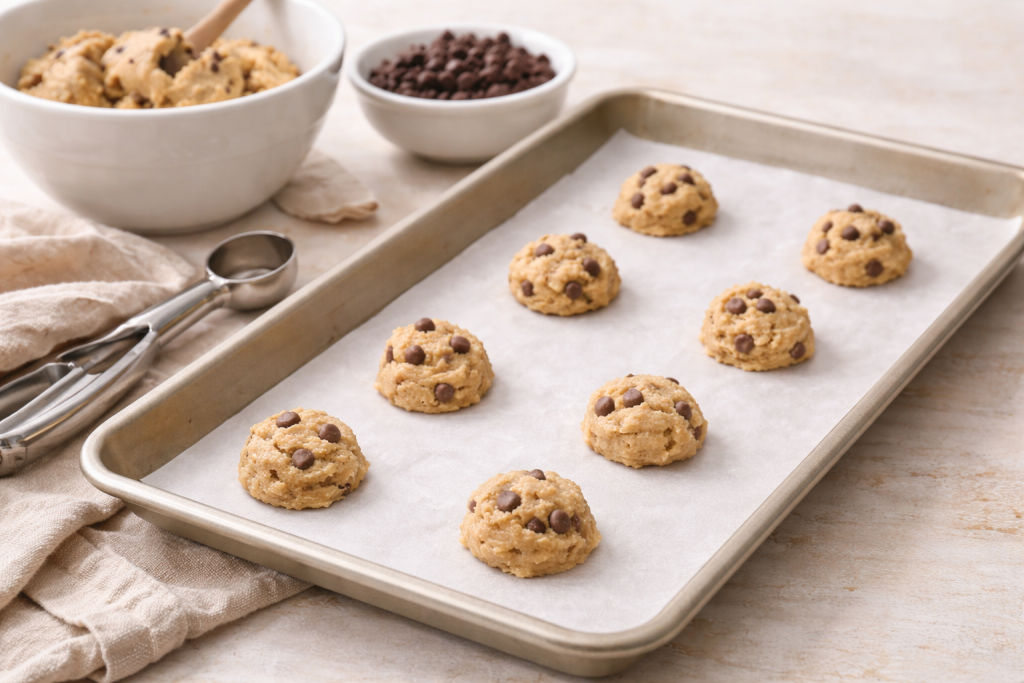
    Small batch cookie dough scooped into a few evenly sized portions

    Baking fewer treats at a time isn’t just convenient — it’s strategic. Many of the same techniques that improve small batch baking also apply when baking perfect mini cookies.

    ⏱️ Bake Time Shrinks Fast

    Small batches and mini desserts bake quicker than full recipes—start checking early.

    Benefits include:

    • Faster baking times
    • Better control over doneness
    • Easier adjustments
    • Less food waste
    • Lower ingredient cost
    • Fresher results

    Smaller batches mean you can pay closer attention to the dough, the oven, and the final texture.


    Why Baking in Small Amounts Is Perfect for Mini Desserts
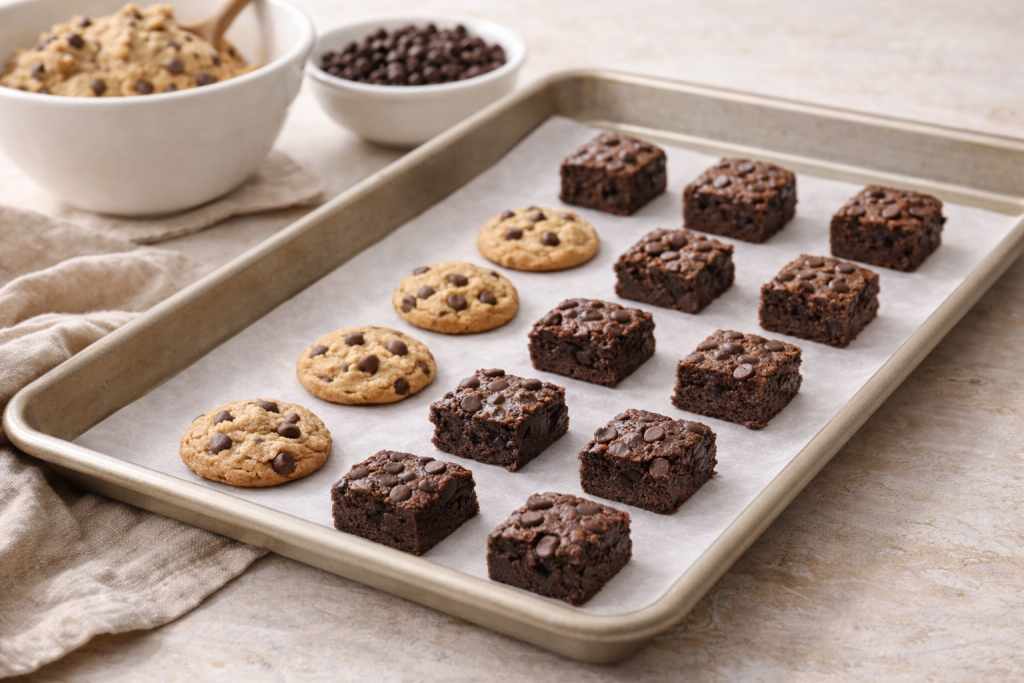
    Mini cookies and brownie bites baked in a small batch on one tray

    Mini desserts and small batch baking naturally go together.

    Oven Temp or Baking Time Off?

    Oven temperature and baking time matter even more in small batch baking, where recipes bake quickly.

    Because mini cookies and bites bake faster, small batches help you:

    • Catch doneness at the right moment
    • Avoid overbaking
    • Test recipes without committing to a full batch
    • Learn how dough behaves

    🔥 Quick Tip: Watch the Oven, Not the Clock

    Visual cues matter more than timers when baking small batches.

    This is especially helpful for beginners or anyone baking with dietary substitutions.


    How Small Batch Baking Improves Texture

    Texture is one of the biggest challenges in baking. Small batch baking helps because:

    • Dough doesn’t sit as long before baking
    • Ingredients stay at consistent temperature
    • You can adjust bake time mid-batch
    • You can pull cookies early if needed

    🧈 Key Takeaway: Freshness Improves Texture

    Baking fewer treats more often leads to softer cookies and better flavor.

    Small batches make it easier to watch doneness cues instead of relying only on bake time.

    This leads to softer cookies, fudgier brownies, and fewer dry edges.


    Common Mistakes When Baking Small Batches

    Small batch baking still has rules. Here’s what to watch for:

    • Cutting large recipes without adjusting bake time
    • Using full-size pans for tiny amounts
    • Overmixing small amounts of dough
    • Forgetting that mini portions bake faster

    Make a Test Batch

    Small batch baking helps you catch common mini cookie mistakes early, before they ruin a full batch.

    Small batch baking works best when recipes are designed to be small.

    Kitchen Supply discusses that accurate measuring is especially important when baking small batches.


    Tools That Make Small Batch Baking Easier
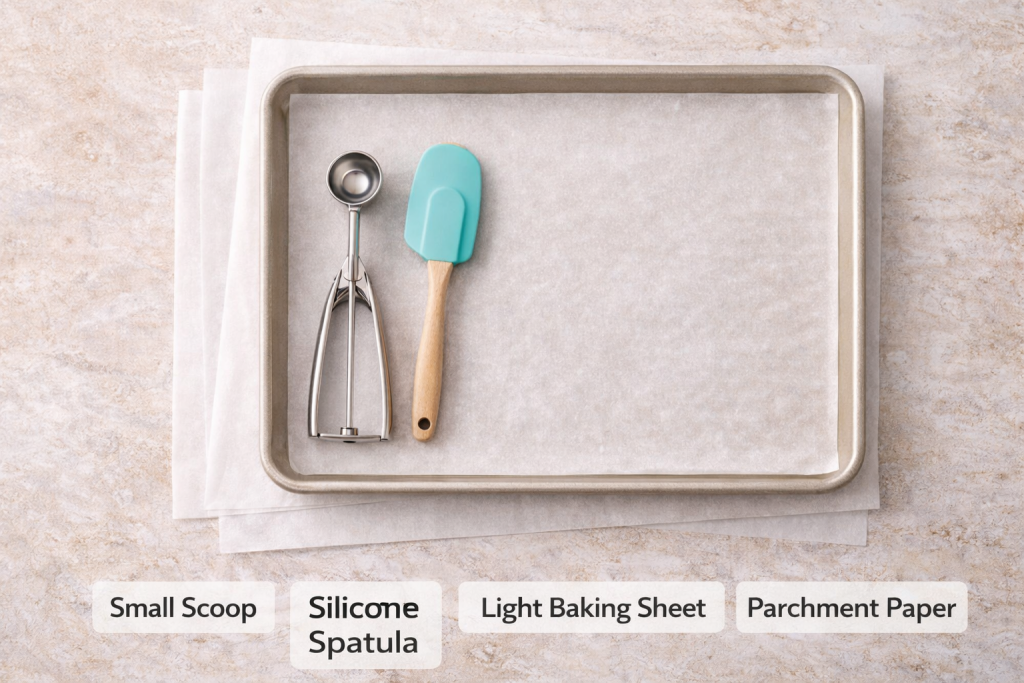
    Small baking tools including a mini cookie scoop, spatula, and baking sheet

    Using the right tools makes small batch baking more consistent, especially when working with mini cookies.

    🔧 Key Takeaway: The Right Tools Matter

    Small scoops, light-colored pans, and parchment help keep results consistent.

    You don’t need special equipment, but a few tools help:

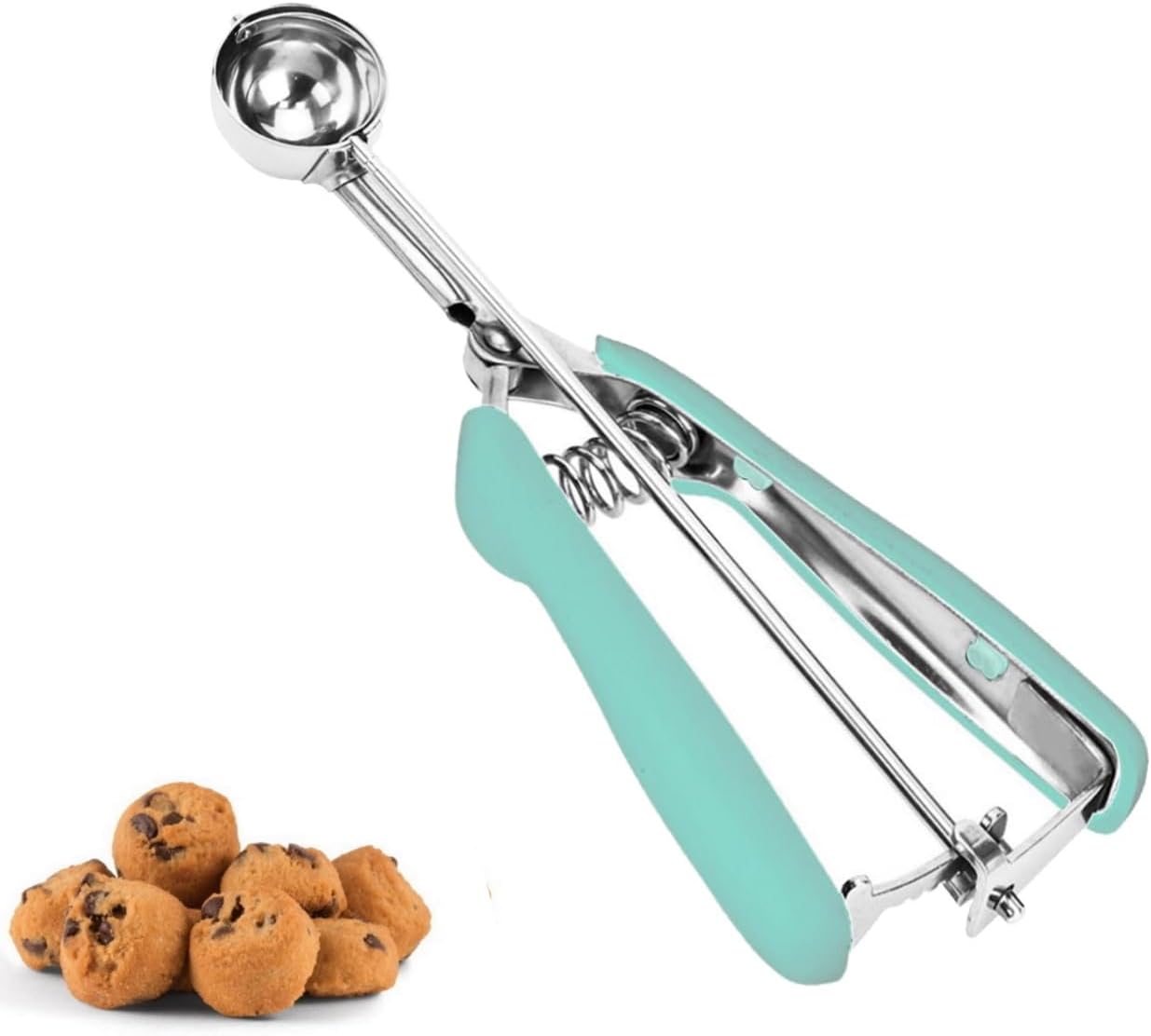
    1 tsp Extra Mini Cookie Scoop

    • The non-slip rubber handle makes it easy to grasp.
    • Just a simple squeeze makes the cookie scoop release the dough easily and neatly

    These tools help maintain consistency when working with small amounts.


    Small Batch Baking for Dietary Needs

    Small batch baking is ideal for:

    • Gluten-free baking
    • Vegan baking
    • Allergy-friendly desserts

    Need Gluten-free?

    Small batch baking works especially well for gluten-free cookies, which benefit from closer timing control.

    When ingredients behave differently, smaller batches let you test texture and timing without waste.

    That’s why small batch baking pairs so well with mini gluten-free cookies and vegan mini desserts.

    🌱 Key Takeaway: Ideal for Dietary Baking

    Small batch baking is perfect for gluten-free or vegan recipes where timing is critical.


    Small Batch Baking vs Scaling Down Recipes

    Not every recipe can simply be divided in half.

    Small batch baking works best when:

    • Ratios are preserved
    • Eggs are adjusted carefully
    • Bake time is reduced significantly
    • Pan size matches batch size

    🧠 Quick Reminder: Don’t Just Cut Recipes in Half

    Not all recipes scale evenly—ratios, eggs, and bake times often need adjustment.

    Recipes written specifically for small batches are more reliable than scaled-down versions.

    Try Yummy Vegan Mini Desserts, too!

    Vegan desserts also benefit from small batch baking, which helps maintain moisture and texture.


    When Small Batch Baking Is the Best Choice
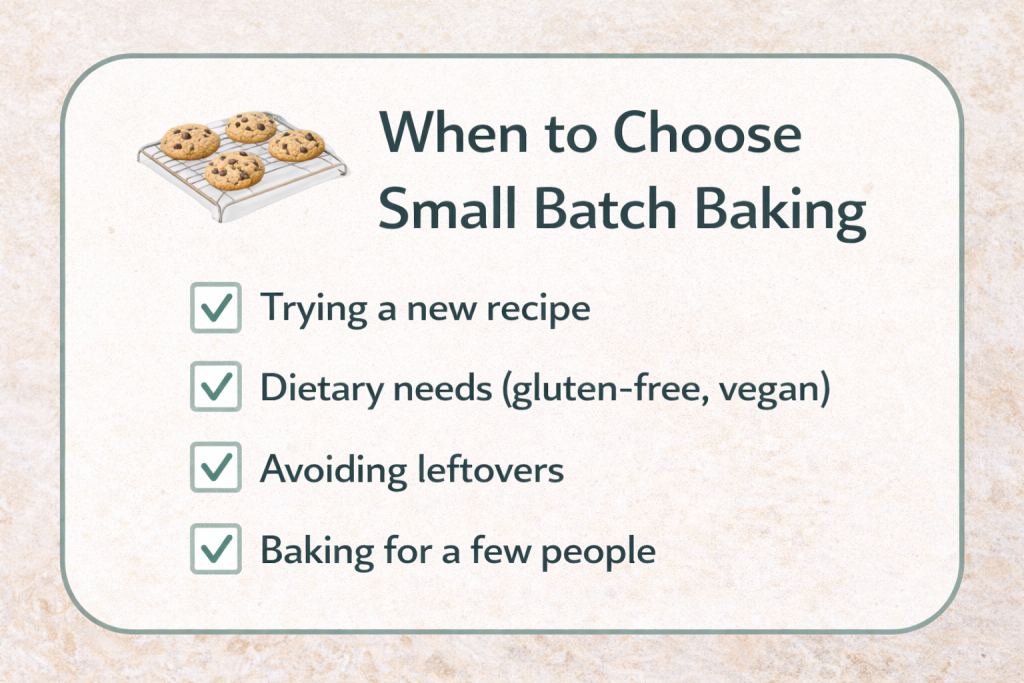
    Infographic showing when to choose small batch baking, including testing recipes and avoiding leftovers

    Small batch baking is perfect when:

    • You want fresh treats without leftovers
    • You’re testing a new recipe
    • You’re baking for one or two people
    • You’re learning new techniques
    • You want consistent results

    It’s less pressure — and often better baking.


    The Big Takeaway

    Small batch baking isn’t about baking less — it’s about baking smarter.

    🎯 Less Waste, More Learning

    Smaller batches mean fewer leftovers and faster feedback when testing recipes.

    By working in smaller amounts, you gain more control over texture, timing, and quality. That’s why small batch baking is the foundation of great mini desserts and consistently good cookies.

    Once you master the basics, you’ll find yourself baking more often — and wasting far less.

    Kitchen Tools I Use

  • Mini Gluten-Free Cookies That Actually Taste Good

    Mini Gluten-Free Cookies That Actually Taste Good

    Gluten-free cookies have a reputation — and honestly, it’s not a great one. Too dry, too crumbly, or just… off. But when they’re done right, mini gluten-free cookies can be soft, flavorful, and every bit as satisfying as traditional cookies.
    The secret? Going small.

    🍪Mini Cookies Are More Forgiving

    Mini gluten-free cookies bake faster and set sooner, which helps prevent dryness and crumbling.

    Mini cookies bake faster, hold moisture better, and make it easier to nail texture — which is exactly what gluten-free baking needs. These mini gluten-free cookies prove that gluten-free doesn’t have to mean disappointing.

    Mini gluten-free cookies stacked on a plate showing soft centers and chewy texture

    Why Mini Gluten-Free Cookies Work Better

    Gluten-free dough behaves differently than regular dough. Without gluten to provide structure, cookies can spread too much, dry out, or crumble after baking.

    Gluten free cookie dough scooped into small portions before baking

    If you’re new to baking mini cookies, this guide to baking perfect mini cookies explains the techniques that make smaller cookies easier to control.

    🧂 Salt Boosts Flavor

    Salt balances sweetness and enhances chocolate and vanilla flavors in gluten-free cookies.

    Mini cookies help solve those problems:

    • Shorter bake time means less moisture loss
    • Smaller size helps cookies set before drying out
    • Texture is easier to control
    • Less risk of overbaking
    • More forgiving for beginners

    Best Tools for Mini Cookies

    Gluten-free mini cookies benefit from precise tools that prevent overbaking.

    If you’ve struggled with gluten-free cookies before, switching to mini is a game changer. Gluten-free doughs are especially sensitive to mini cookie mistakes like overbaking and incorrect portion size.


    What Makes Gluten-Free Cookies Taste “Good”

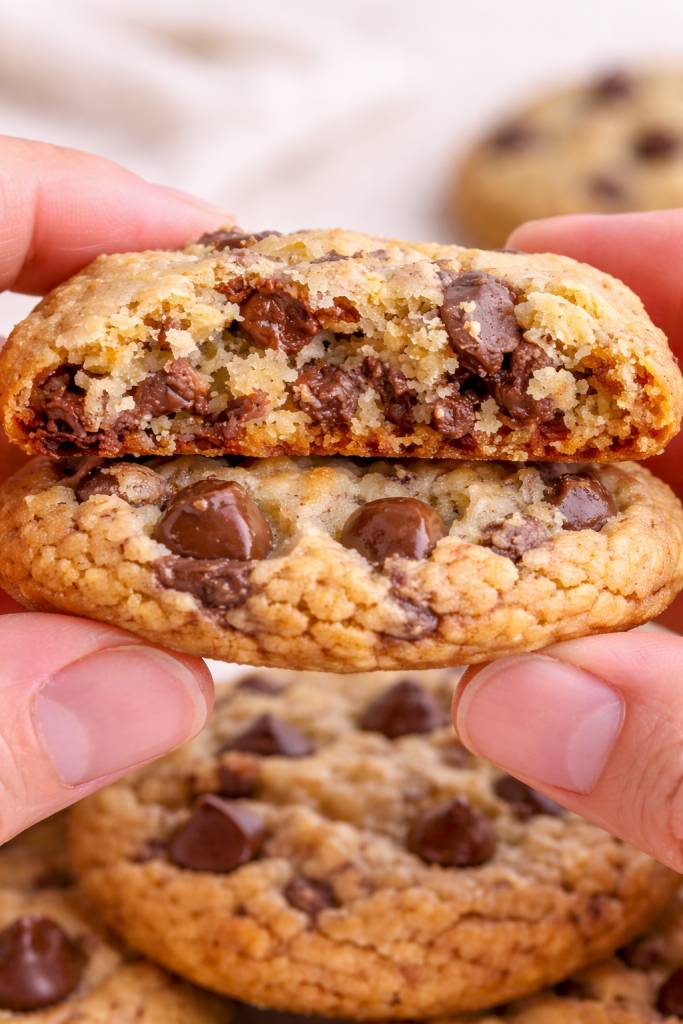
    Mini gluten free cookie broken open showing moist interior and tender crumb

    Great gluten-free cookies don’t rely on gimmicks — they rely on balance.

    The best mini gluten-free cookies focus on:

    • A high-quality gluten-free flour blend
    • Enough fat for moisture and richness
    • Proper rest time for the dough
    • Careful baking time and doneness checks

    🌾 Flour Choice Matters

    A high-quality gluten-free flour blend makes a bigger difference than any single add-in or trick.

    When these elements are right, the cookies taste like cookies — not like substitutes.

    Bob’s Red Mill Gluten Free Flour

    Choosing a reliable gluten-free flour blend helps create cookies with better structure and texture.


    Mini Gluten-Free Cookies Everyone Will Love

    🍪 Mini Gluten-Free Chocolate Chip Cookies

    Soft centers, lightly crisp edges, and plenty of chocolate. Mini size helps prevent dryness and keeps the texture just right.

    Keep Those Cookies Delicious!

    Gluten-free baking benefits from smaller batches, where timing and moisture are easier to control.


    🍫 Mini Gluten-Free Brownie Cookies

    Rich, chewy, and chocolate-forward, these cookies blur the line between brownies and cookies — in the best way.


    🥜 Gluten-Free Peanut Butter Mini Cookies

    Naturally gluten-free and packed with flavor, peanut butter cookies work beautifully in mini form.


    🍋 Mini Gluten-Free Lemon Cookies

    Bright and tender with a soft crumb, these cookies prove gluten-free baking can still feel fresh and light.


    ⏱️ Start Checking Early

    Gluten-free cookies can overbake quickly. Check for doneness a few minutes before the timer ends.

    Common Mistakes That Ruin Gluten-Free Cookies

    Many gluten-free cookie issues overlap with common mini cookie mistakes, especially overbaking and portion size.

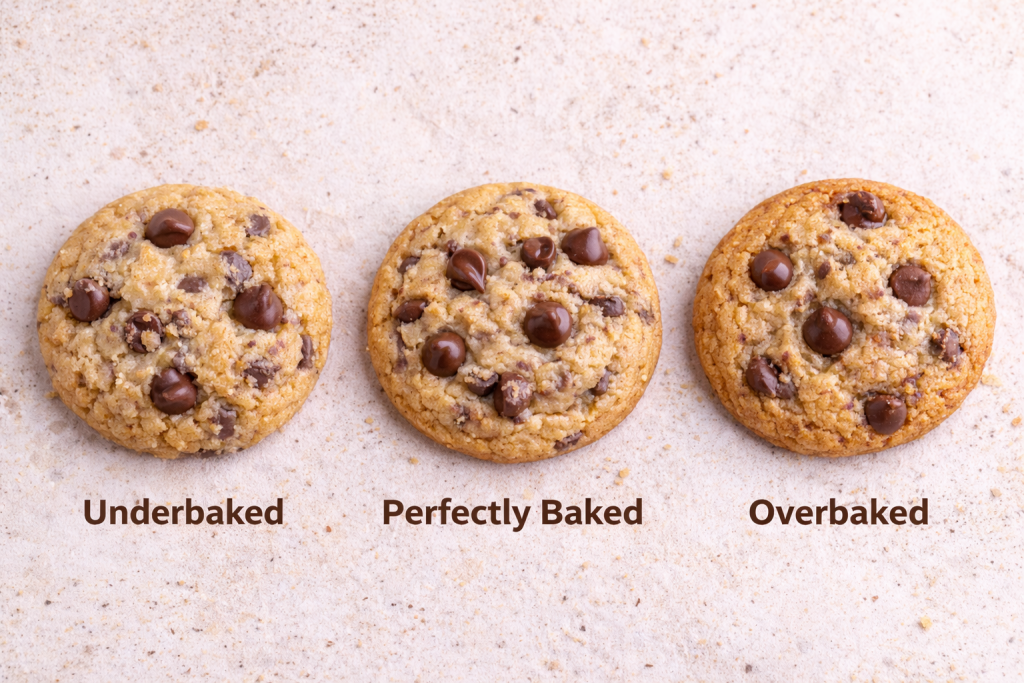
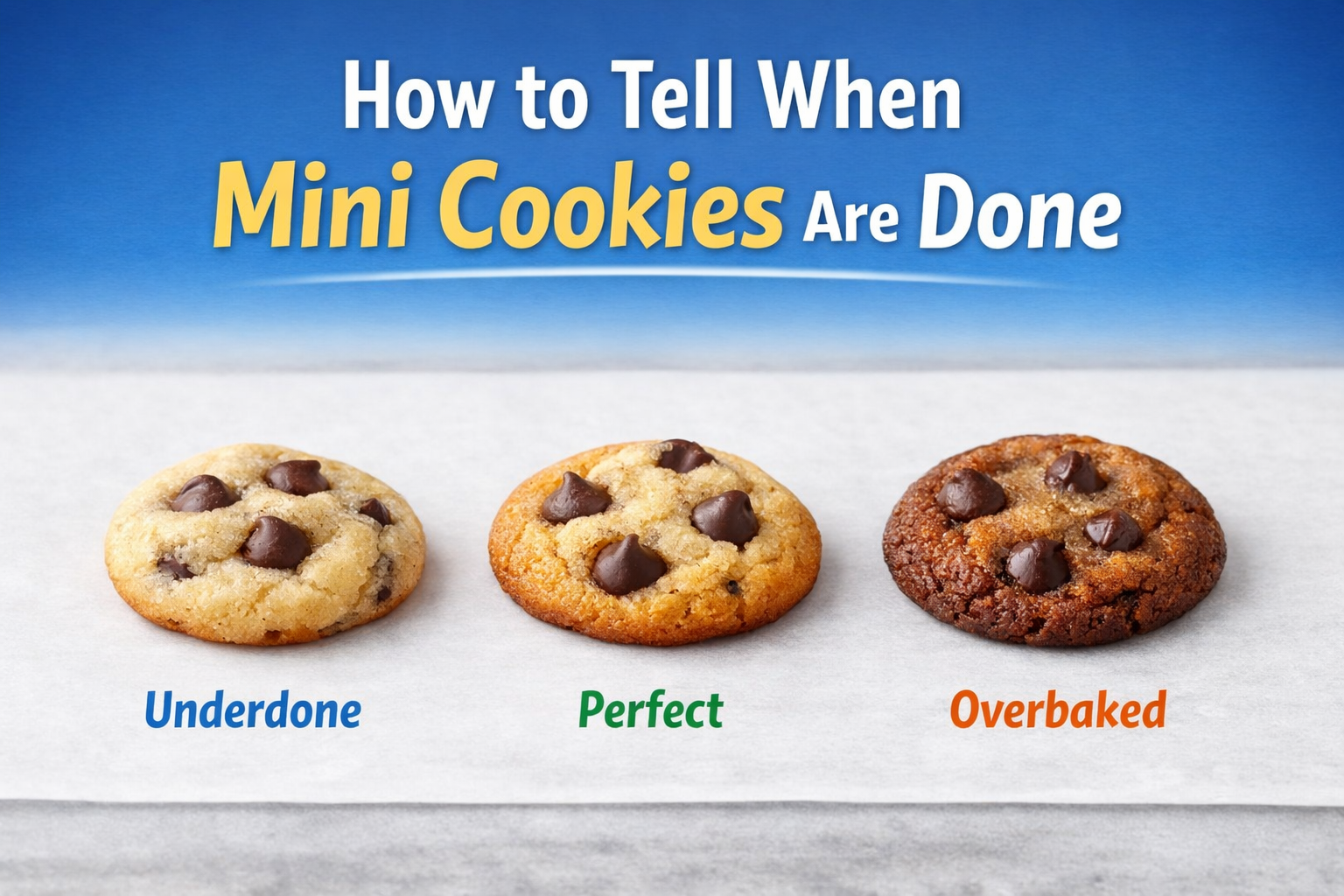
    Comparison of underbaked, perfectly baked, and overbaked mini gluten free cookies

    If gluten-free cookies haven’t worked for you in the past, one of these is usually to blame:

    • Overbaking (the most common issue)
    • Not letting the dough rest
    • Too little fat
    • Using the wrong flour blend
    • Skipping doneness cues

    🧈 Fat Keeps Cookies Soft

    Gluten-free dough needs enough fat to stay tender and flavorful. Don’t reduce it too much.

    Mini cookies reduce the impact of these mistakes, but baking time still matters.

    Also, letting cookies cool properly helps gluten-free cookies set without becoming dry.


    Tips for Baking Better Mini Gluten-Free Cookies

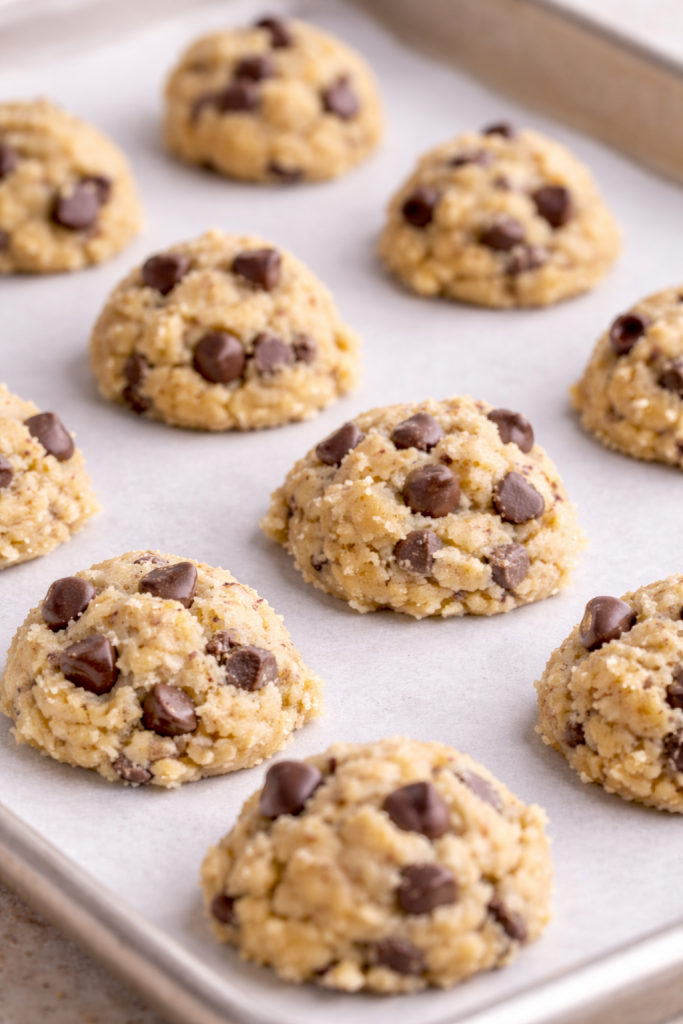
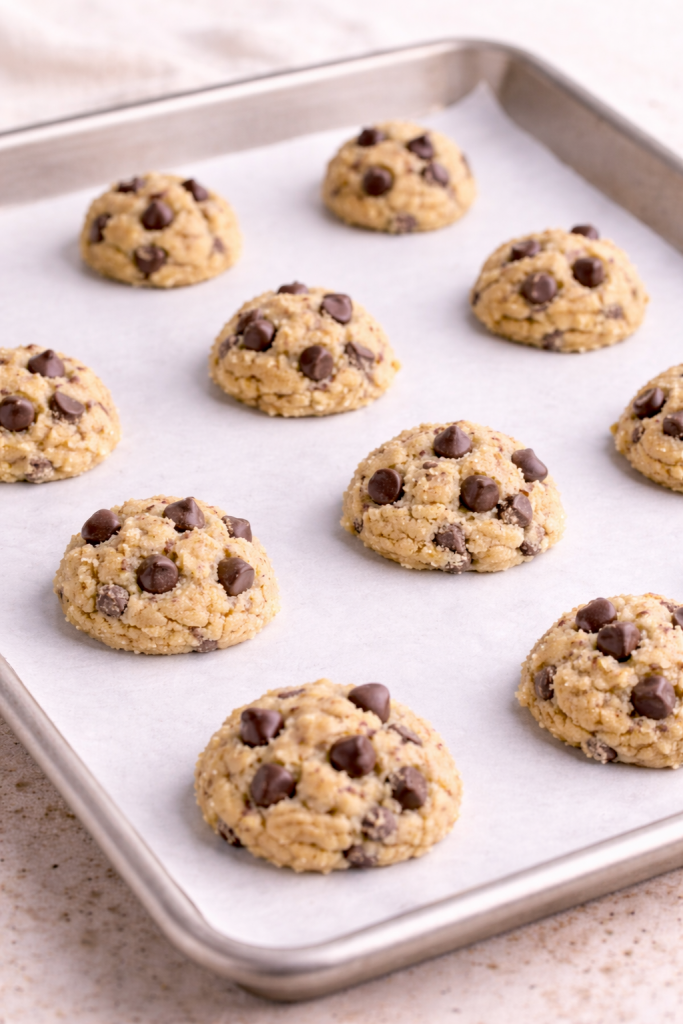
    Mini gluten free cookies spaced evenly on a lined baking sheet before baking

    Visual doneness cues matter more than bake time, especially for gluten-free cookies that can dry out quickly.

    • Always rest the dough before baking
    • Start checking for doneness early
    • Look for set edges and soft centers
    • Let cookies cool fully before judging texture
    • Store cookies airtight to prevent drying

    ❄️ Cooling Improves Texture

    Gluten-free cookies often firm up as they cool. Let them rest before judging the final texture.

    Using the right tools makes portioning and baking mini gluten-free cookies much easier.

    Gluten-free cookies often improve as they cool — patience pays off.

    King Arthur Baking explains why gluten-free baked goods can turn dry — and how to avoid it.


    Why Even Non-Gluten-Free Bakers Love These Cookies

    When done right, mini gluten-free cookies don’t feel like a compromise. They’re just good cookies — soft, flavorful, and easy to eat.

    Mini gluten free cookies stacked and ready to serve

    That’s why they’re perfect for:

    • Parties
    • Mixed-diet households
    • Gift boxes
    • Dessert boards

    Most people won’t even realize they’re gluten-free unless you tell them.

    Tiny cookies. Big baking mistakes — unless you have the right guide.

    This printable Mini Cookie Baking Cheat Sheet shows you exactly when mini cookies are done, how long to bake them, and how to fix common issues.

    Tape it inside a cabinet. Save it forever. Bake with confidence.


    Start Small for Big Results

    If gluten-free baking feels intimidating, mini cookies are the best place to start. Smaller portions mean better control, faster feedback, and consistently better results.

    👩‍🍳 Beginner Tip

    If gluten-free baking feels intimidating, mini cookies are the easiest place to start.

    Mini gluten-free cookies pair well with small batch baking, which helps improve texture and reduce waste.

    These mini gluten-free cookies prove that gluten-free baking can be just as enjoyable — and just as delicious.

    If you’re baking for multiple dietary needs, these mini vegan desserts show how small treats can still be rich and crowd-pleasing.

    🎉 Crowd-Pleaser Reminder

    Well-baked mini gluten-free cookies taste just as good as classic cookies — no announcement needed.

    Cookie Tools I Use

  • 🍪 Mini Cookies vs Regular Cookies: Baking Time & Texture Tips

    🍪 Mini Cookies vs Regular Cookies: Baking Time & Texture Tips

    If you’ve ever wondered why mini cookies bake so differently than regular cookies, you’re not imagining it. Size plays a huge role in both baking time and final texture, and understanding those differences can help you get better results every time.

    These cookie baking tips break down exactly how mini cookies vs regular cookies compare—and how to adjust your baking approach so your cookies come out soft, evenly baked, and never overdone. If you’re new to baking smaller cookies, our ultimate guide to baking perfect mini cookies explains the techniques that make bite-sized cookies bake differently.

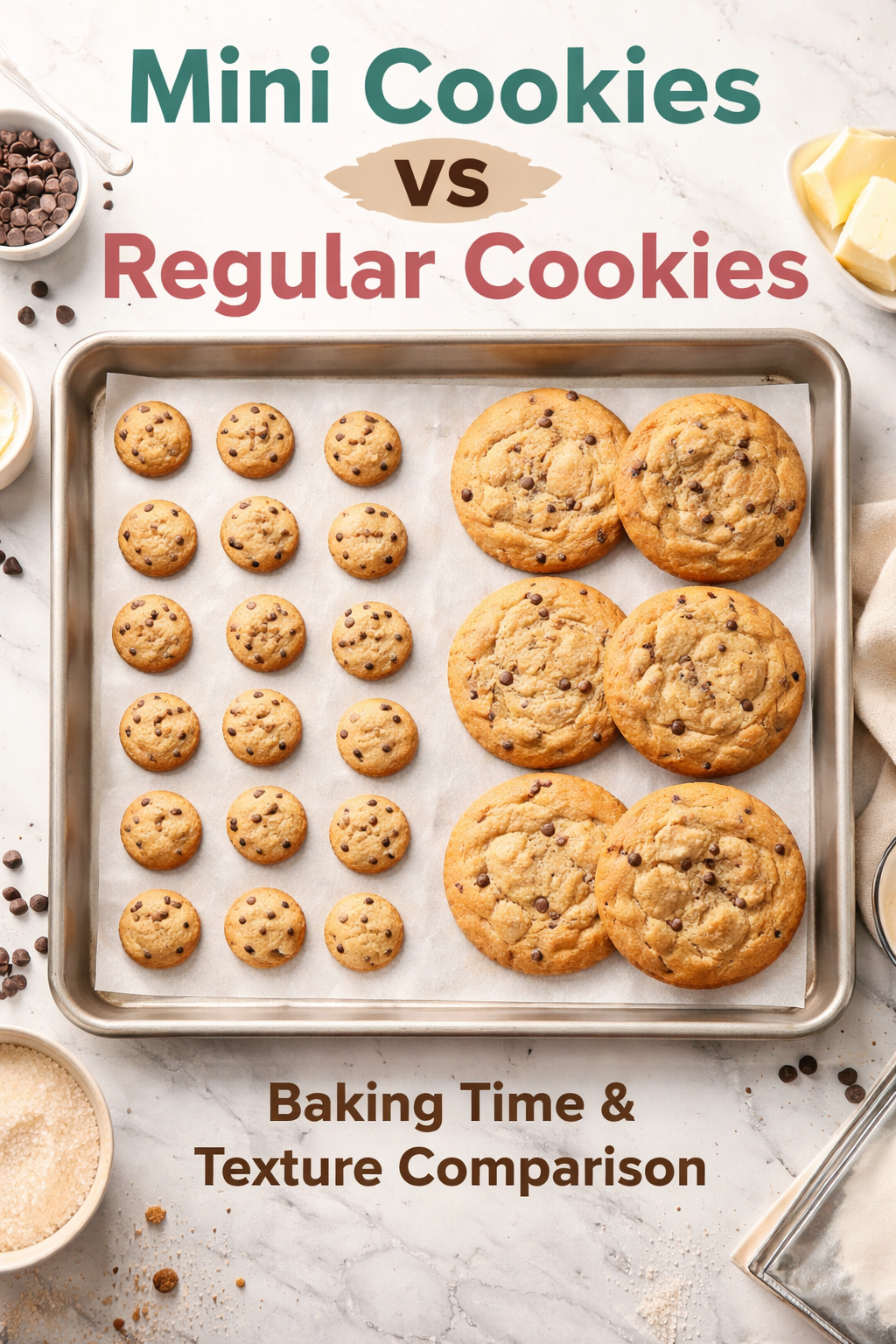
    This comparison of mini cookies vs regular cookies focuses on baking time, texture, and key differences that affect results.

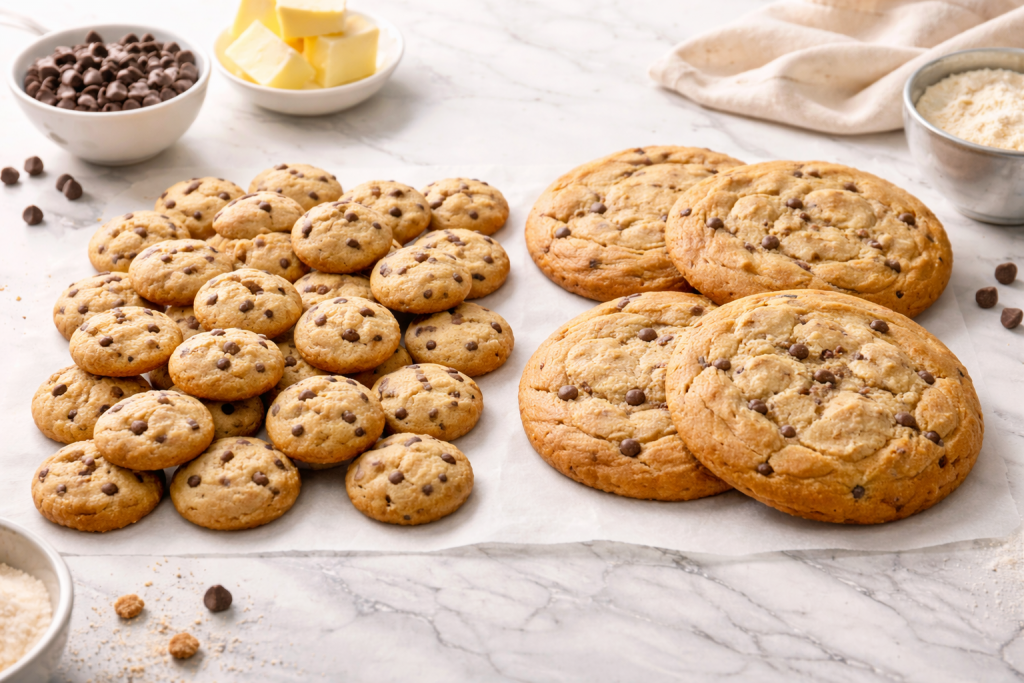
    Baked mini cookies vs regular cookies displayed side by side

    What Makes Mini Cookies Different?

    Mini cookies aren’t just smaller versions of regular cookies. Their size affects:

    • How quickly heat reaches the center
    • How moisture evaporates during baking
    • How fast edges set compared to the middle
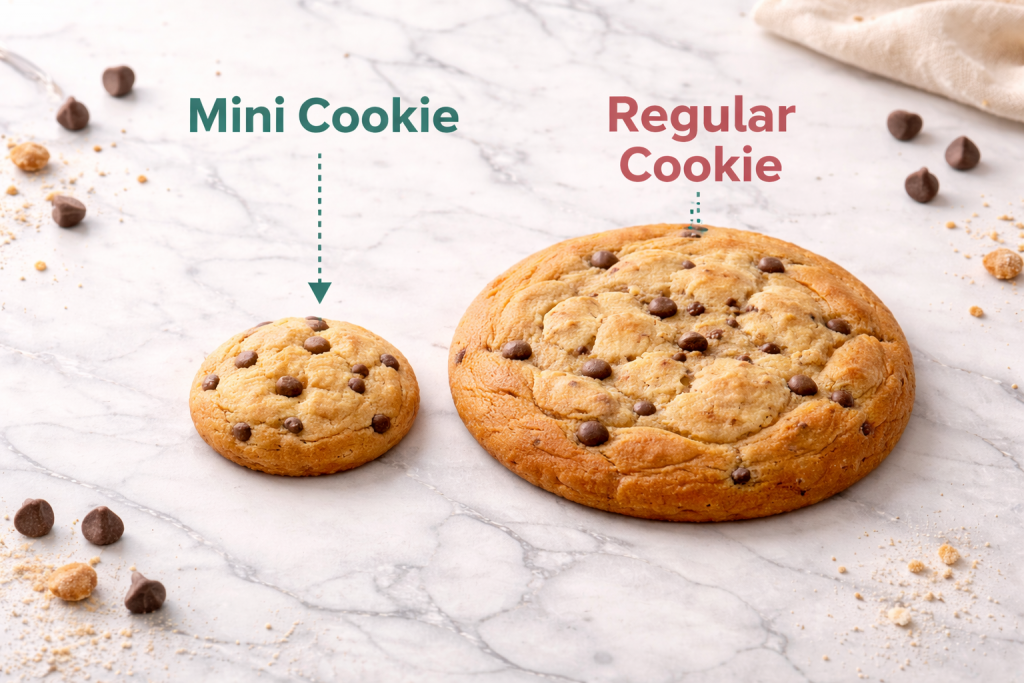
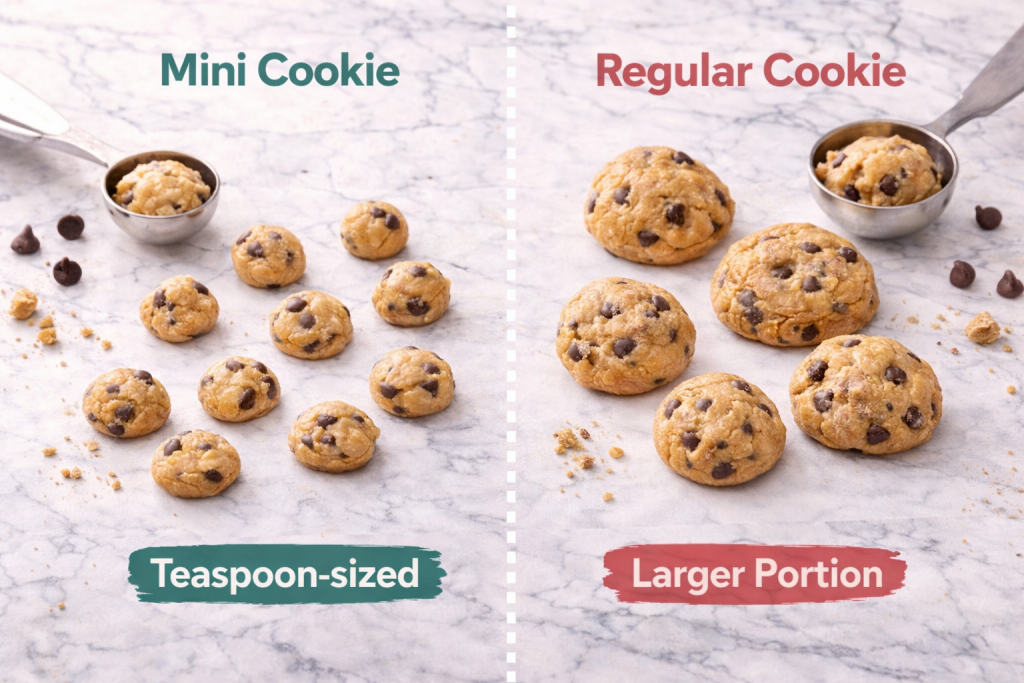
    Size comparison between a mini cookie and a regular cookie

    Because bite-sized cookies bake faster, small changes in time or temperature matter more than they do with larger cookies.


    Baking Time: Mini Cookies vs Regular Cookies

    One of the biggest differences between mini cookies and regular cookies is baking time.

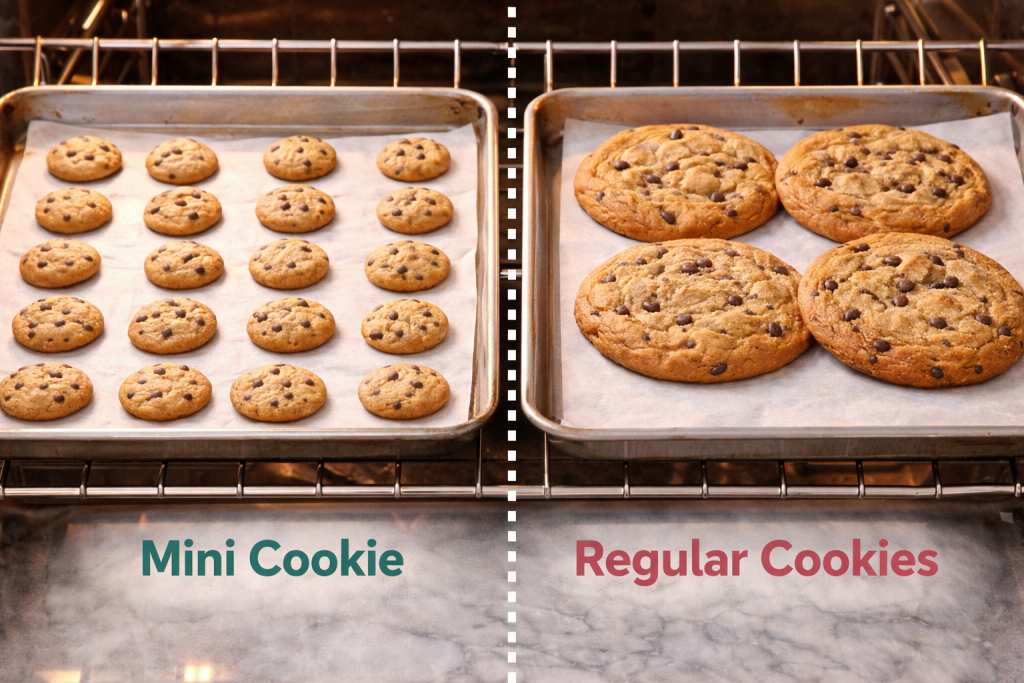
    Mini cookies and regular cookies baking on separate sheets in the oven

    Typical Baking Times

    • Mini cookies: 6–9 minutes
    • Regular cookies: 10–14 minutes

    For more detailed timing guidance, this breakdown of oven temperature and baking time for mini cookies shows how small changes affect results.

    Bite-sized cookies can go from underbaked to overbaked very quickly, so staying close to the oven during the final minutes is important.

    According to baking science experts, smaller cookies bake faster because heat reaches the center more quickly than in larger cookies.


    How Texture Changes with Size

    Cookie size directly impacts texture.

    Mini Cookies Tend to Be:

    • Slightly crisper on the outside
    • Softer in the center when baked correctly
    • More consistent across the batch

    Regular Cookies Tend to Have:

    • Thicker, softer centers
    • More contrast between edges and middle
    • Longer bake times that allow flavors to develop more slowly

    Neither is better—it just depends on the texture you’re aiming for.

    Cookie texture depends on baking time, sugar ratios, and moisture loss during baking.


    Temperature Tips for Baking Bite-Sized Cookies

    Lowering the oven temperature slightly can help bite-sized cookies bake more evenly.

    🍪 Taylor Precision Oven Thermometer

    Ensures accurate oven temperature so mini cookies don’t overbake too quickly.

    Helpful cookie baking tips:

    • Use the same temperature as regular cookies, but watch closely
    • If edges brown too fast, lower oven temp by 10–15°F
    • Always preheat fully before baking

    Even a small temperature difference can affect mini cookies more than regular ones.


    How to Tell When Mini Cookies Are Done

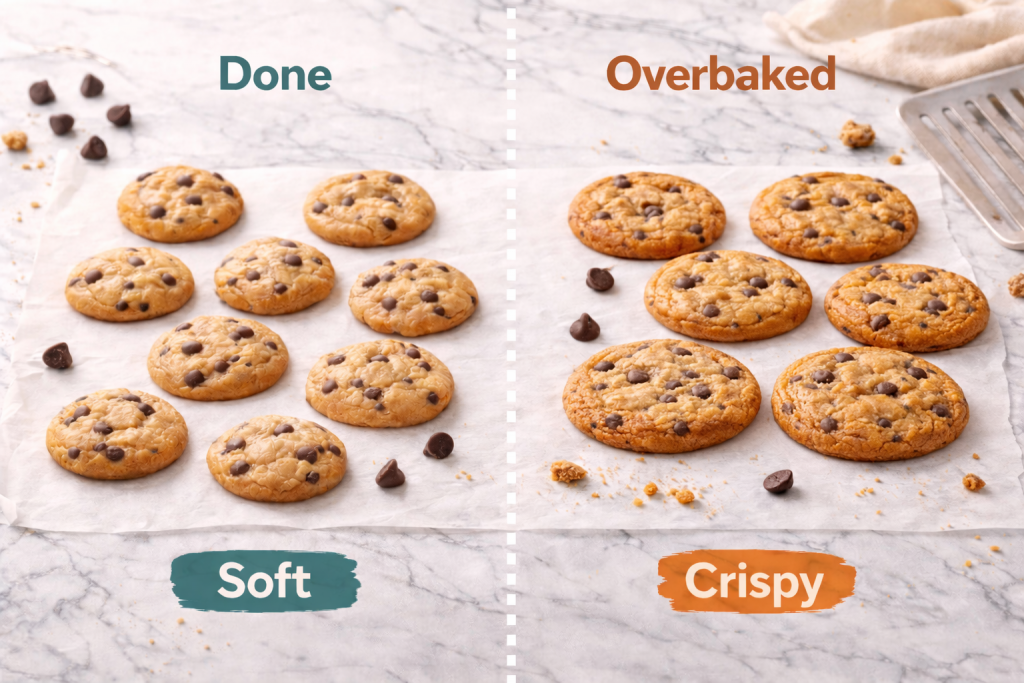
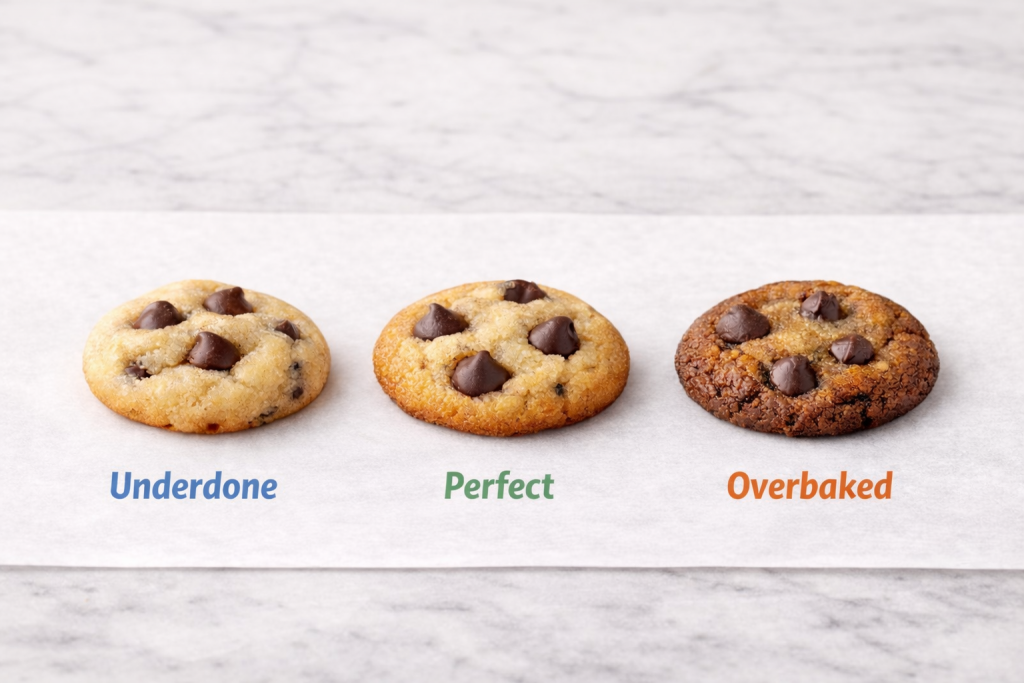
    Mini cookies showing correct doneness and overbaked texture

    Because bite-sized cookies bake quickly, visual cues matter more than time alone.

    Look for:

    • Set edges with a light golden color
    • Slight softness in the center
    • Cookies that stop spreading

    If you wait until bite-sized cookies look fully baked on top, they’re often already overdone. Visual cues matter more than the clock with smaller cookies. This guide on how to tell when mini cookies are done walks through what to look for.

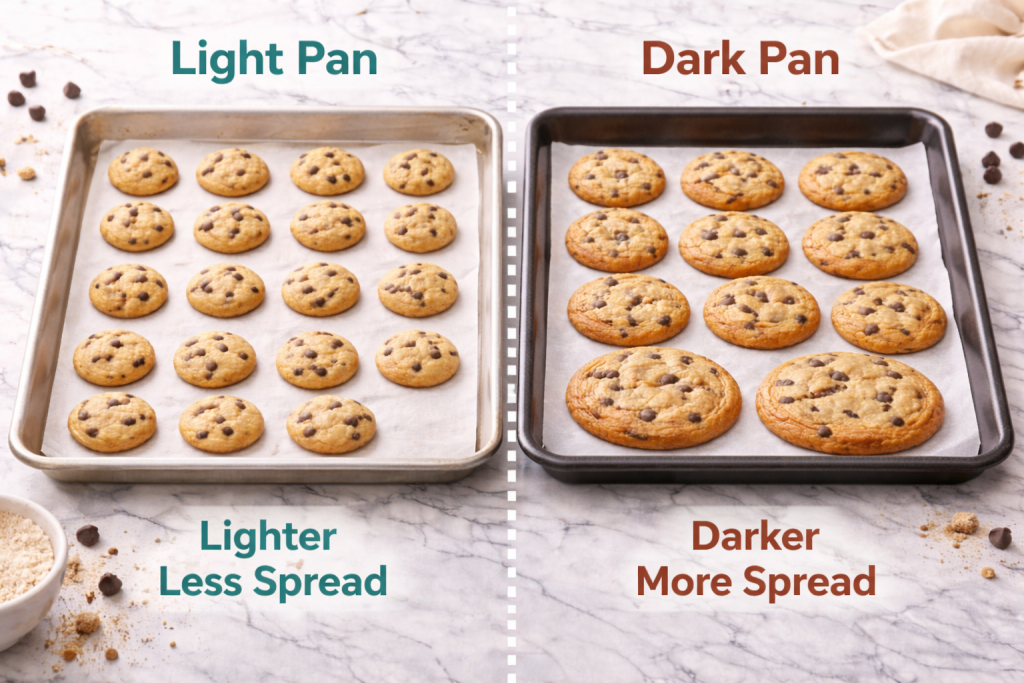
    Oven temperature and pan material play a major role in how cookies spread and brown.


    Why Pan Choice Matters More for Mini Cookies

    Mini cookies baked on light and dark baking sheets

    Smaller cookies respond faster to heat from the pan.

    For best results:

    • Use light-colored baking sheets to help bite-sized cookies bake evenly without overbrowning.
    • Avoid dark pans that brown too quickly
    • Let pans cool between batches

    This helps bite-sized cookies bake evenly without overbrowning the bottoms.


    Dough Portioning Makes a Bigger Difference

    Mini cookie dough portions compared to regular cookie dough portions

    With mini cookies vs regular cookies, consistency is key.

    Portioning tips:

    • Use a small scoop or teaspoon
    • Keep dough portions uniform
    • Space cookies evenly on the baking sheet

    Uneven portions can cause some bite-sized cookies to overbake while others stay underdone.

    1 tsp Extra Mini Cookie Scoop

    • The non-slip rubber handle makes it easy to grasp.
    • Just a simple squeeze makes the cookie scoop release the dough easily and neatly

    Can You Use Regular Cookie Recipes for Mini Cookies?

    Yes—but with adjustments.

    When making mini cookies from regular recipes:

    • Reduce baking time significantly
    • Watch the first batch closely
    • Don’t rely solely on the recipe’s bake time

    Most cookie doughs adapt well to mini sizes once timing is adjusted. This technique works especially well with soft doughs, like these mini chocolate chip cookies (soft & bakery-style).


    Final Thoughts

    Mini cookies and regular cookies may use the same ingredients, but they bake very differently. By understanding how size affects baking time and texture, you can use these cookie baking tips to get consistently great results—especially when working with bite-sized cookies.

    If you enjoy baking smaller treats or want more control over texture, mini cookies are well worth mastering. Once baked, proper storage helps preserve texture. This guide on how to store and freeze mini cookies without drying them out explains best practices. Understanding mini cookies vs regular cookies makes it easier to adjust baking time and achieve the texture you want.

    Explore more baking techniques and comparisons in our mini desserts collection.

    Cookie Tools I Use

  • 🍪 Can You Freeze Mini Cookie Dough? (Yes — and Here’s How)

    🍪 Can You Freeze Mini Cookie Dough? (Yes — and Here’s How)

    Freezing cookie dough is one of the easiest ways to enjoy fresh-baked cookies without making a full batch every time. And yes — mini cookie dough freezes beautifully. If you’ve ever wondered whether you can freeze mini cookie dough and still get great results, this guide walks you through exactly how to do it.

    Mini cookie dough behaves a little differently than full-size dough because of portion size and bake time. If you’re new to mini baking, our ultimate guide to baking perfect mini cookies covers the basics before you freeze or bake.

    Whether you want to bake ahead, save leftovers, or keep dough on hand for small batches, this guide will walk you through exactly how to freeze mini cookie dough, how long it lasts, and how to bake it straight from the freezer.

    Portion to freeze mini cookie dough balls arranged on parchment paper on a kitchen counter

    Using a teaspoon-sized cookie scoop helps portion mini cookie dough evenly, which makes freezing and baking much more consistent.


    ❄️ Why Freezing Mini Cookie Dough Works So Well

    Mini cookie dough is ideal for freezing because:

    • Portions are already small
    • Dough freezes quickly and evenly
    • You can bake just a few cookies at a time

    Freezing also helps control spreading, which is especially helpful when baking mini cookies.


    Why It Matters

    Freezing mini cookie dough gives you flexibility. You can bake a handful of cookies whenever you want without committing to a full batch.


    🧊 How to Freeze Mini Cookie Dough (Step-by-Step)

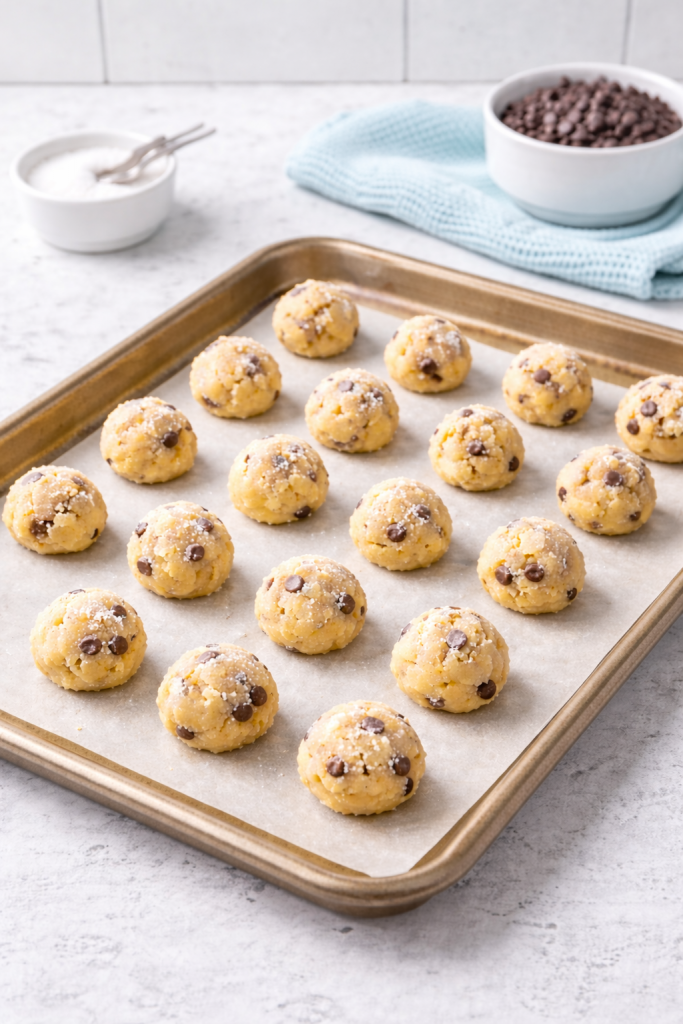
    Lining your baking sheet with parchment paper prevents dough from sticking and makes transferring frozen dough much easier.

    Teaspoon-sized mini cookie dough balls spaced on a baking sheet before freezing

    How to Freeze Mini Cookie Dough the Right Way

    To freeze mini cookie dough successfully, it’s important to portion the dough before freezing so it bakes evenly later.

    1️⃣ Portion the Dough First

    Scoop dough into teaspoon-sized portions before freezing. This makes baking later much easier.

    2️⃣ Freeze Until Solid

    Place dough balls on a parchment-lined baking sheet and freeze until firm, about 1–2 hours.

    3️⃣ Transfer to Storage

    Once frozen, move dough balls to:

    • A freezer-safe bag, or
    • An airtight container

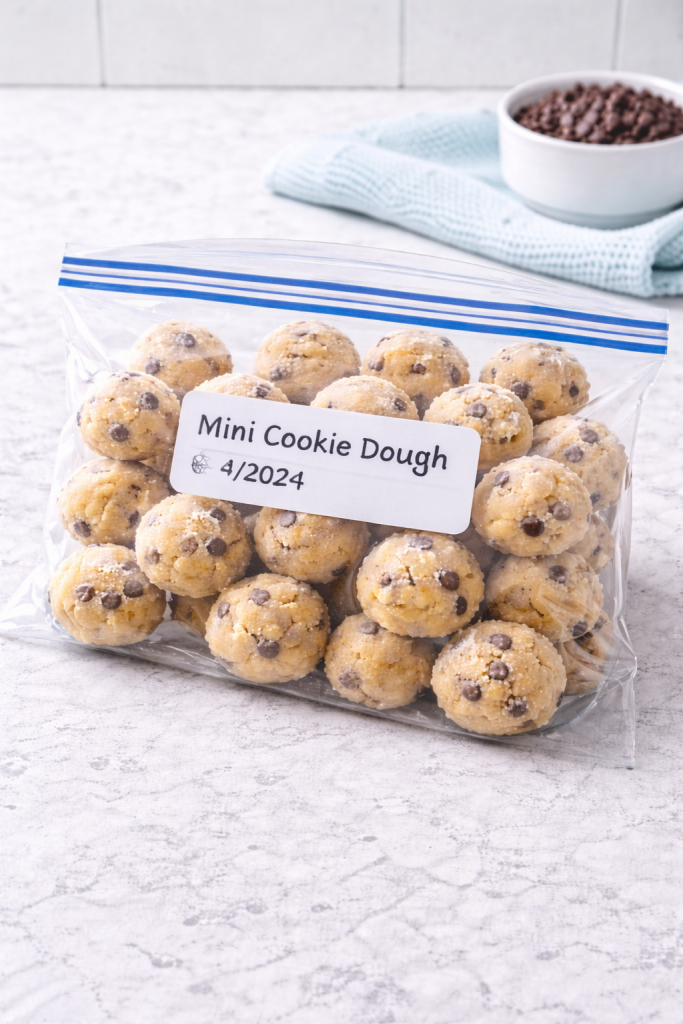
    Label with the date and cookie type.

    According to the USDA, freezing at 0 °F (-18 °C) or lower keeps food safe indefinitely, though quality may decline over time. Their food safety basics explain how freezing halts bacterial growth and preserves foods.


    Common Freezing Mistakes:

    • Freezing dough without portioning first
    • Storing dough in non-freezer-safe bags
    • Thawing dough completely before baking
    • Forgetting to label storage containers

    Quick Tip

    Freeze dough portions in a single layer first. This prevents them from sticking together in storage.


    ⏱️ How Long Can You Freeze Mini Cookie Dough?

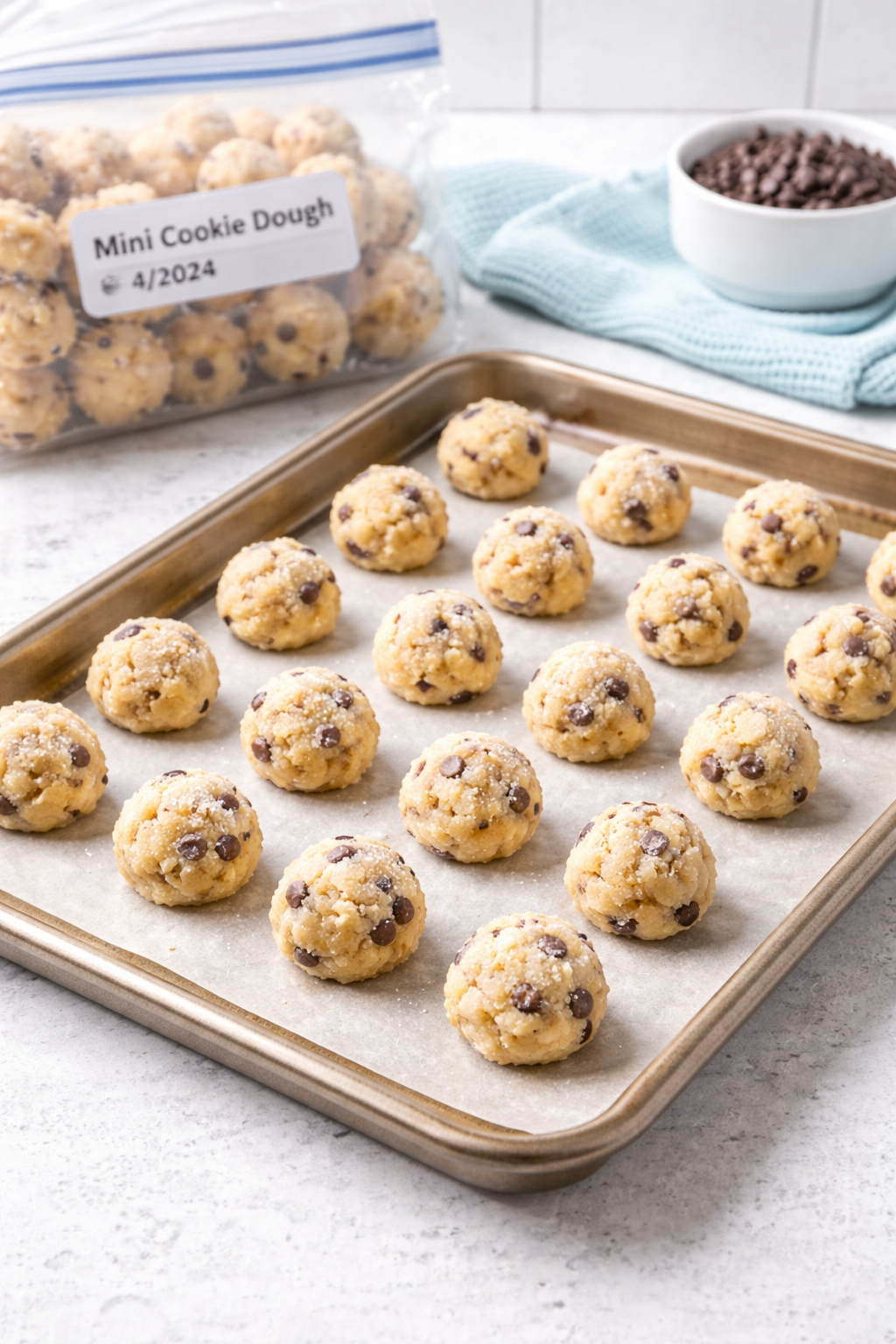
    Store frozen dough in freezer-safe bags or airtight containers to prevent freezer burn and keep dough fresh longer.

    Frozen mini cookie dough stored in a labeled freezer-safe bag

    Mini cookie dough keeps well in the freezer for:

    • Up to 3 months for best quality
    • Up to 6 months if well sealed

    For the best texture and flavor, bake within the first few months.

    Once you know how to freeze mini cookie dough properly, it becomes easy to keep fresh cookies ready for small batches or last-minute baking.

    FoodSafety.gov provides a freezer storage chart that shows recommended storage times for foods based on quality, which helps when deciding how long to keep cookie dough or baked goods frozen.


    Mini Cookie Dough Freezing Checklist:

    • Portion dough into teaspoon-sized balls
    • Freeze in a single layer until solid
    • Transfer to freezer-safe storage
    • Label with date and cookie type
    • Bake directly from frozen for best results

    🔥 How to Bake Mini Cookies From Frozen Dough

    Baking frozen dough on light-colored baking sheets helps mini cookies bake evenly without overbrowning the bottoms.

    Frozen mini cookie dough balls placed on a baking sheet ready to bake

    You can bake mini cookie dough straight from the freezer — no thawing required.

    Here’s how:

    • Preheat oven as usual
    • Place frozen dough balls on a lined baking sheet
    • Add 1–2 extra minutes to the bake time

    Watch the cookies closely and use visual doneness cues rather than time alone.


    Common Mistake

    Letting frozen dough thaw completely can cause mini cookies to spread too much. Baking from frozen usually gives better results.


    👀 How to Tell When Frozen Mini Cookies Are Done

    Frozen dough cookies are done when:

    • Edges are set and lightly golden
    • Centers still look soft and slightly pale
    • Cookies hold their shape

    👉 For a full visual guide, see How to Tell When Mini Cookies Are Done.


    🍪 Does Freezing Affect Cookie Texture?

    Freezing dough does not hurt cookie texture when done properly. In fact, many bakers find that chilled or frozen dough:

    • Improves flavor
    • Creates thicker cookies
    • Produces more even baking

    This is especially helpful for mini cookies.


    🧁 Best Cookies to Freeze as Mini Dough

    Most mini cookie doughs freeze well, including:

    • Chocolate chip
    • Sugar cookies
    • Brown butter cookies

    Can mini cookie dough be frozen with mix-ins?

    Yes. Mini cookie dough with chocolate chips or similar mix-ins freezes well. Avoid freezing dough with delicate toppings that don’t hold up in the freezer.

    Do I need to thaw mini cookie dough before baking?

    No. Mini cookie dough can be baked straight from frozen. Simply add 1–2 minutes to the baking time and watch closely for doneness.

    Does freezing cookie dough change the texture?

    Freezing typically does not harm texture. In many cases, frozen dough bakes thicker and more evenly than fresh dough.

    👉 Try this method with our Mini Chocolate Chip Cookies (Soft & Bakery-Style) to practice.

    Ready to use these freezing tips? Try them with our Mini Chocolate Chip Cookies (Soft & Bakery-Style) to see how frozen mini cookie dough bakes up perfectly every time.

    The CDC outlines basic food safety steps including proper refrigerator/freezer temperatures and handling tips that can help prevent foodborne illness when working with dough and baked desserts.


    🍪 Final Thoughts

    Freezing mini cookie dough is an easy way to enjoy fresh cookies without extra effort. By portioning dough first and baking from frozen, you’ll get consistent results and perfectly baked mini cookies whenever you want them.

    If you bake in small batches or love having cookies ready on demand, freezing mini cookie dough is a technique worth using. Learning how to freeze mini cookie dough is a simple technique that makes baking mini cookies more flexible and convenient.


    Helpful Tools for Freezing Mini Cookie Dough

    Tools that make freezing and baking mini cookie dough easier:


  • 🍪 How to Tell When Mini Cookies Are Done

    🍪 How to Tell When Mini Cookies Are Done

    Mini cookies bake fast — sometimes faster than you expect. Because they’re smaller than regular cookies, they can go from perfectly soft to overbaked in a matter of minutes. How to tell when mini cookies are done can be tricky, especially because they bake much faster than full-size cookies.

    If you’ve ever wondered whether your mini cookies are underbaked or already overdone, this guide will show you exactly what to look for. Knowing how to tell when mini cookies are done helps prevent overbaking and keeps cookies soft and chewy. You’ll learn the visual cues, texture signs, and timing tips that help you pull mini cookies from the oven at just the right moment.

    Don’t Pull Mini Cookies Too Late!

    Many doneness issues come from simple mini cookie mistakes, especially pulling cookies too late.

    Mini cookies bake differently than full-size cookies, which is why understanding the basics of dough size, temperature, and timing matters. If you’re new to mini baking, start with our ultimate guide to baking perfect mini cookies for a complete overview.

    how to tell when mini cookies are done - Mini chocolate chip cookies on a clean kitchen counter showing soft centers and lightly golden edges

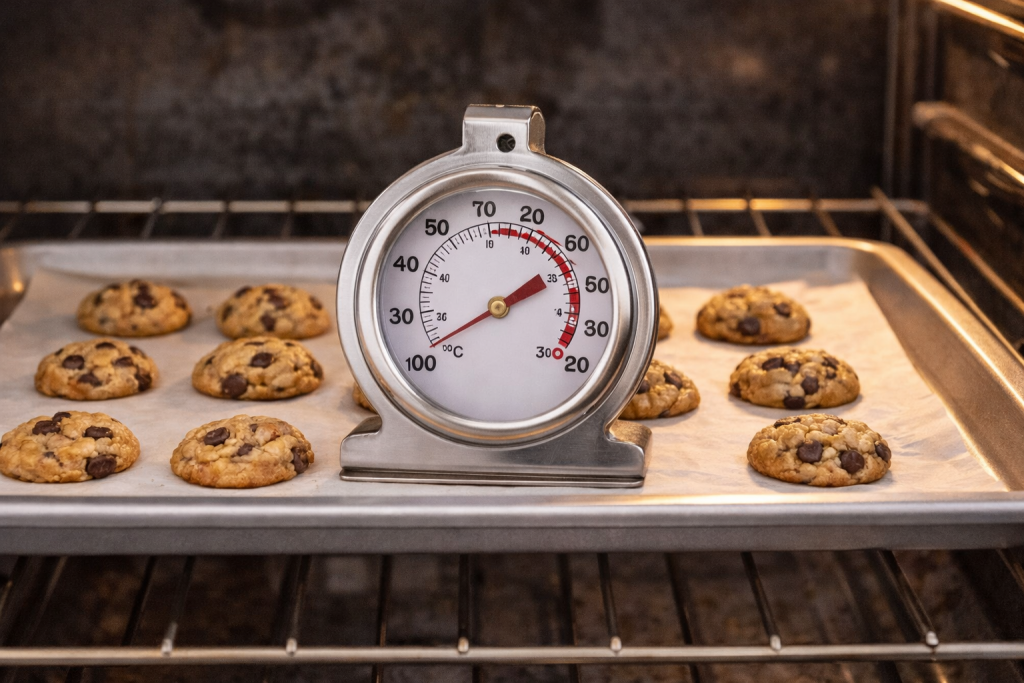
    ➡️Oven temperature plays a big role in how quickly mini cookies bake. An inexpensive oven thermometer helps ensure your oven is actually at the temperature you set.

    🔍 Why Mini Cookies Are Tricky to Judge

    Mini cookies don’t follow the same doneness rules as full-size cookies. This is especially important when baking mini gluten-free cookies, which can dry out quickly if baked too long.

    Watch for Visual Doneness

    Baking in smaller batches makes it easier to watch doneness cues instead of relying only on bake time.

    How to tell when mini cookies are done can be tricky because they:

    • Spread less
    • Bake faster
    • Brown more quickly on the bottom

    They often look underbaked when they’re actually done.

    Why It Matters

    Mini cookies continue to set as they cool. Removing them at the right time keeps the centers soft and chewy instead of dry.

    How to Tell When Mini Cookies Are Done

    👀 Visual Signs Mini Cookies Are Done

    Learning how to tell when mini cookies are done comes down to watching the edges, center color, and overall texture.

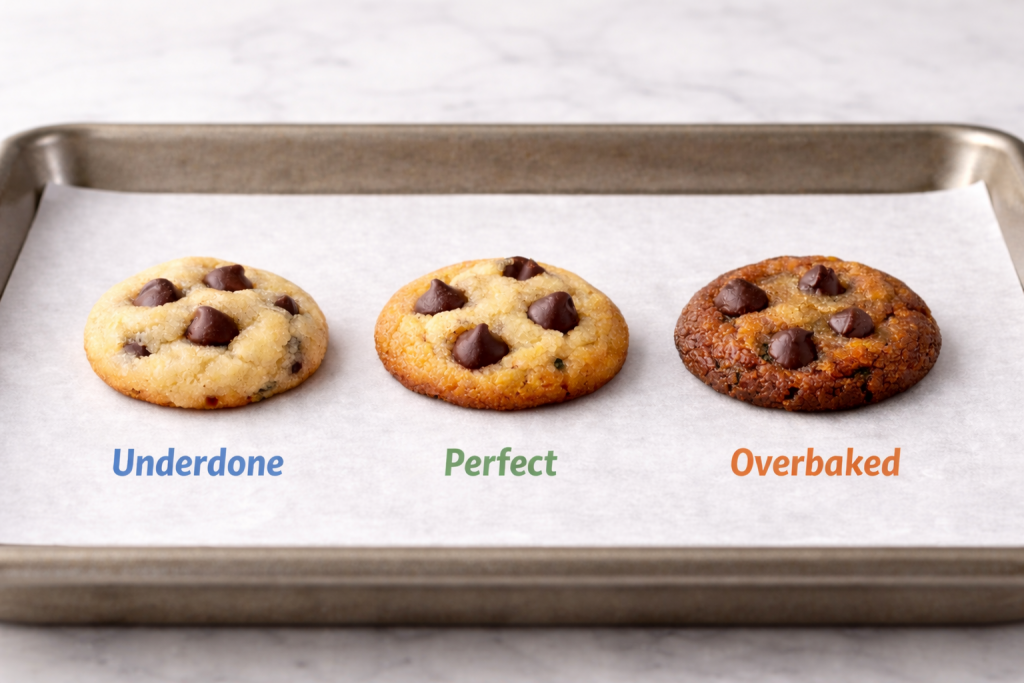
    Three mini chocolate chip cookies on a baking sheet showing underdone, perfectly baked, and overbaked stages

    The image above shows how to tell when mini cookies are done by comparing underbaked, perfectly baked, and overbaked cookies.

    ➡️A simple digital kitchen timer makes it easier to check mini cookies early and avoid overbaking, especially since they bake so quickly.

    Instead of relying on baking time alone, use these visual cues:

    ✅ Look for Set Edges

    The edges should:

    • Look firm
    • Hold their shape
    • Be lightly golden

    ✅ Soft, Pale Centers

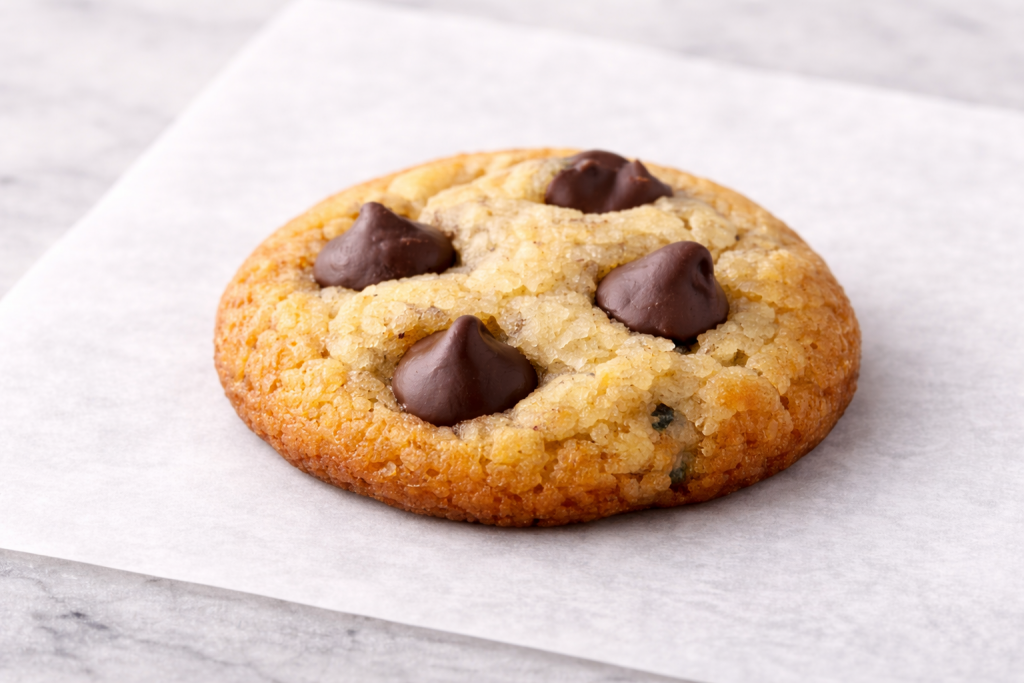
    Single mini chocolate chip cookie with golden edges and a soft, slightly pale center on parchment paper

    The centers should:

    • Still look slightly pale
    • Appear soft, not shiny or wet

    ❌ Avoid Fully Brown Tops

    If the tops look fully browned, mini cookies are usually overbaked.

    Quick Tip

    Mini cookies should look slightly underbaked when you remove them from the oven. They’ll finish baking as they cool on the pan.

    Serious Eats has explored how visual cues like edge set, center softness, and carryover baking help determine when baked goods are properly done.

    ⏱️ How Baking Time Affects Doneness

    Oven thermometer showing accurate baking temperature inside an oven

    Most mini cookies bake in 8–10 minutes, but doneness depends on:

    • Dough size
    • Oven temperature
    • Whether the dough was chilled

    Pan Color Affects Doness, Too

    Tools like light-colored pans and oven thermometers make it easier to judge when mini cookies are done.

    If you’re unsure, it’s better to:

    • Check early
    • Bake one test cookie
    • Adjust timing from there

    Baking time plays a huge role in doneness, especially with smaller cookies. For more details, see our guide to oven temperature and baking time for mini cookies to help avoid overbaking.

    ➡️Using light-colored baking sheets helps mini cookies bake more evenly and prevents the bottoms from browning too fast.

    According to the USDA, oven temperature accuracy plays a key role in proper baking and food safety, which is especially important when baking small items like cookies.

    🖐️ The Gentle Touch Test (Optional)

    If you’re comfortable checking by touch:

    • Lightly tap the edge of a cookie
    • It should feel set, not doughy
    • The center should feel soft but not liquid

    This works best once you’ve baked a few batches and know what to expect.

    Common Mistake

    Waiting until mini cookies look fully baked often leads to dry results. Visual cues matter more than color alone.

    King Arthur Baking explains in their cookie science guide how factors like size, temperature, and dough hydration affect cookie spread and doneness.

    🍪 What Happens If Mini Cookies Are Underbaked?

    Slightly underbaked mini cookies will:

    • Firm up as they cool
    • Stay soft in the center
    • Have a chewy texture

    Truly underbaked cookies will look wet or collapse — those need another minute in the oven.

    🍫 What Happens If Mini Cookies Are Overbaked?

    Overbaked mini cookies:

    • Lose moisture quickly
    • Become crunchy or dry
    • Brown heavily on the bottom

    Unfortunately, there’s no fix for overbaking — which is why pulling cookies early matters.

    If mini cookies are browning too fast on the bottom, try lowering the oven rack or using a lighter baking sheet.

    Mini Cookie Doneness Checklist

    • Edges are set and lightly golden
    • Centers look soft and slightly pale
    • Cookies hold shape when nudged
    • Bottoms are lightly browned, not dark

    🧁 Practice Makes It Easier

    The more you bake mini cookies, the easier it becomes to spot doneness. Start by watching:

    • The edges
    • The center color
    • How cookies look one minute before they’re done

    Over time, you’ll know exactly when to pull them.

    🍪 Ready to Practice?

    If you want to put these tips into action, start with a reliable recipe.

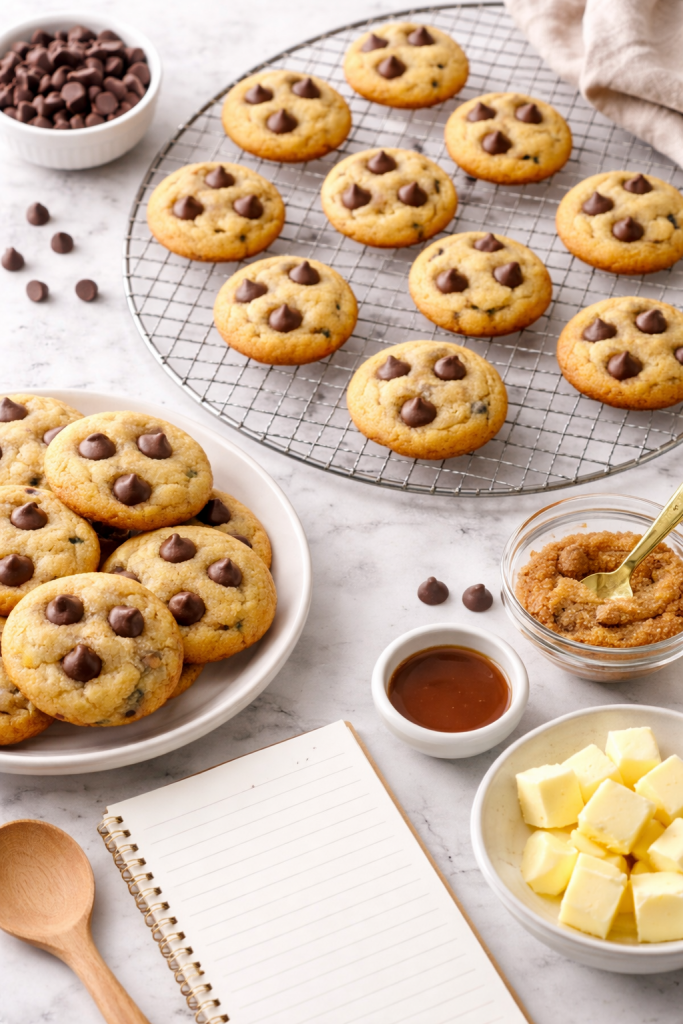
    Freshly baked mini chocolate chip cookies cooling on a wire rack with baking ingredients on a kitchen counter
    Mini cookies should look slightly underbaked in the center when removed from the oven.

    Ready to practice these doneness cues? Try our Mini Chocolate Chip Cookies (Soft & Bakery-Style) to see exactly how mini cookies should look when they’re done.

    Tools that make baking mini cookies easier:

    ❓ Mini Cookie Doneness FAQs

    Can mini cookies be slightly underbaked?

    Yes. Mini cookies are best removed from the oven when the edges are set but the centers still look soft and pale. They continue to firm up as they cool, which helps keep them chewy.


    Do mini cookies harden as they cool?

    Mini cookies will set slightly as they cool, but they shouldn’t become hard. If cookies turn crunchy after cooling, they were likely baked too long.


    Why do my mini cookies look done but taste dry?

    Mini cookies can overbake quickly because of their size. Even if they look fully baked, leaving them in the oven too long can dry them out. Checking cookies early and relying on visual cues helps prevent this.


    Should I rely on baking time or visual cues?

    Visual cues are more reliable than time alone. Oven temperatures vary, so watching the edges and centers of mini cookies gives better results than following a timer exactly.

    Once you understand how to tell when mini cookies are done, baking mini desserts becomes much more consistent and stress-free.

    Ready to put these doneness tips into practice? Try our mini chocolate chip cookies (soft & bakery-style) — they’re perfect for learning how mini cookies should look when they’re done.

    Tools I Use for Baking Mini Cookies

    You don’t need special equipment, but these tools help:

    These are the tools I reach for every time I bake mini cookies. You don’t need anything fancy — just a few reliable basics that make the process easier and the results better.

    This guide simplifies how to tell when mini cookies are done using clear visual cues instead of guesswork.

  • Mini Chocolate Chip Cookies (Soft & Bakery-Style)

    Mini Chocolate Chip Cookies (Soft & Bakery-Style)

    If you love chocolate chip cookies but don’t always want a full-size dessert, these mini chocolate chip cookies are the answer. They’re soft in the center, lightly crisp on the edges, and packed with chocolate in every bite — all in perfect, bite-sized form.

    These cookies bake quickly, freeze beautifully, and are ideal for parties, gift boxes, or when you just want a little something sweet.

    ➡️This mini cookie baking guide shows you all the tips and tricks to baking bite-sized cookies!

    Why It Matters

    Mini cookies bake much faster than full-size cookies, which means small changes in dough size, chilling, and bake time have a bigger impact on texture. Getting these details right is what keeps mini cookies soft and chewy instead of dry.

    Jump to Mini Cookie Recipe 🍪

    1 tsp Extra Mini Cookie Scoop

    • The non-slip rubber handle makes it easy to grasp.
    • Just a simple squeeze makes the cookie scoop release the dough easily and neatly

    Why You’ll Love These Mini Chocolate Chip Cookies

    • Soft, bakery-style texture
    • Ready in under 30 minutes
    • Perfectly portioned
    • No fancy equipment required
    • Easy to double for parties or events
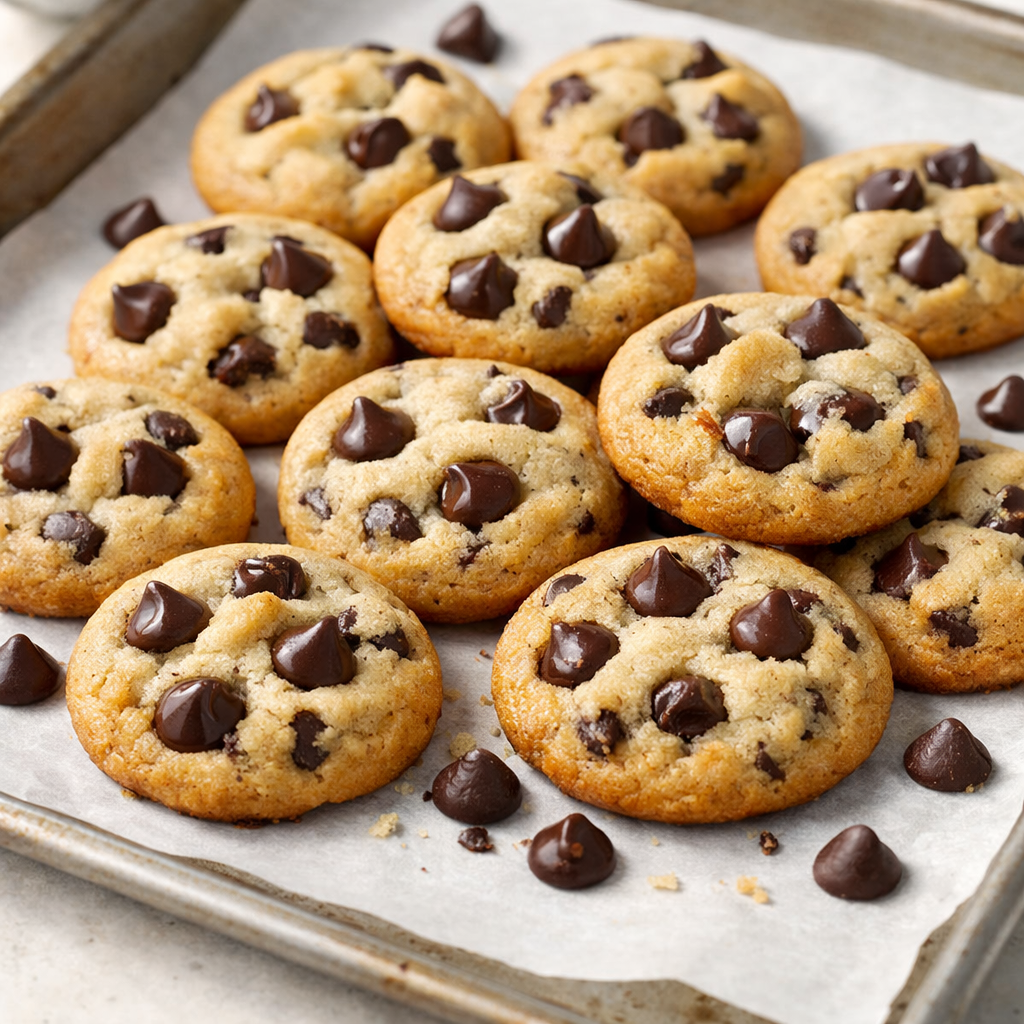
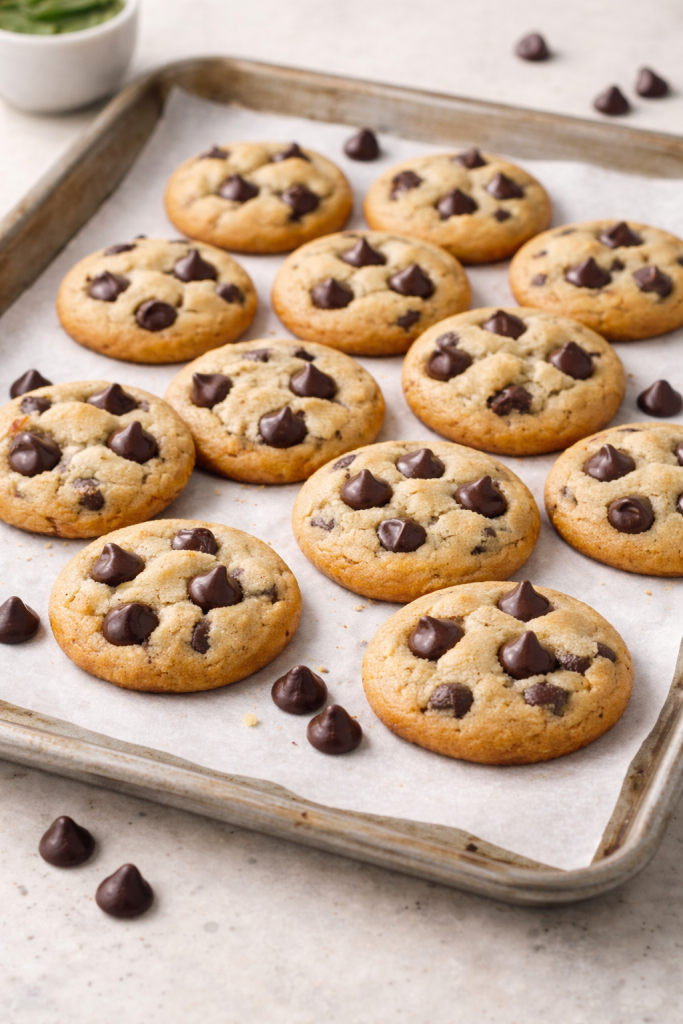
    Freshly baked mini chocolate chip cookies with golden edges and melted chocolate chips on a parchment-lined baking sheet

    Ingredients You’ll Need

    (Makes about 45–55 mini cookies)

    • ½ cup (113g) unsalted butter, softened
    • ½ cup brown sugar, packed
    • ¼ cup granulated sugar
    • 1 large egg
    • 1 teaspoon vanilla extract
    • 1¼ cups all-purpose flour
    • ½ teaspoon baking soda
    • ½ teaspoon salt
    • ¾ cup mini chocolate chips

    👉 Why mini chocolate chips?
    They distribute more evenly in small cookies, so every bite has chocolate.

    How to Make Mini Chocolate Chip Cookies

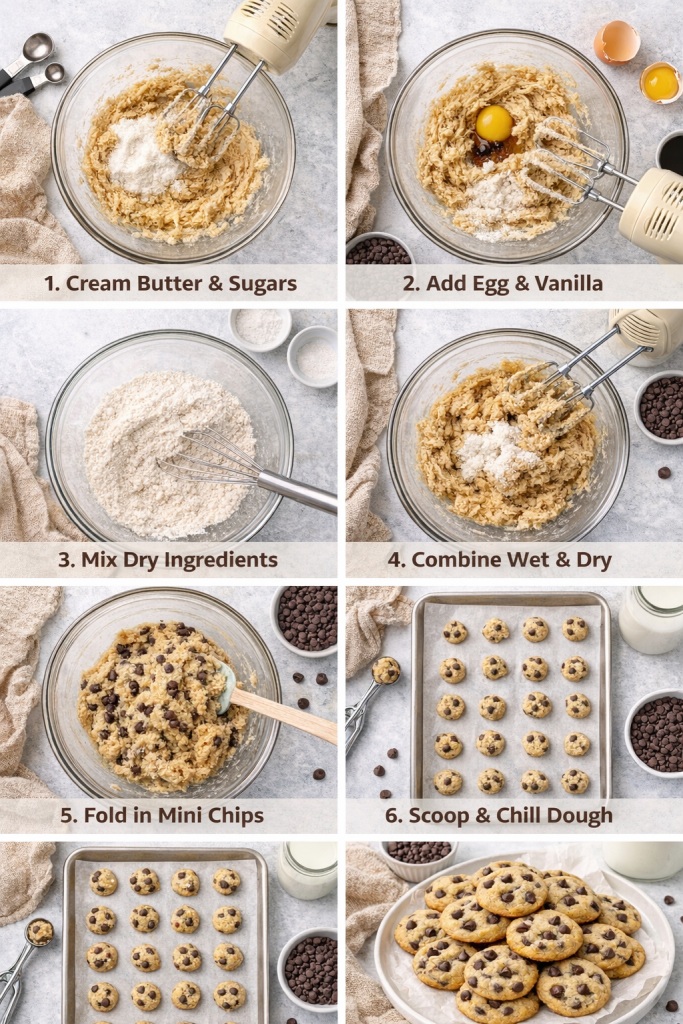
    Step-by-step process of making mini chocolate chip cookies, including mixing dough, folding in chocolate chips, scooping, and baking

    1. Cream the Butter & Sugars

    In a medium bowl, beat the softened butter, brown sugar, and granulated sugar until light and fluffy (about 1–2 minutes).

    2. Add Egg & Vanilla

    Mix in the egg and vanilla until fully combined. Scrape down the sides of the bowl.

    This Hamilton Beach 6-Speed Electric Hand Mixer is a great, quick and easy handheld mixer

    3. Mix the Dry Ingredients

    In a separate bowl, whisk together flour, baking soda, and salt.

    Gradually add the dry ingredients to the wet ingredients, mixing just until combined.

    4. Fold in the Chocolate Chips

    Gently stir in the mini chocolate chips.

    5. Chill the Dough (Highly Recommended)

    Cover and chill the dough for 20–30 minutes.
    This helps prevent spreading and improves flavor.

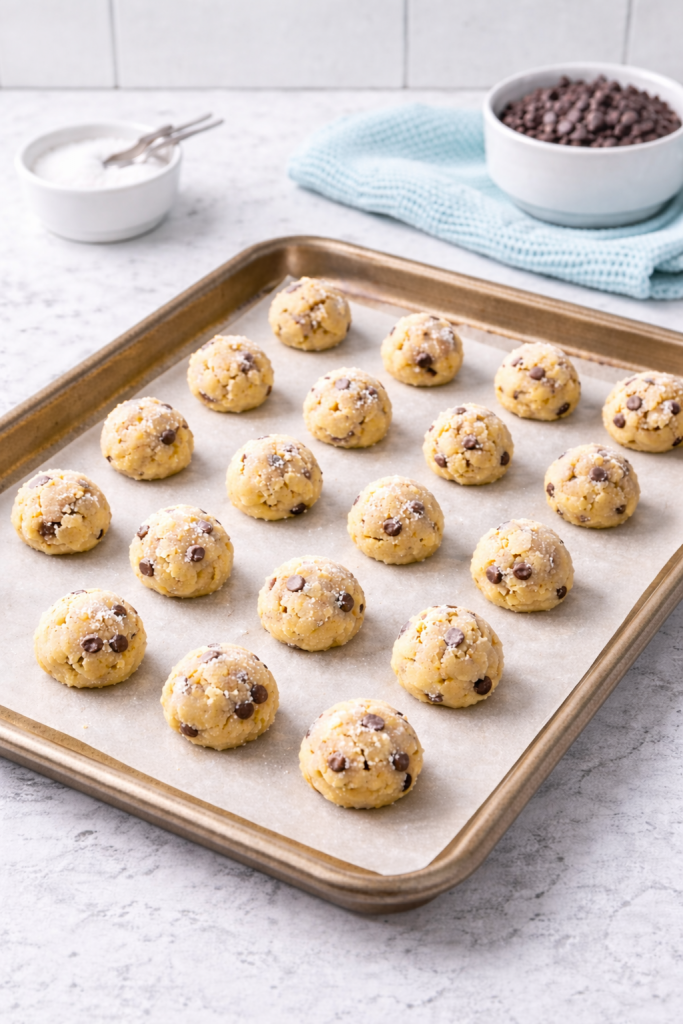
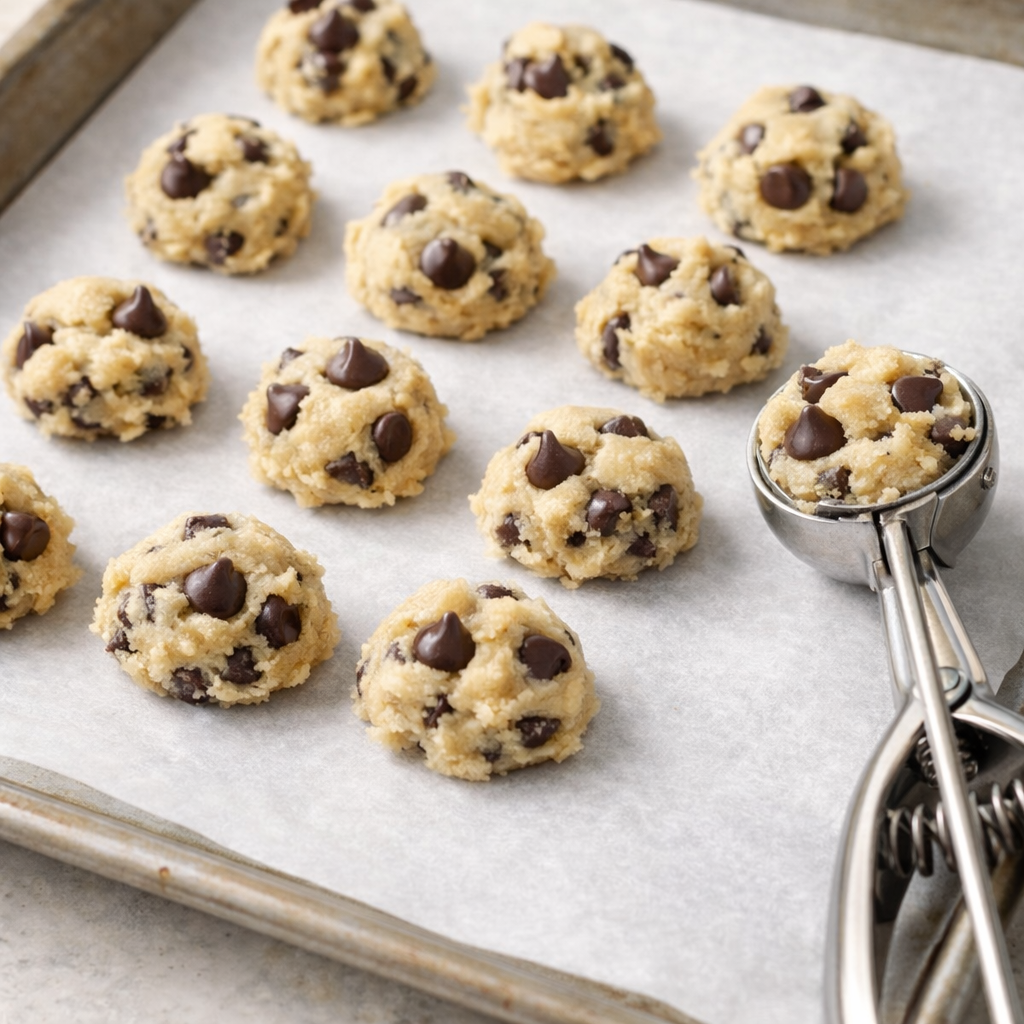
    Teaspoon-sized portions of mini chocolate chip cookie dough spaced on a parchment-lined baking sheet with a small cookie scoop

    How Big Should Mini Cookies Be?

    • Scoop 1 teaspoon of dough per cookie
    • Roll lightly if needed
    • Place cookies 1½–2 inches apart on the baking sheet

    Using a small cookie scoop gives the most consistent results.

    Quick Tip

    Using teaspoon-sized portions helps mini cookies bake evenly. Keeping the dough size consistent prevents some cookies from overbaking while others stay underdone.

    Baking Instructions

    ➡️For more details on oven settings and timing, see our oven temperature & baking time guide for mini cookies to avoid overbaking.

    • Preheat oven to 350°F (175°C)
    • Line baking sheets with parchment paper
    • Bake for 6–8 minutes

    Common Mistake

    Baking mini cookies for the same amount of time as regular cookies often leads to overbaked, dry results. Mini cookies need less time and should be checked early.

    How to Tell They’re Done

    • Edges look set
    • Centers still appear soft
    • Bottoms are lightly golden

    ➡️If you’re unsure when to pull them from the oven, this guide on how to tell when mini cookies are done walks through the visual cues to look for.

    ⚠️ Do not wait for browning on top — mini cookies overbake quickly.

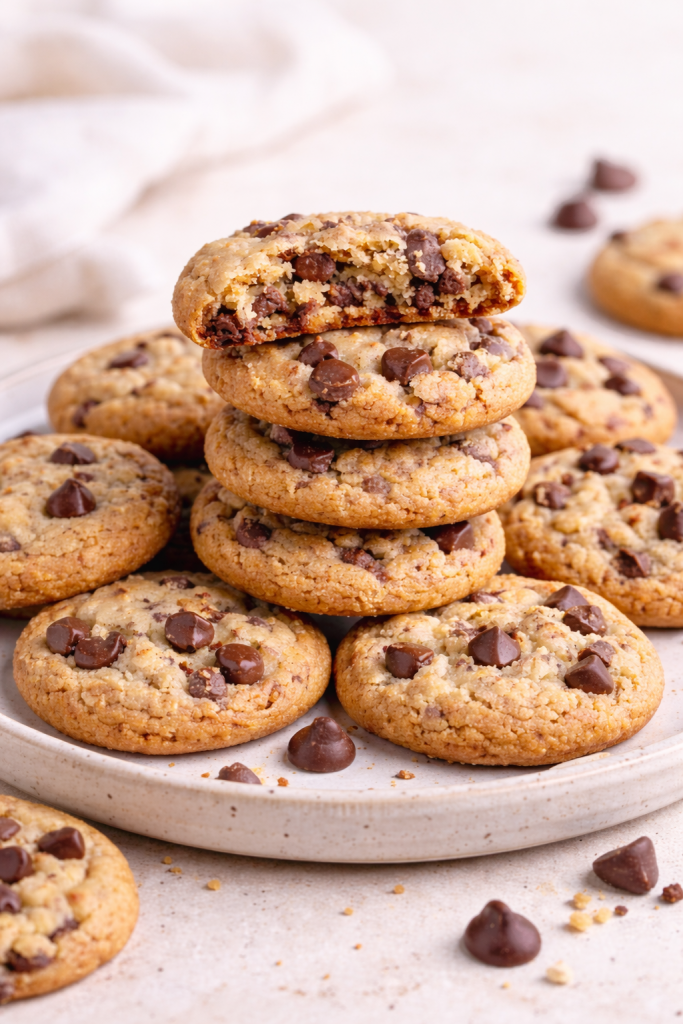
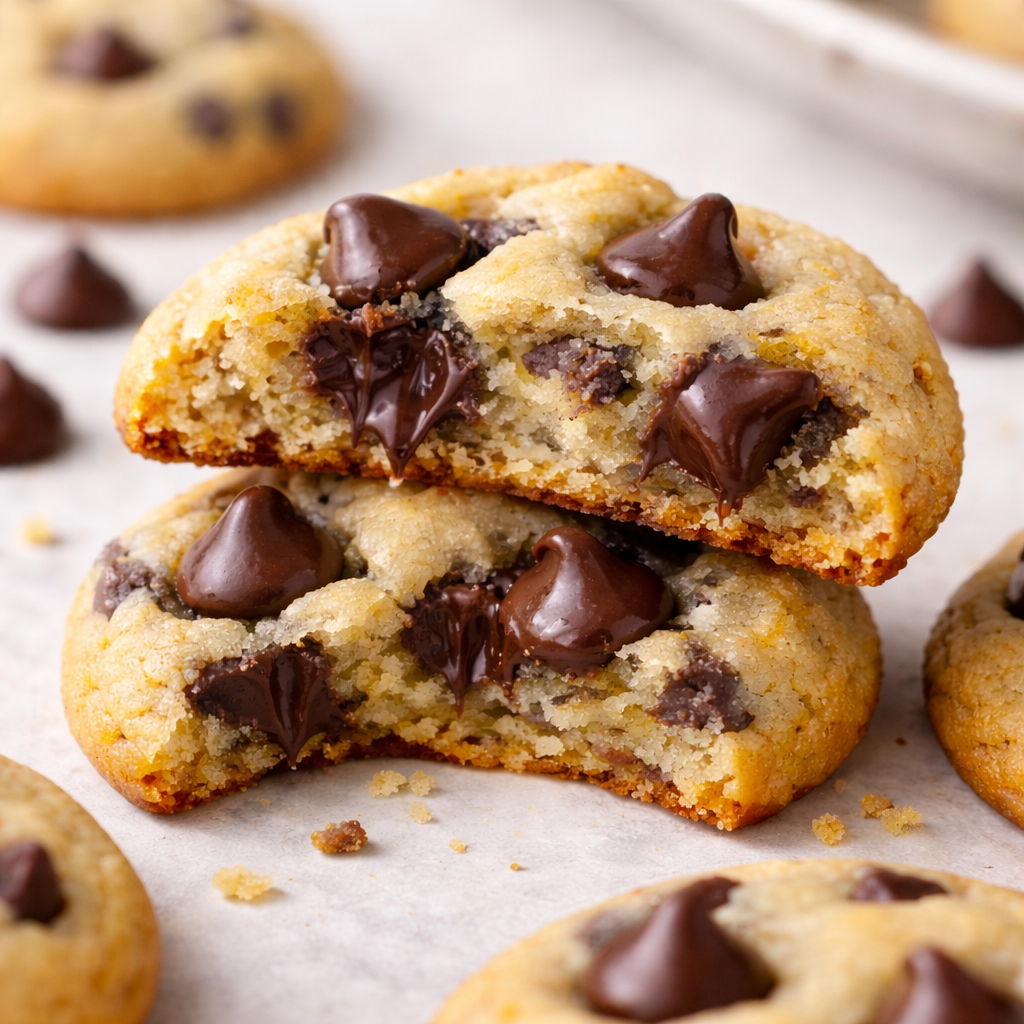
    Mini chocolate chip cookie broken in half showing a soft, chewy interior with melted chocolate chips

    Quick Tip

    Mini cookies should be removed from the oven when the edges are set, but the centers still look soft and pale. They’ll continue to set as they cool.

    Cooling the Cookies

    Let cookies cool on the baking sheet for 5 minutes, then transfer to a wire rack to cool completely.

    They will continue to set as they cool while staying soft inside.

    Tips for Soft, Bakery-Style Mini Cookies

    • Don’t overbake — slightly underbaked is best
    • Use brown sugar for moisture
    • Chill the dough
    • Store properly (see storage tips below)

    How to Store Mini Chocolate Chip Cookies

    Why It Matters

    Freezing mini cookie dough lets you bake only what you need, when you need it. This keeps cookies tasting fresh without baking a full batch every time.

    • Store in an airtight container at room temperature for 3–4 days
    • Add a slice of bread to the container to keep them soft
    • Freeze the baked cookies for up to 2 months

    👉 These cookies are perfect for make-ahead baking.

    Rubbermaid Brilliance Large Food Storage Container

    • The Brilliance Food Storage Container from Rubbermaid is a convenient way to store
    • Stackable for optimal fridge or freezer organization

    Variations & Add-Ins

    • Mini chocolate chunk cookies: Use finely chopped chocolate
    • Sprinkle cookies: Add 2 tablespoons of sprinkles
    • Nutty version: Add finely chopped walnuts or pecans
    • Holiday version: Swap mini chips for seasonal baking chips

    Perfect Occasions for Mini Chocolate Chip Cookies

    ➡️These cookies are great for baking ahead — you can also freeze mini cookie dough, so fresh cookies are always ready to bake.

    • Dessert boards
    • Cookie gift boxes
    • Parties & showers
    • Kids’ treats
    • Portion-controlled desserts

    Final Thoughts

    These mini chocolate chip cookies prove that great things really do come in small packages. They’re quick to make, easy to customize, and always a crowd-pleaser.

    Once you bake them, you’ll find yourself reaching for this recipe again and again.

    Soft and chewy mini chocolate chip cookies on a plate

    Mini Chocolate Chip Cookies (Soft & Bakery-Style)

    Soft, chewy mini chocolate chip cookies with crisp edges and perfectly portioned bites. These bakery-style cookies bake fast, freeze well, and are ideal for parties, gifting, or small-batch treats.
    Prep Time 10 minutes
    Cook Time 8 minutes
    Additional Time 20 minutes
    Total Time 38 minutes
    Course Dessert
    Cuisine American
    Servings 50 mini cookies
    Calories 55 kcal

    Ingredients
      

    • 1/2 cup unsalted butter softened
    • 1/2 cup brown sugar packed
    • 1/4 cup granulated sugar
    • 1 large egg
    • 1 tsp vanilla extract
    • 1 1/4 cups all-purpose flour
    • 1/2 tsp baking soda
    • 1/2 tsp salt
    • 3/4 cup mini chocolate chips

    Instructions
     

    • Preheat oven to 350°F (175°C). Line baking sheets with parchment paper.
    • In a medium bowl, cream the butter, brown sugar, and granulated sugar together until light and fluffy, about 1–2 minutes.
    • Add the egg and vanilla extract and mix until fully combined, scraping down the sides of the bowl as needed.
    • In a separate bowl, whisk together the flour, baking soda, and salt.
    • Gradually add the dry ingredients to the wet ingredients and mix just until combined.
    • Gently fold in the mini chocolate chips.
    • Cover and chill the dough for 20–30 minutes for best results.
    • Scoop 1 teaspoon of dough per cookie and place 1½–2 inches apart on prepared baking sheets.
    • Bake for 6–8 minutes, until edges are set and centers look slightly soft.
    • Let cookies cool on the baking sheet for 5 minutes, then transfer to a wire rack to cool completely.

    Storage

    • Store mini chocolate chip cookies in an airtight container at room temperature for 3–4 days. For longer storage, freeze baked cookies for up to 2 months.

    Notes

    • Do not overbake — mini cookies firm up as they cool.
    • Mini chocolate chips work best for even chocolate distribution in small cookies.
    • For thicker cookies, chill the dough longer.

    Nutrition

    Serving: 1mini cookieCalories: 55kcalCarbohydrates: 7gProtein: 1gFat: 3g
    Keyword bite sized cookies, mini chocolate chip cookies, mini cookies, small batch cookies
    Tried this recipe?Let us know how it was!

    Up Next

    👉 10 Easy Mini Dessert Ideas for Parties & Events

    Kitchen Tools I Use