Tag: baking tips

Practical baking tips that improve texture, flavor, and consistency, especially for mini desserts and cookies.

  • Oven Temperature & Baking Time for Mini Cookies

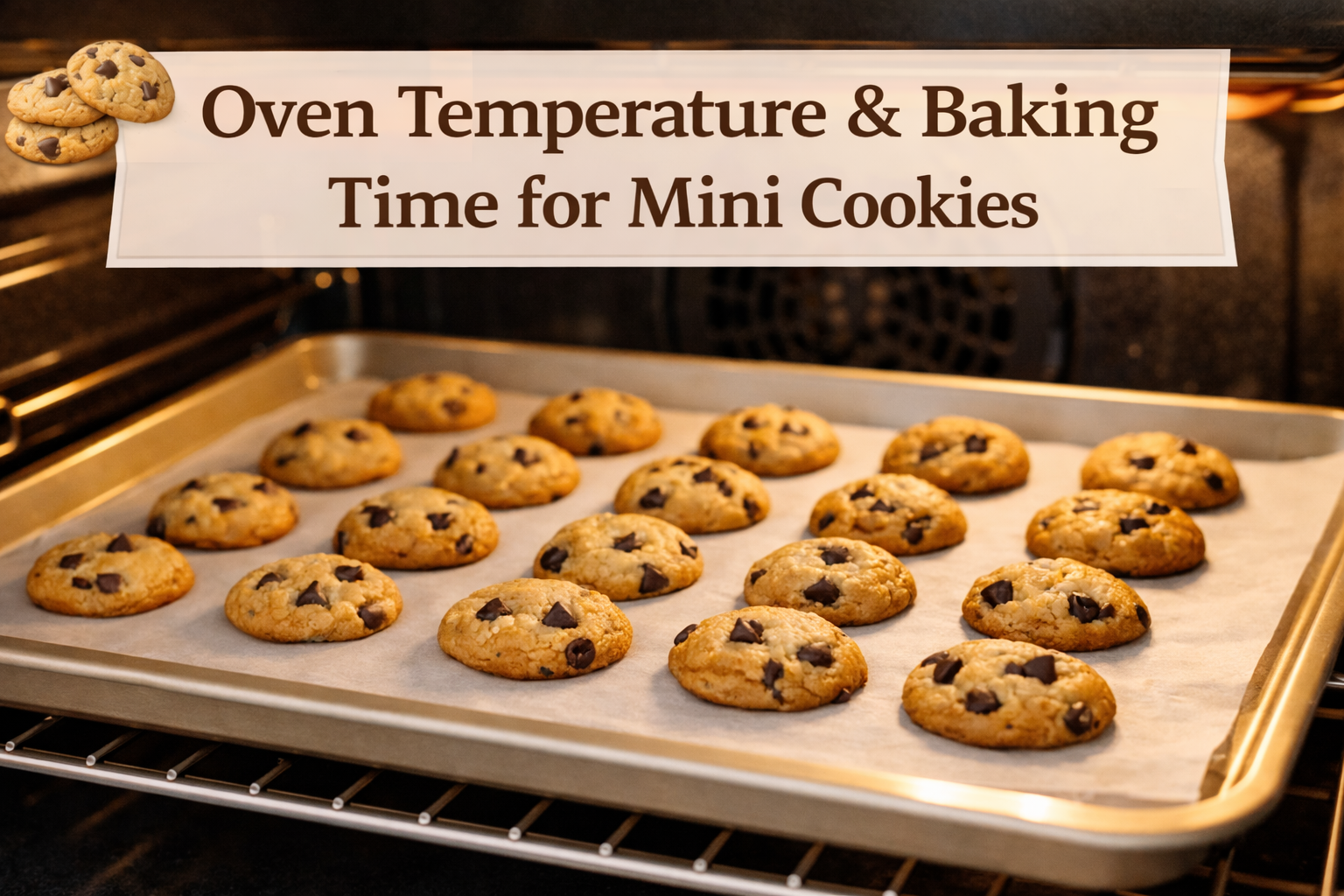
    Oven Temperature & Baking Time for Mini Cookies

    Oven temperature for mini cookies plays a bigger role in texture and doneness than most bakers realize.

    Mini cookies are small, but they’re unforgiving. A difference of 30 seconds or a few degrees can mean the difference between soft and chewy… or dry and crumbly.

    That’s why oven temperature and baking time matter more for mini cookies than full-size cookies. Once you understand how heat works at a smaller scale, mini cookies become easy and reliable.
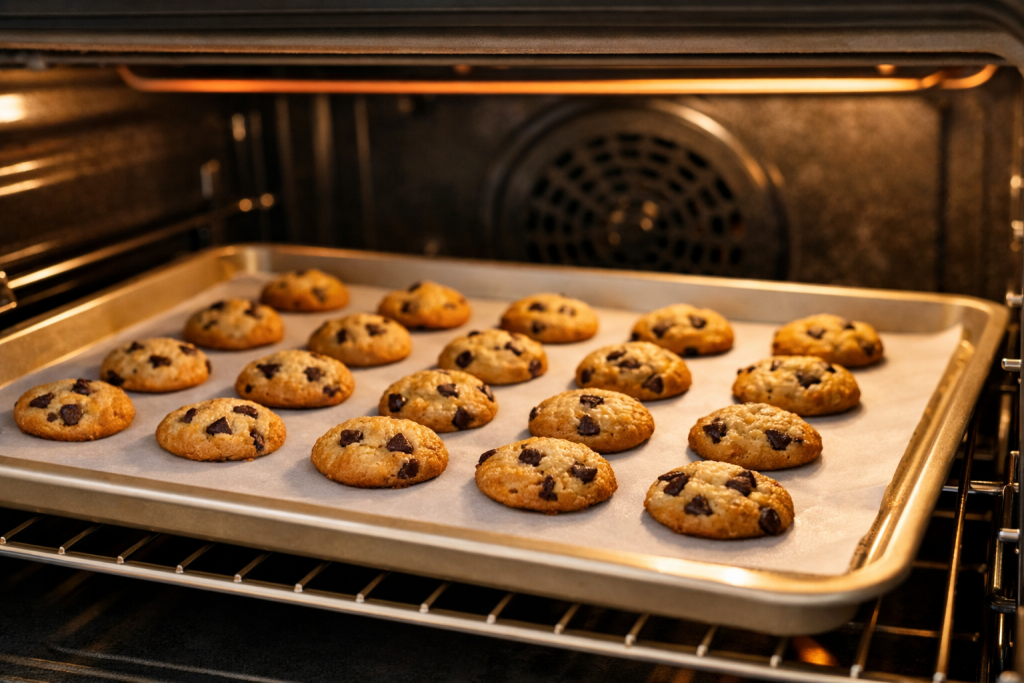
    Good oven temperature for mini cookies baking evenly on a light-colored baking sheet in an oven

    Why Mini Cookies Bake Differently

    Getting the oven temperature for mini cookies right prevents dry edges, pale centers, and uneven baking.

    Mini cookies:

    • Have less mass
    • Heat up faster
    • Finish baking quickly
    • Continue baking after leaving the oven
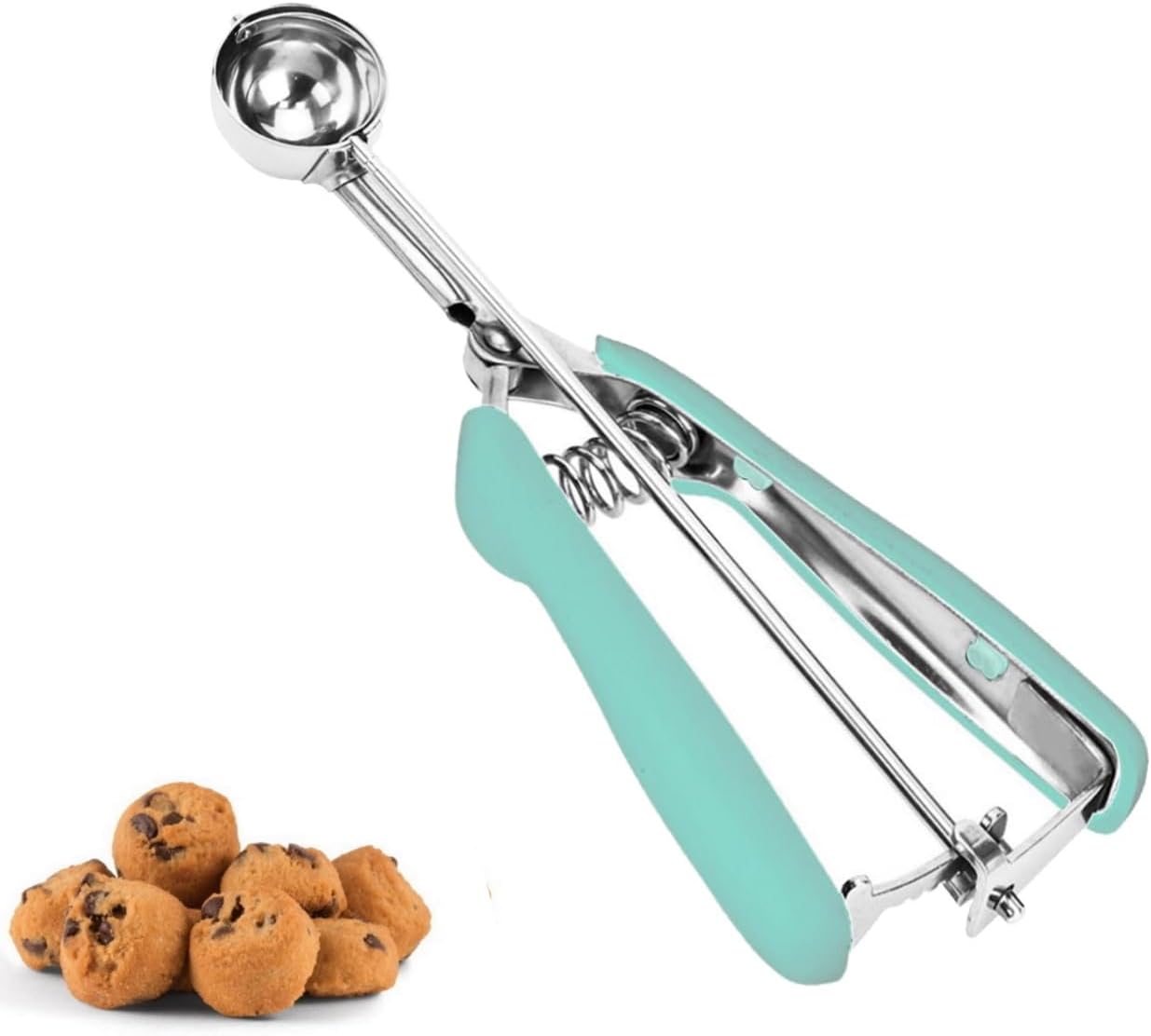
    1 tsp Extra Mini Cookie Scoop

    • The non-slip rubber handle makes it easy to grasp.
    • Just a simple squeeze makes the cookie scoop release the dough easily and neatly

    This means they don’t follow the same timing rules as standard cookies. You can’t just “bake until golden” and walk away.
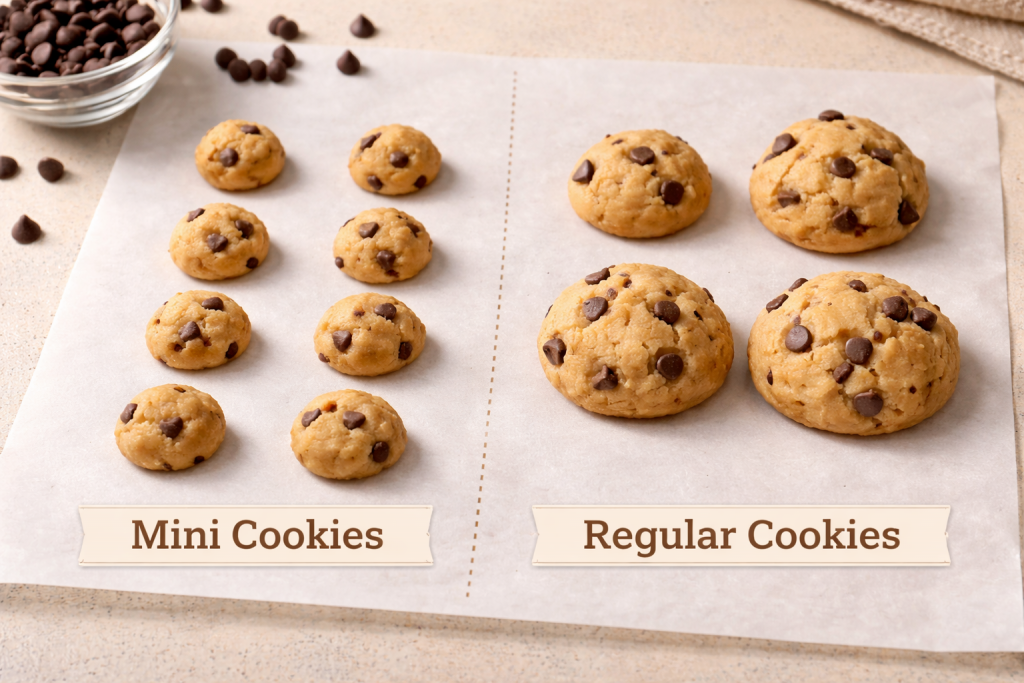
    Mini cookie dough balls compared to regular-sized cookie dough balls

    The Best Oven Temperature for Mini Cookies Explained

    350°F (175°C) is the sweet spot

    🍪 Taylor Precision Oven Thermometer

    Ensures accurate oven temperature so mini cookies don’t overbake too quickly.

    Most mini cookies bake best at 350°F, which allows:

    • Even spreading
    • Controlled browning
    • Enough time to catch doneness

    Oven Temperature & Timing is Key!

    Understanding oven temperature and timing is key to baking consistently perfect mini cookies.

    Lower temperatures can cause excess spreading. Higher temperatures can brown the bottoms too fast before the centers set.

    When to Adjust the Temperature

    • Try 325°F if your oven runs hot or cookies brown too quickly
    • Avoid 375°F+ unless a recipe specifically calls for it

    Typical Baking Time for Mini Cookies

    Perfect Batches for Mini Cookies

    Mini cookies pair perfectly with small batch baking, where timing and temperature control matter most.

    Mini cookies usually bake in 6–9 minutes, depending on:

    • Dough type
    • Cookie size
    • Pan material
    • Oven accuracy

    General Timing Guide

    • Very small (½–1 tsp dough): 6–7 minutes
    • Standard mini (1–1½ tsp): 7–9 minutes

    Always start checking early. Mini cookies don’t give much warning before overbaking.


    Why Bake Time Is Only a Guideline
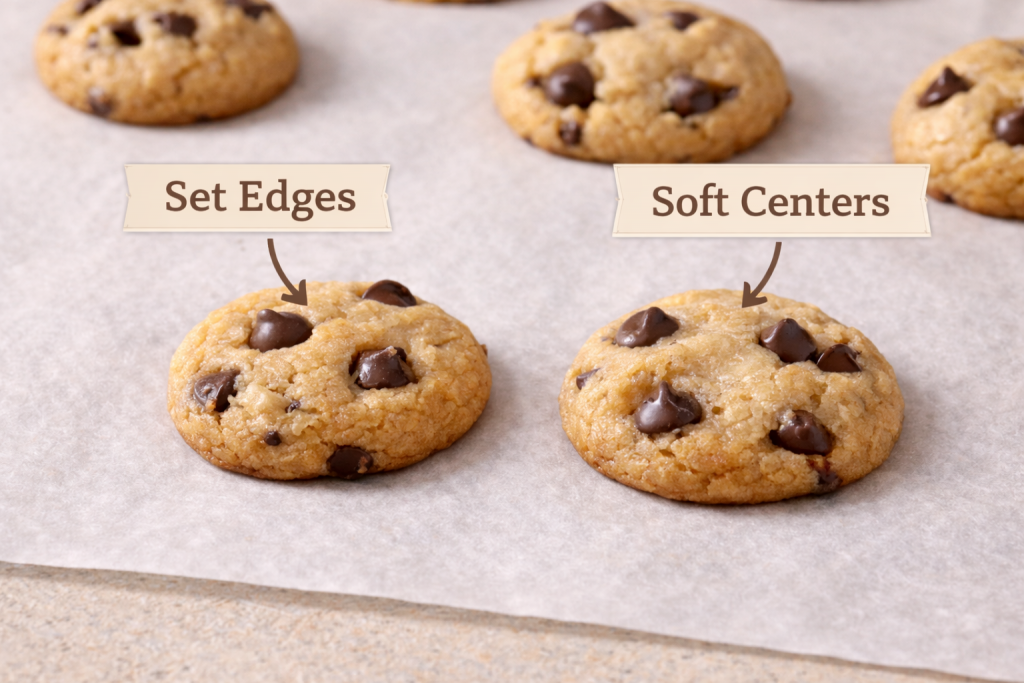
    Mini cookies showing set edges and soft centers indicating proper doneness

    Bake time is helpful — but visual cues matter more, especially with mini cookies.

    Mini cookies are usually done when:

    • The edges look set
    • The centers look slightly underbaked
    • The tops lose their raw shine

    How to Tell When Mini Cookies Are Done

    Visual cues matter more than the clock when deciding when mini cookies are done.

    They should look almost done when you pull them from the oven.


    Carryover Baking: The Step Everyone Misses
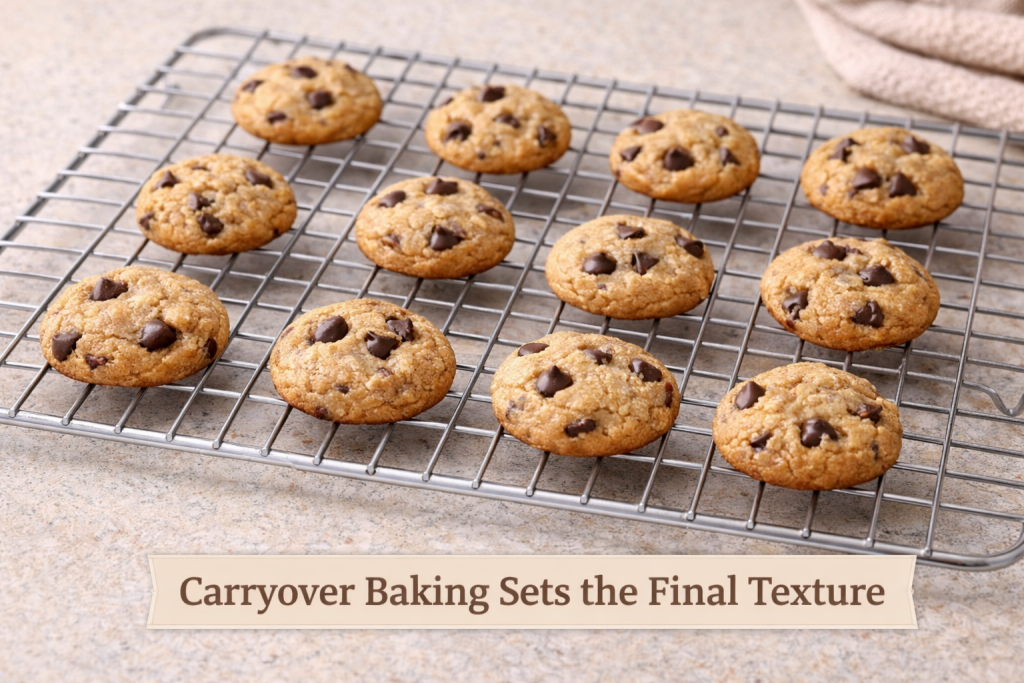
    Mini cookies cooling on a wire rack after being removed from the oven

    Mini cookies continue baking from residual heat after you remove them from the oven.

    That means:

    • Waiting until they look fully baked = overbaked cookies
    • Pulling them slightly early = soft, chewy centers

    Reduce Waste Costs

    Efficient baking processes help keep costs predictable when pricing mini desserts.

    This carryover effect is stronger in mini cookies because they’re so small. Cookies continue cooking from residual heat after being removed from the oven.


    How Pan Choice Affects Baking Time
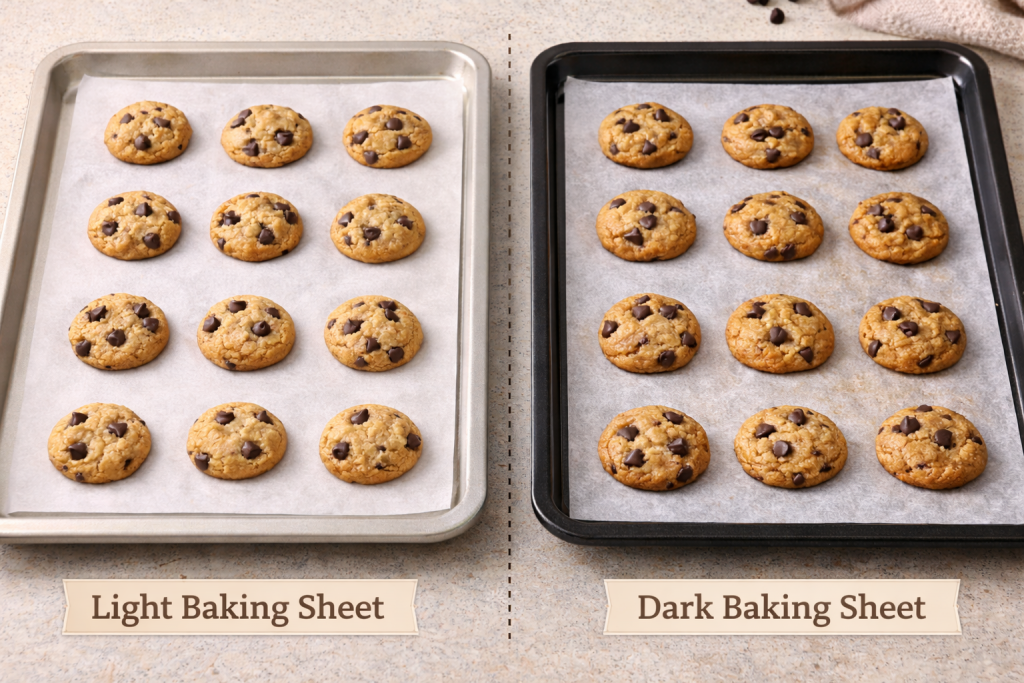
    Mini cookies baked on light and dark baking sheets showing different browning

    Your baking sheet changes how fast mini cookies bake.

    • Light-colored pans: Even baking, more forgiving
    • Dark pans: Faster browning, higher risk of overbaking
    • Thin pans: Heat up quickly
    • Insulated pans: Slow baking slightly

    Martha Stewart Gallen 3-Piece Cookie Sheet Set

    Complete bakeware set with nonstick sheets for cookies.

    If your cookies brown too fast on the bottom, your pan is likely the issue — not the recipe.


    Why Oven Accuracy Matters More for Minis
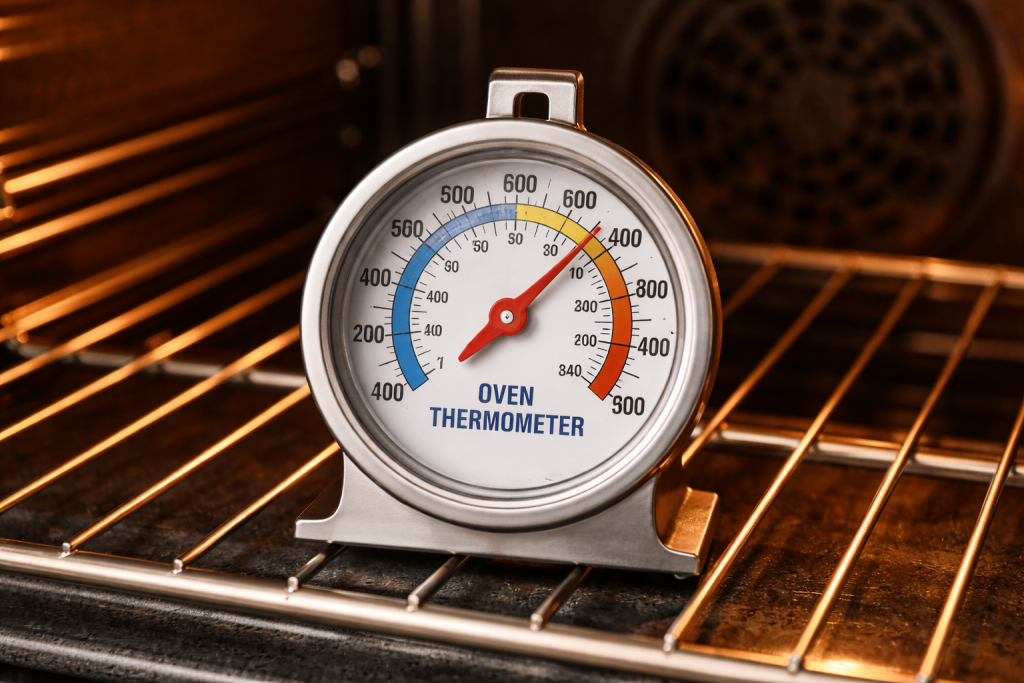
    Oven thermometer showing the true temperature inside a home oven

    Many home ovens run 10–25°F off from what the dial says.

    That difference barely matters for a 12-minute cookie… but it matters a lot for a 7-minute mini cookie.

    Best Tools for Mini Cookies

    Tools like oven thermometers and light-colored pans make mini cookie timing much easier to manage.

    An oven thermometer helps you:

    • Confirm your true temperature
    • Adjust bake time accurately
    • Avoid dry or burnt cookies

    Gluten Free?

    Gluten-free mini cookies are especially sensitive to oven temperature and baking time.

    Many home ovens run hotter or cooler than the dial indicates, which affects baking results.


    Rack Placement for Mini Cookies

    Always bake mini cookies on the center rack.

    • Too high → tops brown too fast
    • Too low → bottoms overbake

    Even small rack shifts can change results when bake times are short.


    Common Mini Cookie Timing Mistakes

    Overbaking is one of the most common mini cookie mistakes and is usually caused by timing issues.

    Avoid these:

    • Waiting for golden color
    • Baking minis as long as full-size cookies
    • Ignoring pan color
    • Trusting the oven dial blindly
    • Leaving cookies on the hot pan too long

    Most mini cookie failures come down to timing, not ingredients. Oven temperature for mini cookies affects bake time more than most bakers expect.
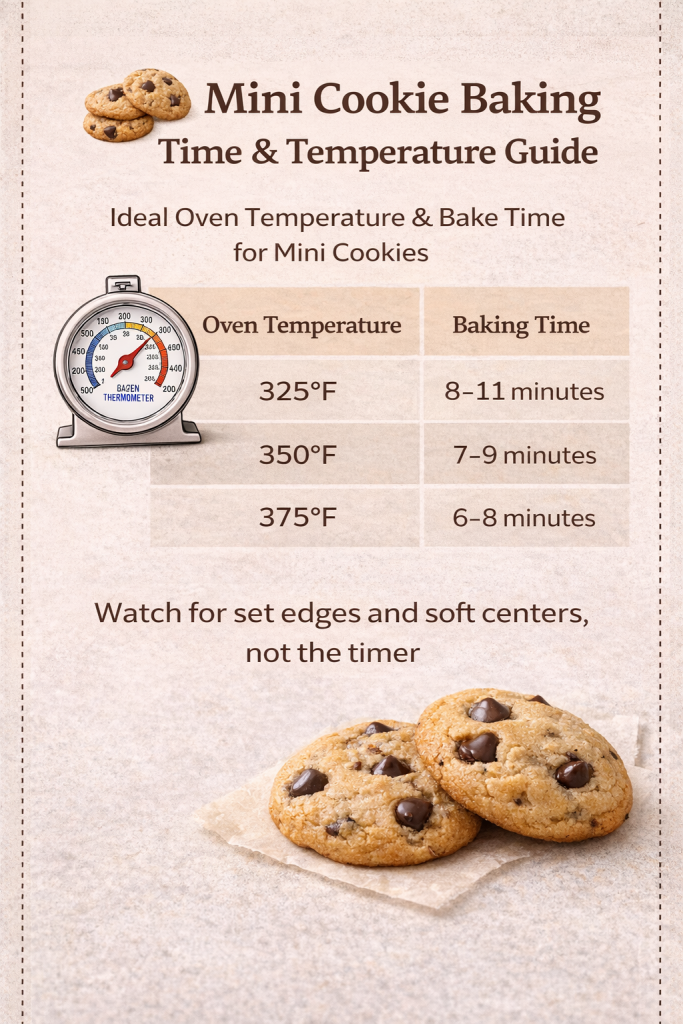
    Mini cookie baking time and temperature guide chart

    A Simple Mini Cookie Timing Routine

    For consistent results:

    1. Preheat fully to 350°F
    2. Use a light-colored pan with parchment
    3. Start checking cookies at the minimum time
    4. Pull when edges are set but centers look soft
    5. Let cool briefly on the pan, then transfer to a rack

    This routine works for most mini cookie recipes.

    Are You Baking Vegan?

    Vegan mini desserts bake quickly and benefit from careful temperature and timing control.


    The Big Takeaway

    Mastering oven temperature for mini cookies makes baking faster, easier, and more consistent. Mini cookies reward attention with their delicious taste!

    When you control oven temperature and baking time, mini cookies become:

    • Softer
    • Chewier
    • More consistent
    • Less stressful

    Once you dial this in, you’ll stop guessing — and start baking mini cookies with confidence.

    Cookie Tools I Use

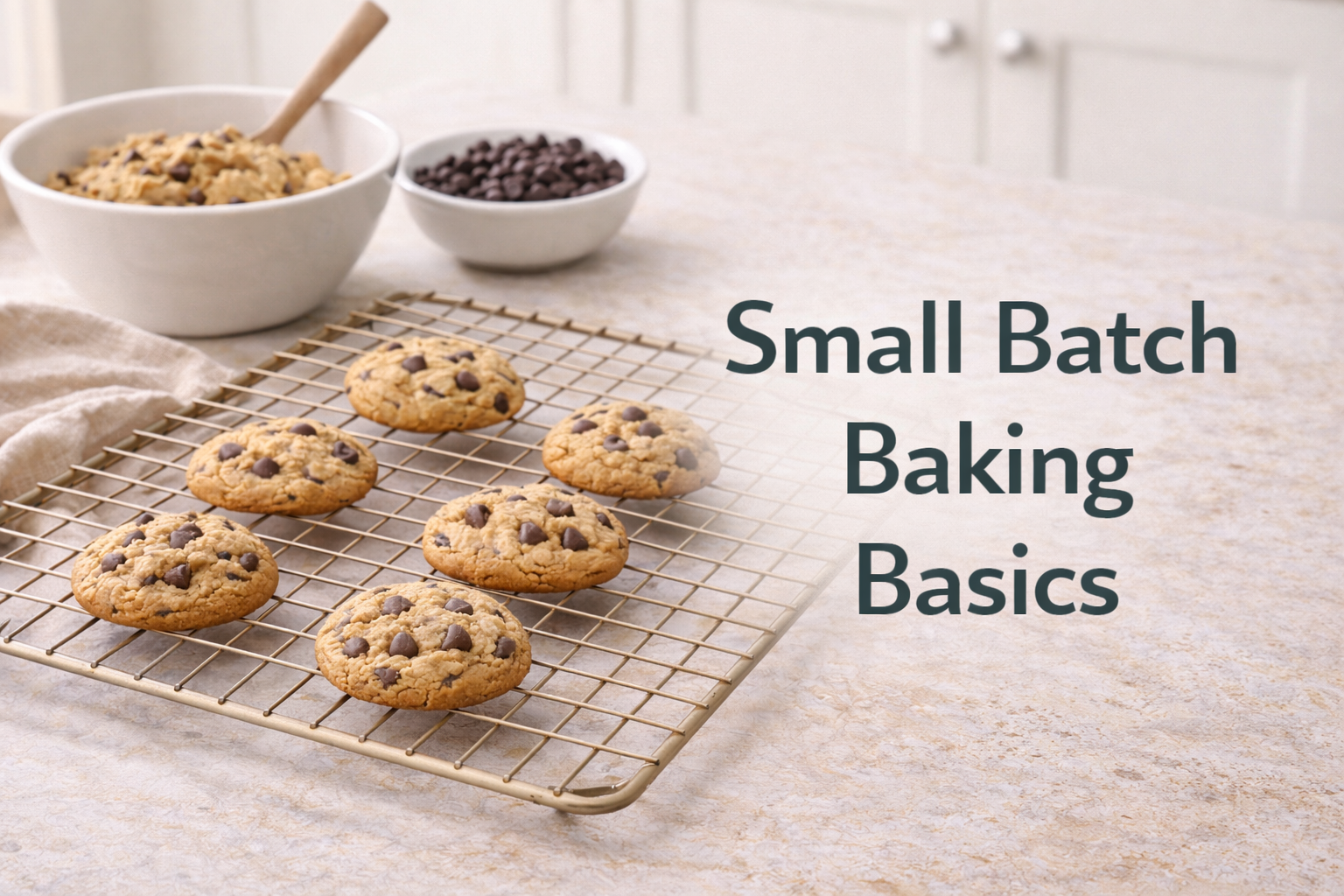
  • Small Batch Baking Basics

    Small Batch Baking Basics

    Small batch baking is exactly what it sounds like: baking fewer treats at a time — intentionally. But it’s more than just scaling down recipes. When done right, baking smaller portions leads to better texture, less waste, and more consistent results, especially for cookies and mini desserts.

    The Right Tools Matter

    Small batch baking works best when you use tools designed for precision and control.

    If you’ve ever wanted freshly baked treats without leftovers (or pressure to eat a dozen cookies), small batch baking is the solution.

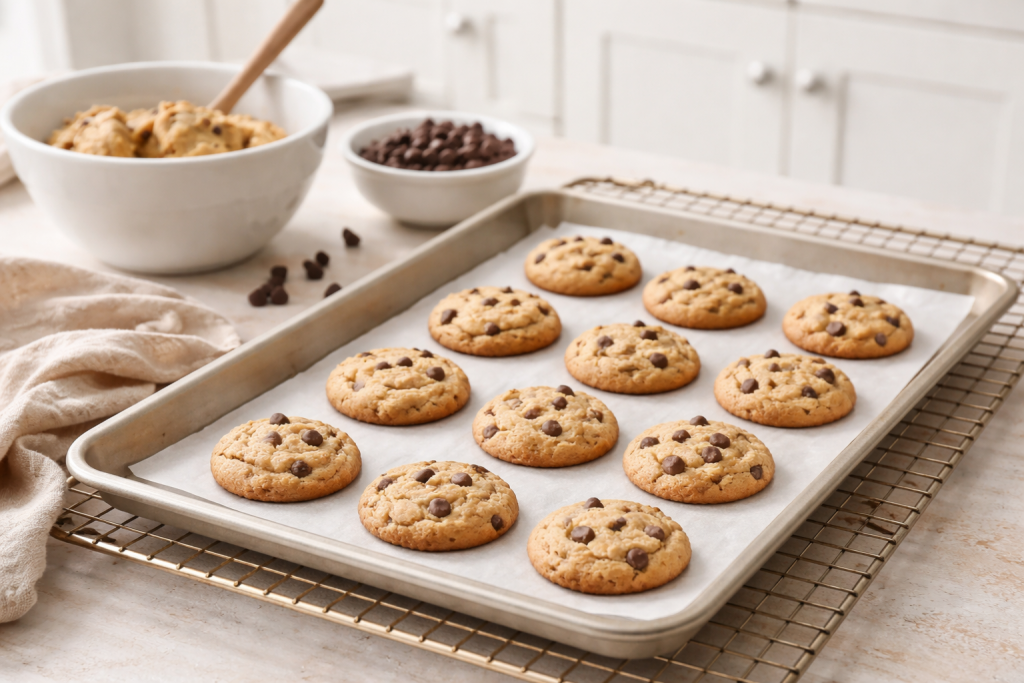
    Small batch baking setup with a few cookies cooling on a baking sheet

    What Is Small Batch Baking?

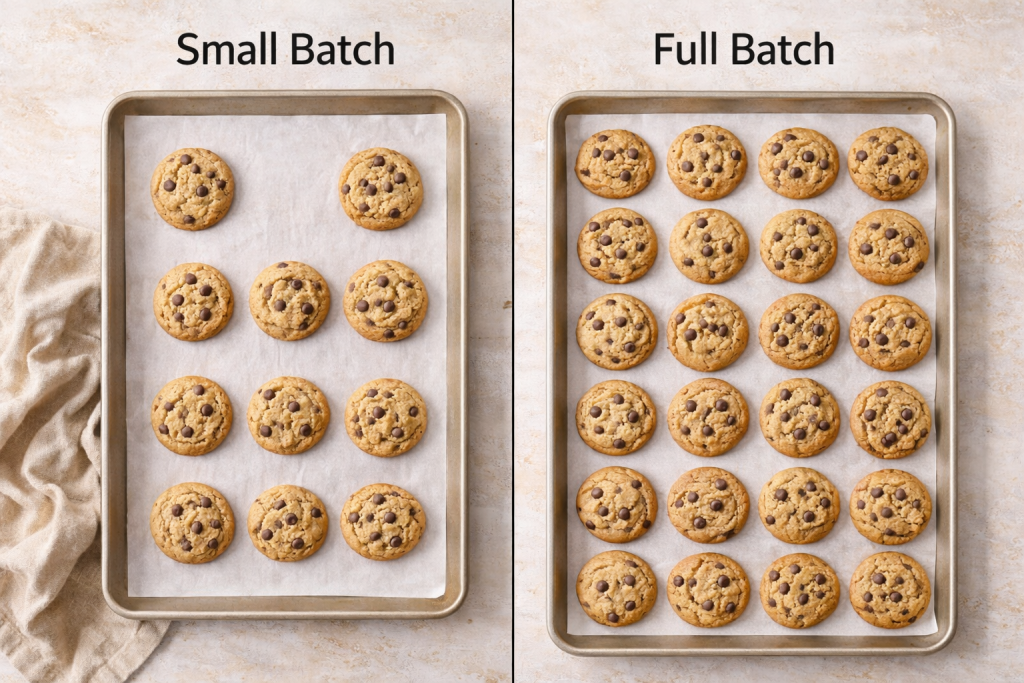
    Side-by-side comparison of a small batch of cookies versus a full batch

    Small batch baking focuses on making just enough — typically:

    • 4–8 cookies
    • A single small pan of brownies
    • A handful of mini desserts

    🍪 Smaller Batch Baking = Better Control

    Smaller batches make it easier to watch doneness, adjust timing, and avoid overbaking.

    Instead of baking for crowds, you bake for right now. The goal is freshness, control, and flexibility.

    Pricing Small Batch Baking

    Small batch baking works best when your pricing accounts for time, ingredients, and packaging.

    Panecito explains what small batch baking is and why it’s useful for home bakers.


    Why Baking in Small Amounts Works So Well

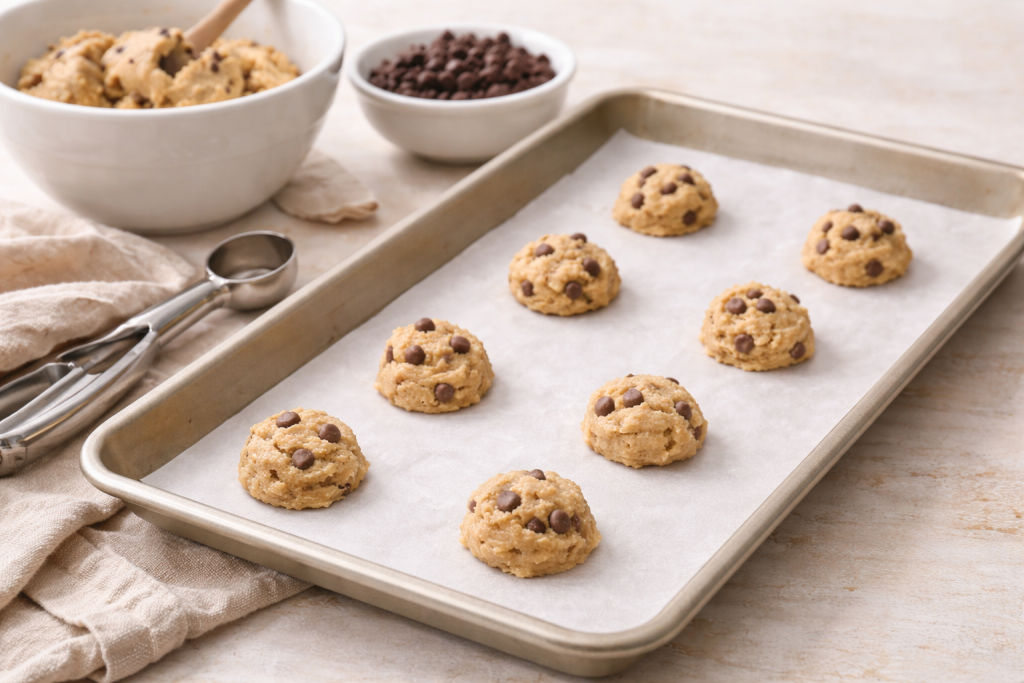
    Small batch cookie dough scooped into a few evenly sized portions

    Baking fewer treats at a time isn’t just convenient — it’s strategic. Many of the same techniques that improve small batch baking also apply when baking perfect mini cookies.

    ⏱️ Bake Time Shrinks Fast

    Small batches and mini desserts bake quicker than full recipes—start checking early.

    Benefits include:

    • Faster baking times
    • Better control over doneness
    • Easier adjustments
    • Less food waste
    • Lower ingredient cost
    • Fresher results

    Smaller batches mean you can pay closer attention to the dough, the oven, and the final texture.


    Why Baking in Small Amounts Is Perfect for Mini Desserts

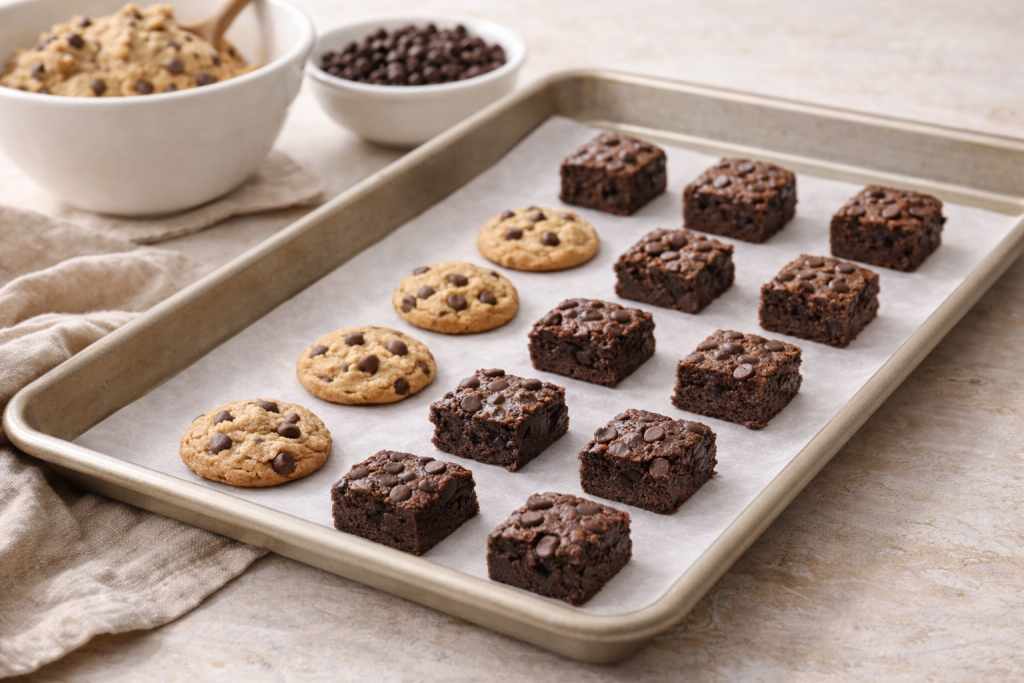
    Mini cookies and brownie bites baked in a small batch on one tray

    Mini desserts and small batch baking naturally go together.

    Oven Temp or Baking Time Off?

    Oven temperature and baking time matter even more in small batch baking, where recipes bake quickly.

    Because mini cookies and bites bake faster, small batches help you:

    • Catch doneness at the right moment
    • Avoid overbaking
    • Test recipes without committing to a full batch
    • Learn how dough behaves

    🔥 Quick Tip: Watch the Oven, Not the Clock

    Visual cues matter more than timers when baking small batches.

    This is especially helpful for beginners or anyone baking with dietary substitutions.


    How Small Batch Baking Improves Texture

    Texture is one of the biggest challenges in baking. Small batch baking helps because:

    • Dough doesn’t sit as long before baking
    • Ingredients stay at consistent temperature
    • You can adjust bake time mid-batch
    • You can pull cookies early if needed

    🧈 Key Takeaway: Freshness Improves Texture

    Baking fewer treats more often leads to softer cookies and better flavor.

    Small batches make it easier to watch doneness cues instead of relying only on bake time.

    This leads to softer cookies, fudgier brownies, and fewer dry edges.


    Common Mistakes When Baking Small Batches

    Small batch baking still has rules. Here’s what to watch for:

    • Cutting large recipes without adjusting bake time
    • Using full-size pans for tiny amounts
    • Overmixing small amounts of dough
    • Forgetting that mini portions bake faster

    Make a Test Batch

    Small batch baking helps you catch common mini cookie mistakes early, before they ruin a full batch.

    Small batch baking works best when recipes are designed to be small.

    Kitchen Supply discusses that accurate measuring is especially important when baking small batches.


    Tools That Make Small Batch Baking Easier

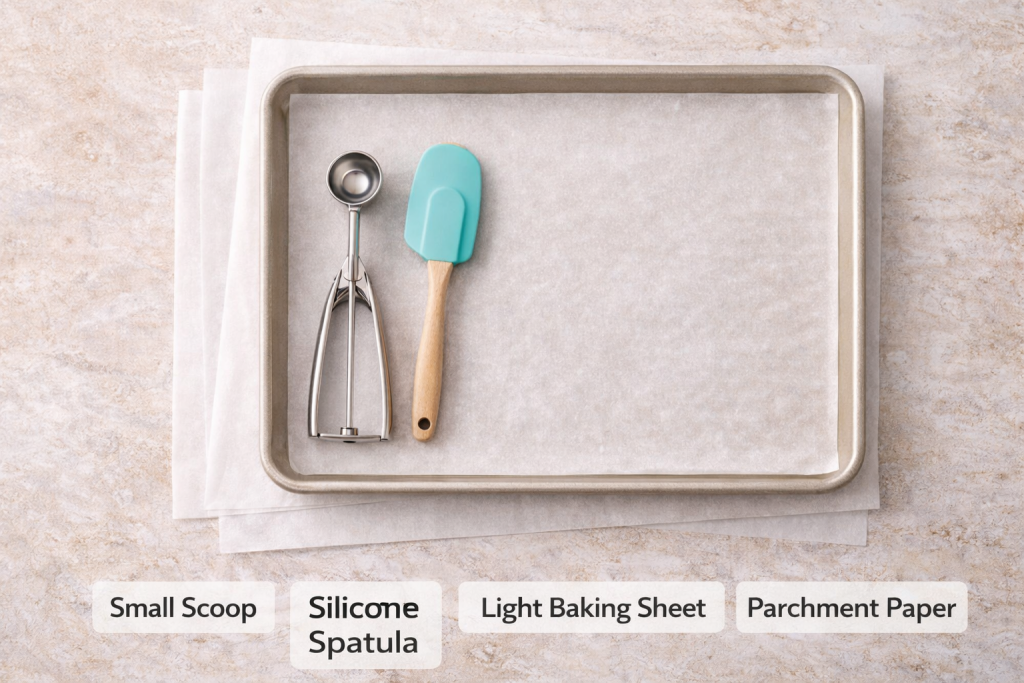
    Small baking tools including a mini cookie scoop, spatula, and baking sheet

    Using the right tools makes small batch baking more consistent, especially when working with mini cookies.

    🔧 Key Takeaway: The Right Tools Matter

    Small scoops, light-colored pans, and parchment help keep results consistent.

    You don’t need special equipment, but a few tools help:

    1 tsp Extra Mini Cookie Scoop

    • The non-slip rubber handle makes it easy to grasp.
    • Just a simple squeeze makes the cookie scoop release the dough easily and neatly

    These tools help maintain consistency when working with small amounts.


    Small Batch Baking for Dietary Needs

    Small batch baking is ideal for:

    • Gluten-free baking
    • Vegan baking
    • Allergy-friendly desserts

    Need Gluten-free?

    Small batch baking works especially well for gluten-free cookies, which benefit from closer timing control.

    When ingredients behave differently, smaller batches let you test texture and timing without waste.

    That’s why small batch baking pairs so well with mini gluten-free cookies and vegan mini desserts.

    🌱 Key Takeaway: Ideal for Dietary Baking

    Small batch baking is perfect for gluten-free or vegan recipes where timing is critical.


    Small Batch Baking vs Scaling Down Recipes

    Not every recipe can simply be divided in half.

    Small batch baking works best when:

    • Ratios are preserved
    • Eggs are adjusted carefully
    • Bake time is reduced significantly
    • Pan size matches batch size

    🧠 Quick Reminder: Don’t Just Cut Recipes in Half

    Not all recipes scale evenly—ratios, eggs, and bake times often need adjustment.

    Recipes written specifically for small batches are more reliable than scaled-down versions.

    Try Yummy Vegan Mini Desserts, too!

    Vegan desserts also benefit from small batch baking, which helps maintain moisture and texture.


    When Small Batch Baking Is the Best Choice

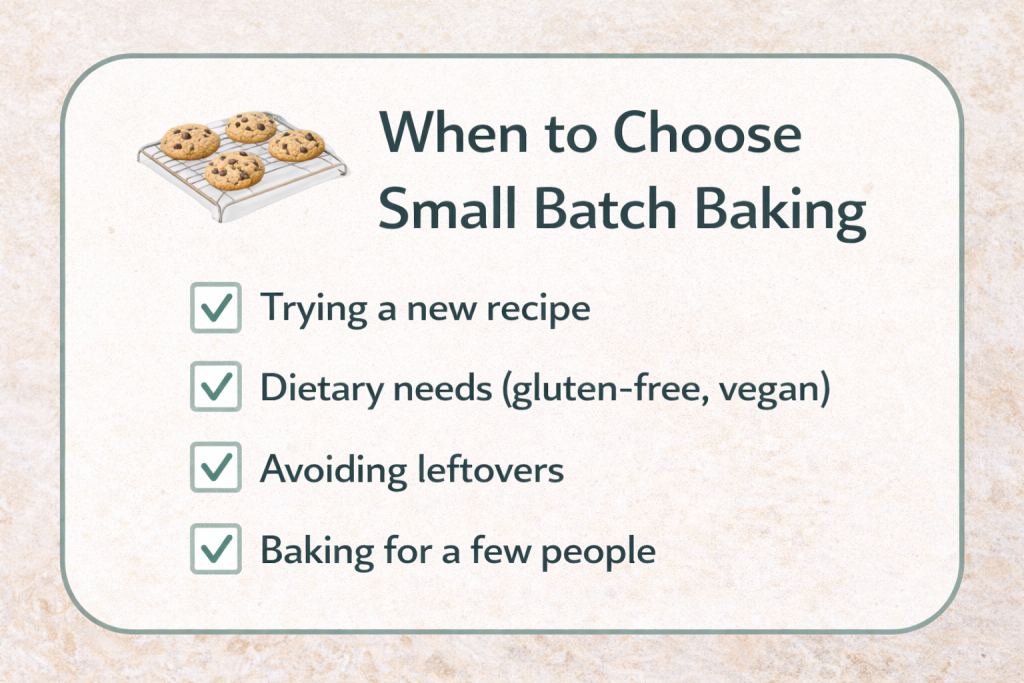
    Infographic showing when to choose small batch baking, including testing recipes and avoiding leftovers

    Small batch baking is perfect when:

    • You want fresh treats without leftovers
    • You’re testing a new recipe
    • You’re baking for one or two people
    • You’re learning new techniques
    • You want consistent results

    It’s less pressure — and often better baking.


    The Big Takeaway

    Small batch baking isn’t about baking less — it’s about baking smarter.

    🎯 Less Waste, More Learning

    Smaller batches mean fewer leftovers and faster feedback when testing recipes.

    By working in smaller amounts, you gain more control over texture, timing, and quality. That’s why small batch baking is the foundation of great mini desserts and consistently good cookies.

    Once you master the basics, you’ll find yourself baking more often — and wasting far less.

    Kitchen Tools I Use

  • 🍪Common Mini Cookie Mistakes (And How to Fix Them)

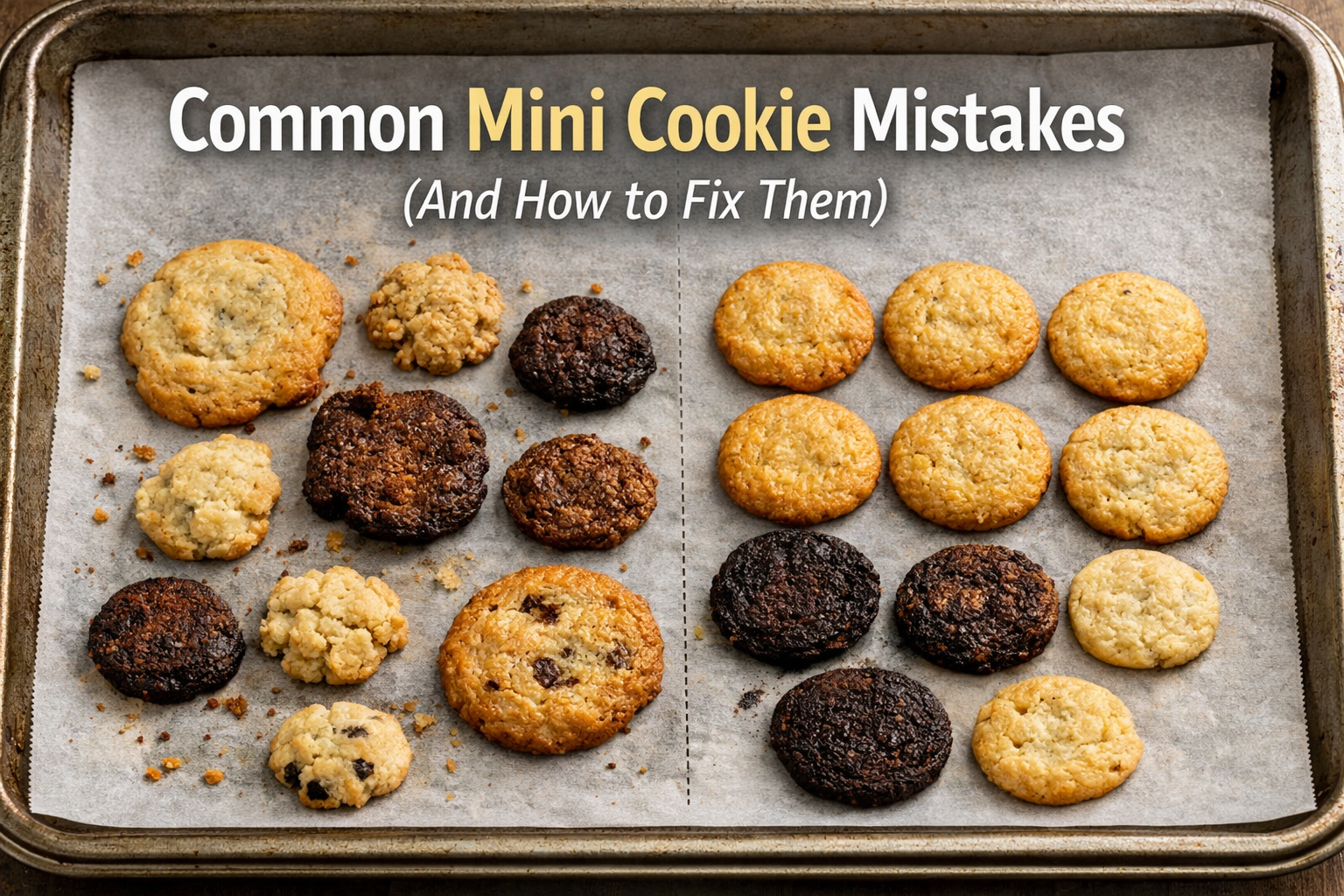
    🍪Common Mini Cookie Mistakes (And How to Fix Them)

    Mini cookies are adorable, fast-baking, and incredibly satisfying — but they’re also less forgiving than full-size cookies. A mistake that barely matters in a regular cookie can completely change the texture of a mini one. These mini cookie mistakes are easy to make, but even easier to fix once you know what to watch for.

    If your mini cookies have ever spread too much, baked too fast, or turned out dry, you’re not alone. These are the most common mini cookie mistakes — and exactly how to fix each one.

    common Mini cookie mistakes on a baking sheet showing uneven sizes and baking results

    New to Baking?

    This guide to baking perfect mini cookies walks through the techniques that help avoid the most common mistakes.

    The 10 Most Common Mini Cookie Mistakes

    Most mini cookie mistakes come down to size, timing, and temperature.

    • Making Them Too Big
    • Overbaking
    • Baking at the Wrong Temperature
    • Skipping Dough Chilling
    • Crowding the Baking Sheet
    • Using the Wrong Baking Surface
    • Not Letting Cookies Cool Properly
    • Expecting Minis to Behave Like Full-Size Cookies
    • Inconsistent Dough Mixing
    • Not Adjusting for Dietary Doughs

    Small batch baking makes it easier to spot and correct these mistakes before they ruin a full batch.


    Mistake #1: Making Them Too Big

    What Happens

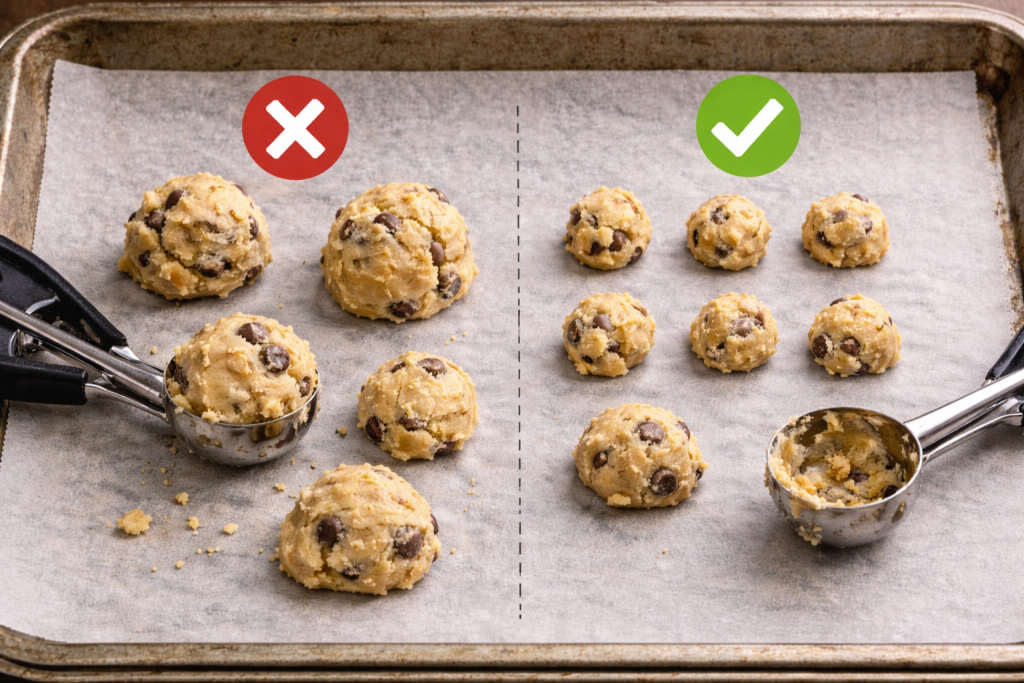
    Oversized “mini” cookies spread too much, bake unevenly, and lose their soft centers.

    Mini cookie dough scoops of different sizes on a baking sheet

    1 tsp Extra Mini Cookie Scoop

    • The non-slip rubber handle makes it easy to grasp.
    • Just a simple squeeze makes the cookie scoop release the dough easily and neatly

    Using the right tools makes portioning and baking mini cookies much more consistent.

    🍪 Size Matters More Than You Think

    Mini cookies need consistent, small portions to bake evenly and stay soft.

    How to Fix It

    • Use a teaspoon or small cookie scoop
    • Aim for 1–1½ teaspoons of dough per cookie
    • Keep dough portions consistent

    Mini cookies rely on size control more than any other factor.


    Mistake #2: — One of the Most Common Mini Cookie Mistakes

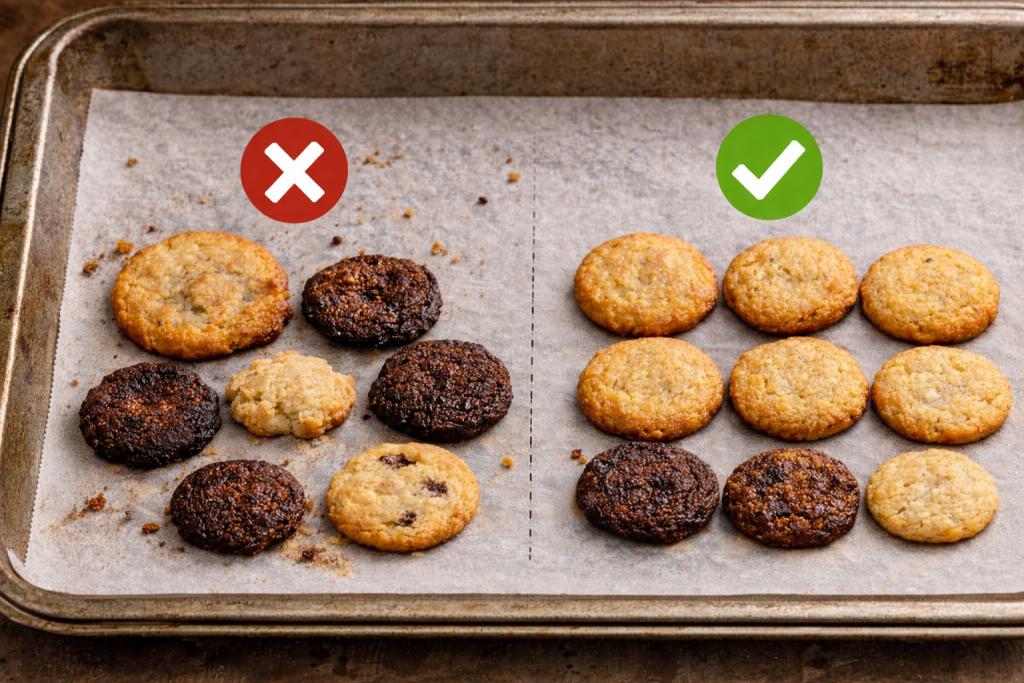
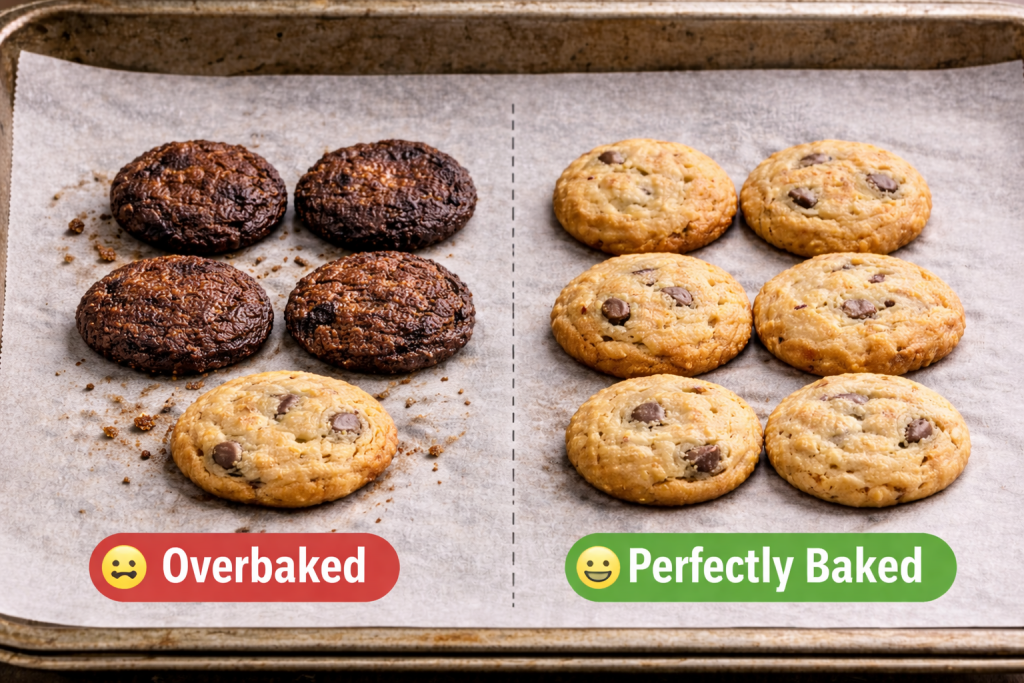
    Comparison of overbaked and properly baked mini cookies showing texture differences

    What Happens

    Mini cookies go from soft to dry in minutes — sometimes seconds.

    ⏱️ Key Takeaway: Overbaking Happens Fast

    Mini cookies can go from perfect to dry in minutes — start checking early.

    🔥 Trust Visual Doneness, Not the Timer

    Look for set edges and soft centers. The oven clock isn’t enough for minis.

    How to Fix It

    • Start checking cookies 2–3 minutes earlier than recipes suggest
    • Look for set edges and soft centers
    • Remember cookies continue baking on the hot pan

    Visual cues are more reliable than bake time when it comes to knowing when mini cookies are done.

    When in doubt, pull them early.

    Avoid Mistakes When Possible

    Many of these mini cookie mistakes can be avoided by using the right baking tools.


    Mistake #3: Baking at the Wrong Temperature

    What Happens

    Too hot: cookies spread and brown too fast
    Too cool: cookies dry out before setting

    Pay Attention to Your Oven Temp & Time

    Oven temperature and bake time play a huge role in mini cookie results, especially since they bake so quickly.

    How to Fix It

    • Bake most mini cookies at 350°F (175°C)
    • Use an oven thermometer if possible
    • Avoid baking multiple trays at once early on

    🌡️ Oven Accuracy Is Critical

    Even small temperature differences can ruin mini cookies — use an oven thermometer if possible.

    Consistent heat matters more with small cookies. Butter temperature and dough warmth play a major role in how cookies spread during baking.


    Mistake #4: Skipping Dough Chilling

    What Happens

    Warm dough spreads too quickly, especially in mini form.

    ❄️ Chilling Dough Is Not Optional

    Chilled dough helps mini cookies hold their shape and bake evenly.

    How to Fix It

    • Chill dough 20–30 minutes minimum
    • Chill scooped dough for even better control
    • Especially important for butter-heavy or gluten-free doughs

    Chilling gives mini cookies structure before baking.


    Mistake #5: Crowding the Baking Sheet

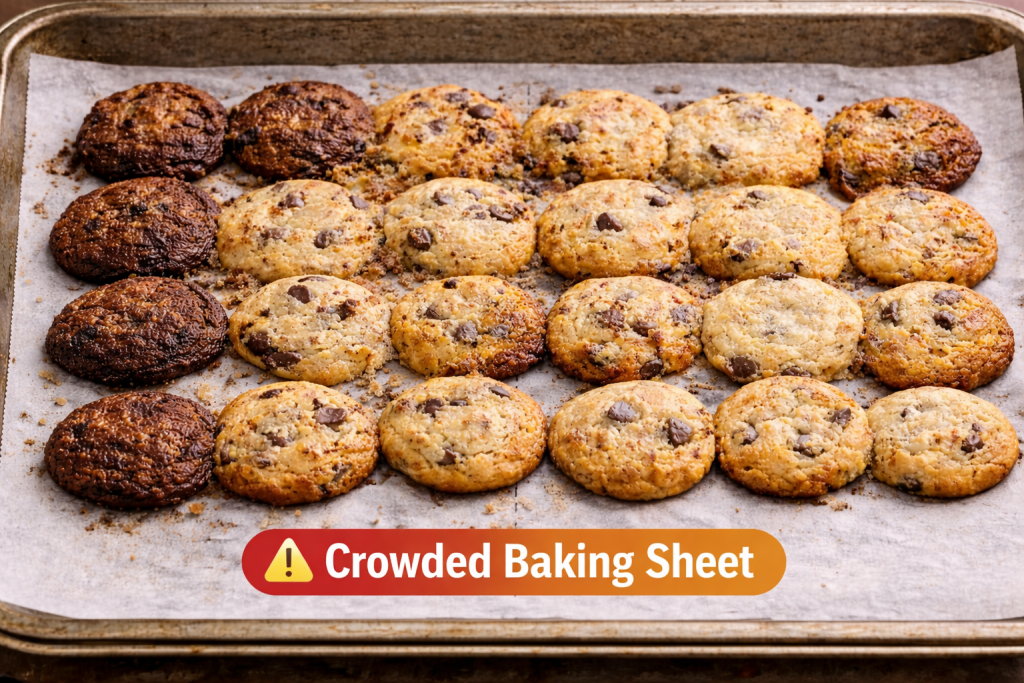
    Mini cookies baked too close together on a crowded baking sheet

    What Happens

    Cookies bake unevenly and steam instead of setting.

    🍽️ Give Cookies Space

    Crowded baking sheets lead to uneven baking and poor texture.

    How to Fix It

    • Leave 1½–2 inches between cookies
    • Bake fewer cookies per tray
    • Rotate the pan halfway through if needed

    Mini cookies still need breathing room.


    Mistake #6: Using the Wrong Baking Surface

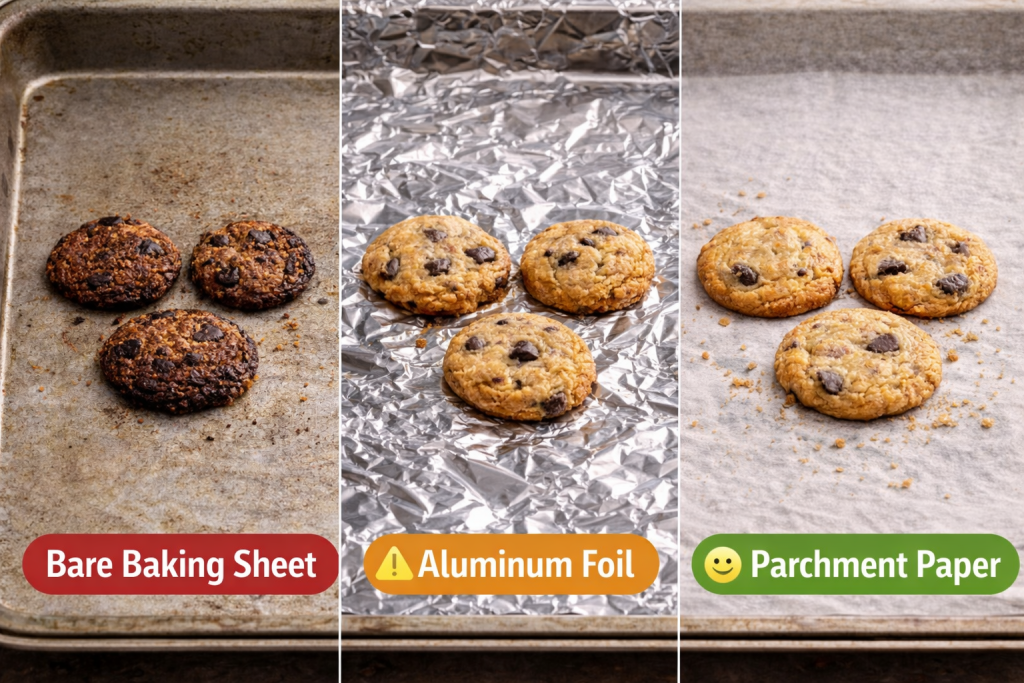
    Mini cookies baked on dark pan versus light pan showing different browning

    What Happens

    Cookies burn on the bottom or bake unevenly.

    🧈 Baking Surfaces Matter

    Light-colored pans with parchment or silicone mats work best for mini cookies.

    How to Fix It

    • Use light-colored metal baking sheets
    • Line with parchment paper or a silicone mat
    • Avoid dark or insulated pans for minis

    Surface choice has a bigger impact on small cookies.

    Different baking surfaces affect browning and heat transfer in cookies.


    Mistake #7: Not Letting Cookies Cool Properly

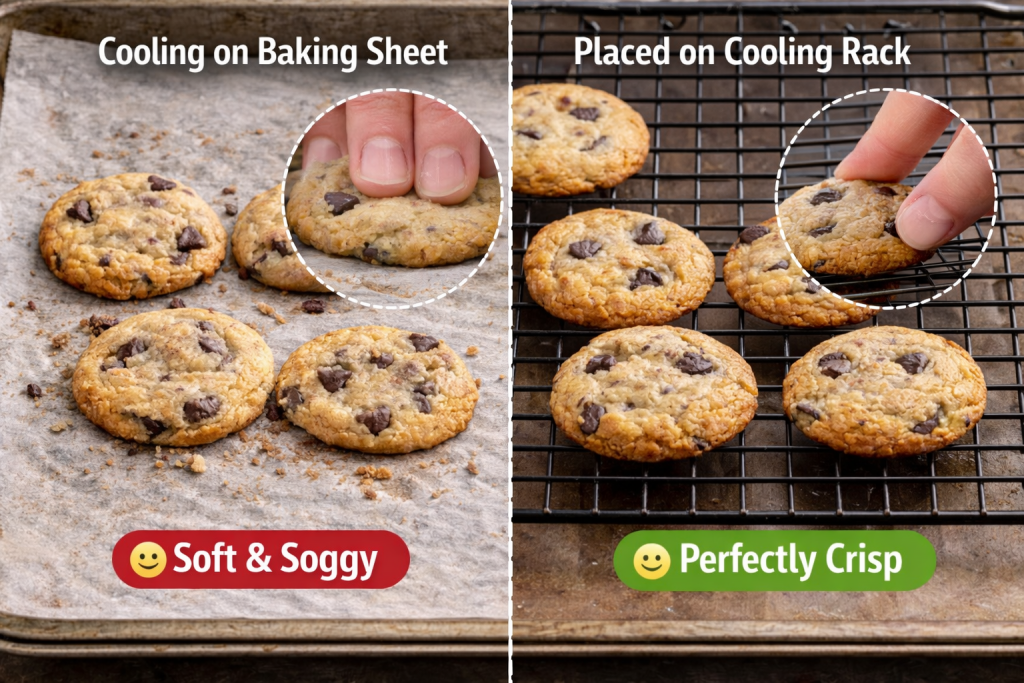
    Mini cookies cooling on a wire rack after baking

    What Happens

    Cookies seem underbaked or crumbly when they’re actually still setting.

    🕒 Cooling Is Part of Baking

    Mini cookies often finish setting as they cool. Don’t judge texture too soon.

    How to Fix It

    • Let cookies rest 5 minutes on the pan
    • Transfer to a rack to cool completely
    • Judge texture after cooling, not immediately

    Mini cookies often firm up as they cool.


    Mistake #8: Expecting Minis to Behave Like Full-Size Cookies

    What Happens

    Recipes adapted directly from large cookies don’t always work.

    🧠 Minis Play by Different Rules

    Mini cookies aren’t just smaller cookies — they require different timing and attention.

    How to Fix It

    • Reduce bake time significantly
    • Watch doneness cues instead of the clock
    • Adjust expectations — minis are their own thing

    Mini cookies follow different rules.

    Mini cookies pair perfectly with small batch baking, which makes testing and adjustments easier.

    Remember to Account for Mistakes When Pricing

    Underpricing often happens when bakers underestimate how much effort mini desserts really take.


    Mistake #9: Inconsistent Dough Mixing

    What Happens

    Some cookies bake perfectly while others spread or dry out.

    How to Fix It

    • Mix dough just until combined
    • Scrape the bowl thoroughly
    • Scoop dough from evenly mixed areas

    Consistency starts before the oven.

    5 Pieces Silicone Spatula Set

    Useful set of mini spatulas for mixing, folding, and scraping small batches.


    Mistake #10: Not Adjusting for Dietary Doughs

    What Happens

    Gluten-free or vegan mini cookies dry out faster.

    New to Gluten-free?

    Gluten-free doughs are especially sensitive to these mini cookie mistakes and benefit from shorter bake times.

    How to Fix It

    • Reduce bake time even further
    • Add moisture-supporting ingredients
    • Chill dough longer
    • Pull cookies earlier than traditional dough

    Mini + dietary baking requires extra care.

    These same mini cookie principles also apply to vegan doughs, which can dry out quickly if overbaked.


    The One Rule That Fixes Most Mini Cookie Problems

    If there’s one takeaway, it’s this:

    Mini cookies should look slightly underbaked when you remove them from the oven.

    That single adjustment fixes:

    • Dry cookies
    • Crumbly texture
    • Overbrowning
    • Loss of chew
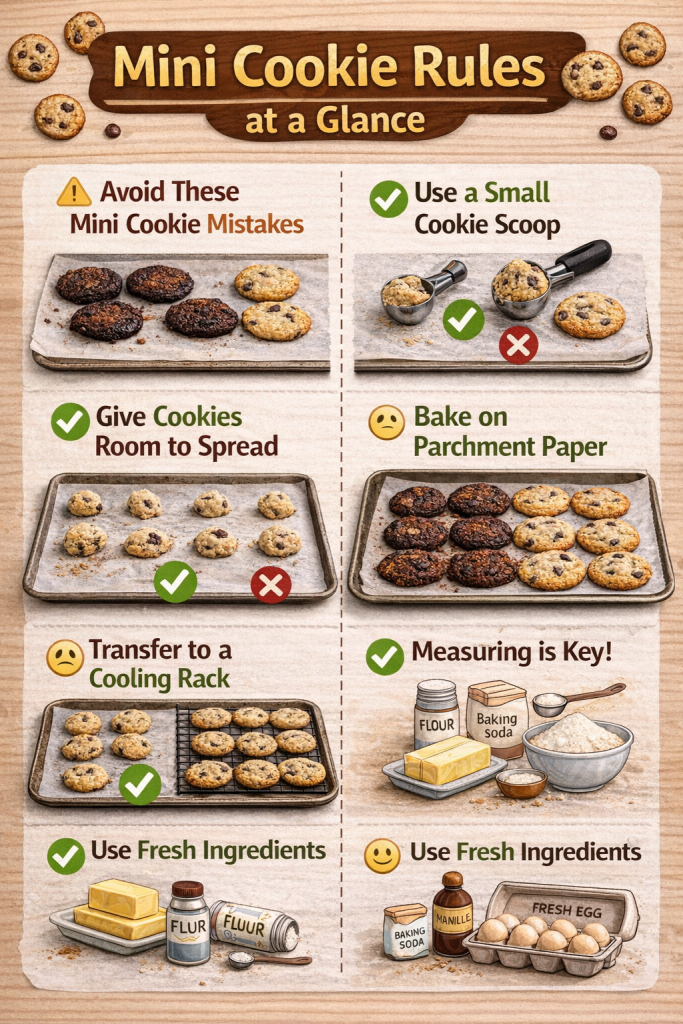
    Mini cookie baking rules infographic showing portion size, spacing, baking surfaces, and cooling tips

    Bake Smaller, Bake Smarter

    🎯 One Rule to Remember

    If mini cookies look perfect in the oven, they’re probably overbaked. Pull them slightly early.

    Mini cookies aren’t harder — they’re just more precise. Once you understand how size affects baking time, temperature, and texture, mini cookies become incredibly reliable.

    Avoiding these mini cookie mistakes makes baking smaller cookies faster, easier, and more reliable.

    Fix these common mistakes, and your mini cookies will bake faster, softer, and more consistently every time.

    Cookie Tools I Use

  • How to Store & Freeze Mini Cookies Without Drying Them Out

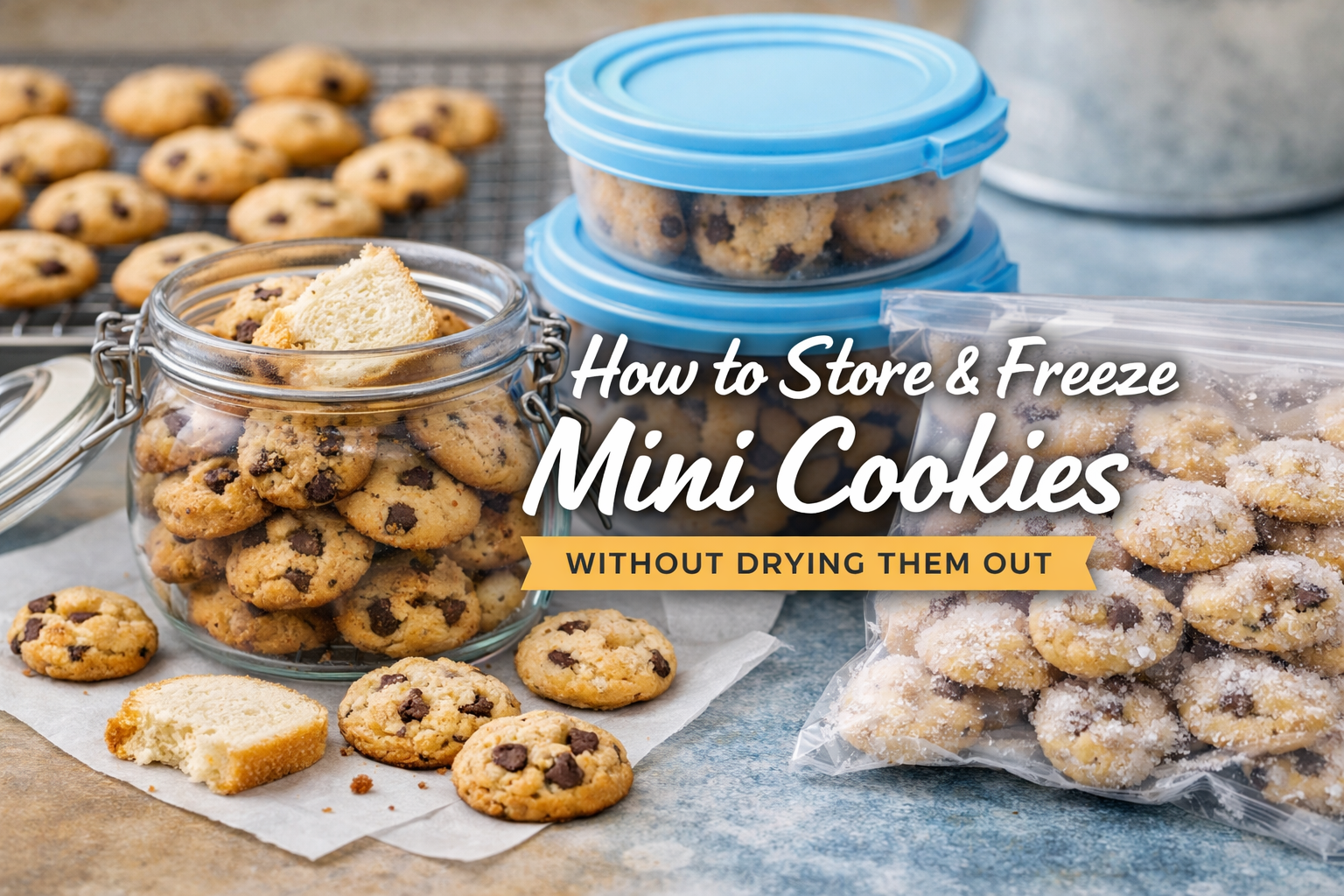
    How to Store & Freeze Mini Cookies Without Drying Them Out

    Learning how to store and freeze mini cookies properly helps keep them soft, fresh, and never dried out.

    If you’ve ever baked mini cookies only to find them dry or stale the next day, storage is usually the problem. Learning how to store cookies properly—and when freezing mini cookies makes sense—can keep them soft, flavorful, and bakery-quality for days (or weeks).

    Because mini cookies have more surface area than full-size cookies, they need a little extra care after baking.

    If you’re baking smaller treats, this ultimate guide to baking perfect mini cookies covers sizing, bake times, and common mistakes that affect storage.

    When you know how to store and freeze mini cookies correctly, you can enjoy fresh-tasting cookies days or even weeks later.

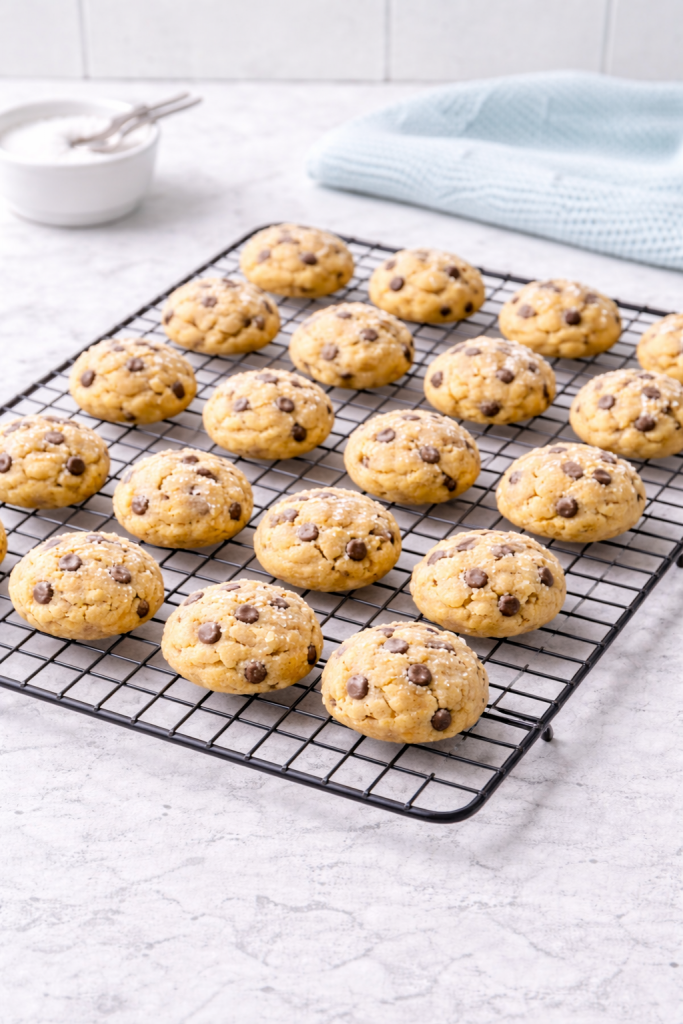
    Freshly baked mini cookies cooling on a wire rack on a kitchen counter

    🍪 Why Mini Cookies Dry Out Faster

    Mini cookies lose moisture more quickly because:

    • They’re smaller
    • They have more exposed edges
    • They cool faster after baking

    The good news? The right storage method fixes all of this.

    Rubbermaid Brilliance Large Food Storage Container

    • The Brilliance Food Storage Container from Rubbermaid is a convenient way to store
    • Stackable for optimal fridge or freezer organization

    Proper storage makes a big difference when you store and freeze mini cookies.


    🫙 How to Store and Freeze Mini Cookies Properly

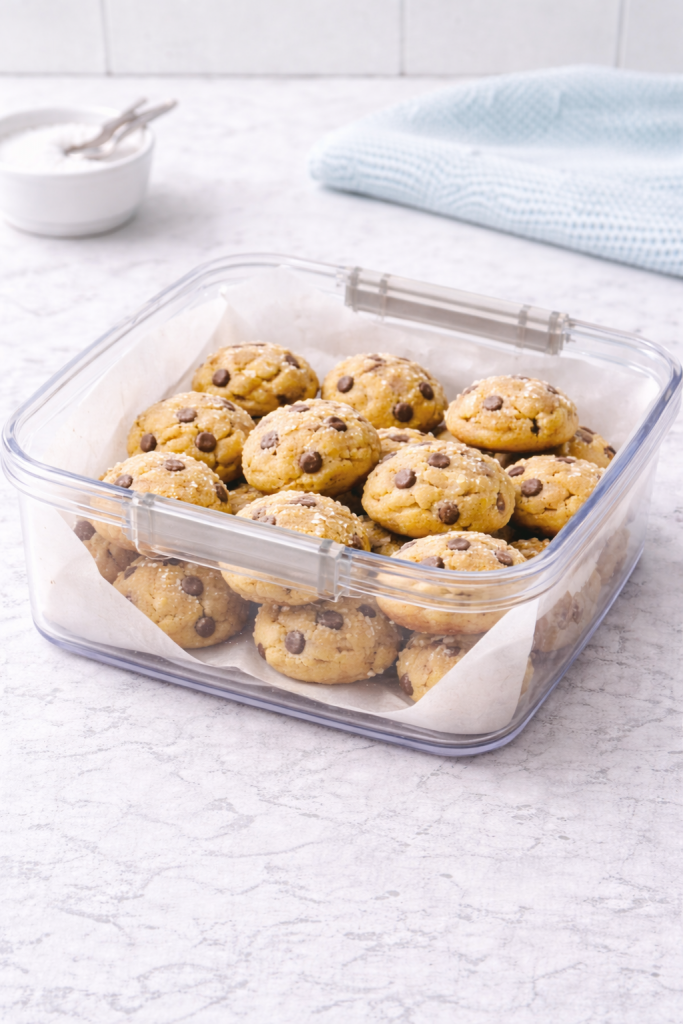
    How to Store and Freeze Mini Cookies Properly in an airtight container lined with parchment paper

    Storage Makes the Difference

    Mini cookies dry out faster than full-size cookies, so proper storage is key to keeping them soft and fresh.

    For cookies you’ll eat within 2–3 days, room temperature storage works best.

    ✅ Best Method

    1. Let cookies cool completely
    2. Store in an airtight container
    3. Place a sheet of parchment between layers
    4. Keep away from heat and sunlight

    Keep Cookies Soft

    Adding a small slice of bread to the container helps maintain moisture and keeps cookies from drying out.


    ❄️ Refrigerating Cookies: When to Avoid It

    Refrigeration often dries cookies out faster and is not recommended for most mini cookies.

    Skip the Fridge

    For most cookies, room-temperature storage in an airtight container works better than refrigeration.

    Only refrigerate cookies if:

    • They contain perishable fillings or toppings
    • Food safety requires it

    Otherwise, stick to room temperature or freezing.

    Trapped steam is one of the most common reasons cookies become soggy or stale after storage, which is why cooling fully before storing matters.


    🧊 Freezing Mini Cookies (Baked)

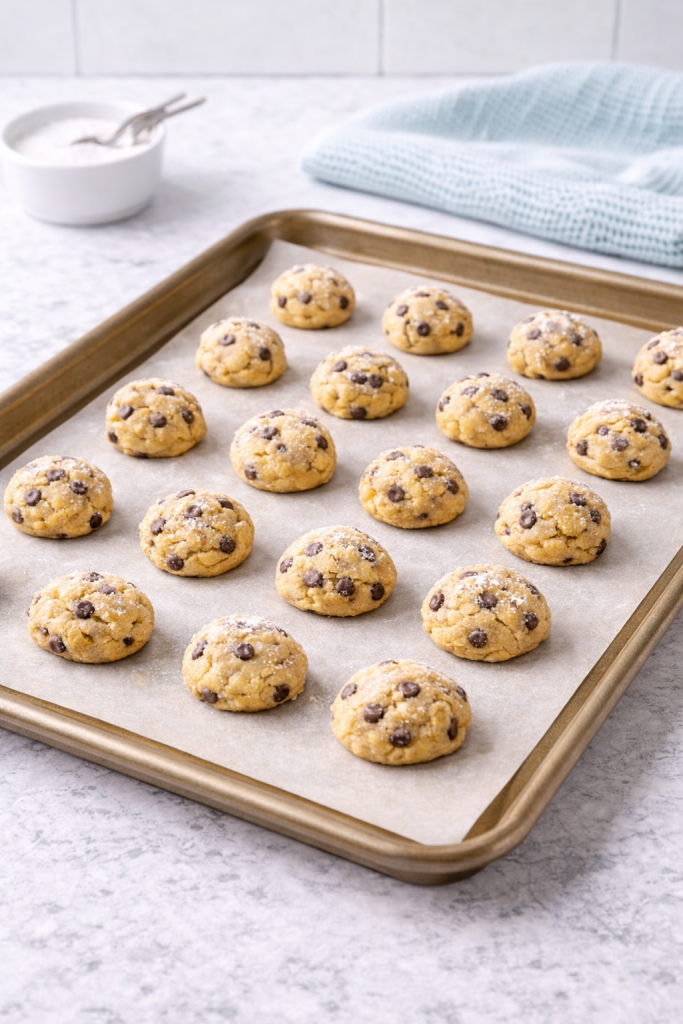
    Mini cookies arranged on a parchment-lined baking sheet ready to freeze

    Freezing is the best long-term option for keeping mini cookies fresh.

    This step-by-step guide explains exactly how to freeze mini cookie dough so it bakes fresh later without drying out.

    Freeze for Later

    Freezing mini cookies or dough is the best way to preserve texture and flavor for longer storage.

    How to Freeze Baked Mini Cookies

    1. Cool cookies completely
    2. Place in a single layer on a baking sheet
    3. Freeze until solid (about 1 hour)
    4. Transfer to a freezer-safe bag or container

    Storage Time

    • Freeze for up to 2 months
    • Label with date and cookie type
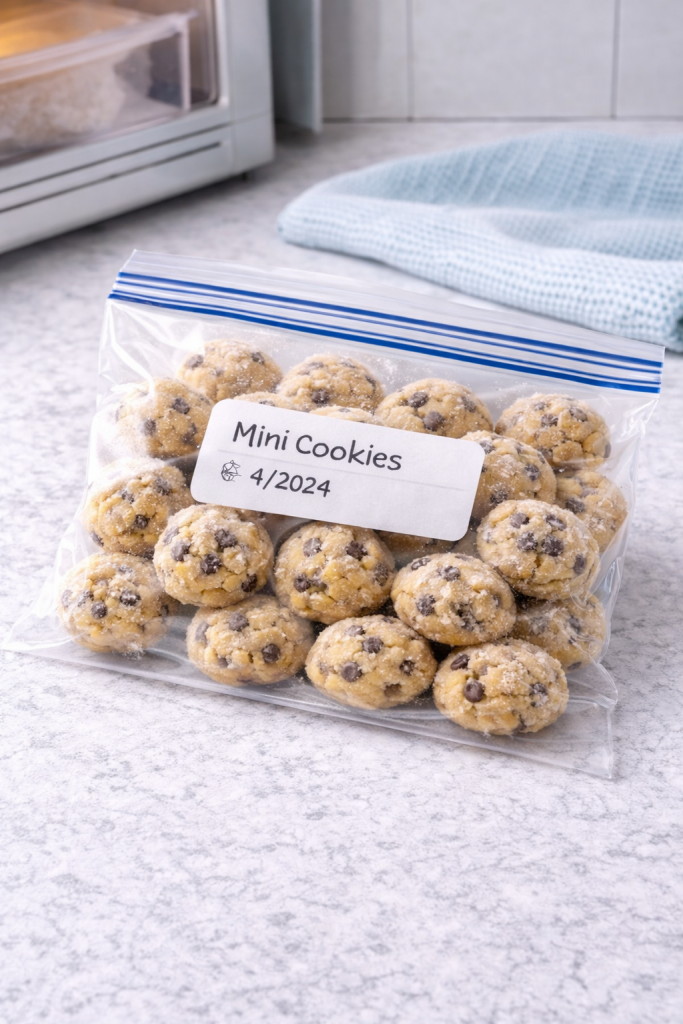
    Frozen mini cookies stored in a labeled freezer-safe bag

    According to food safety guidelines, properly stored baked goods can be frozen for several months without safety concerns.


    🍪 Freezing Mini Cookie Dough (Best Option)

    If you want freshly baked cookies anytime, freezing dough is ideal.

    Freeze the Dough Instead

    Freezing mini cookie dough lets you bake fresh cookies anytime without risking dry leftovers.

    1 tsp Extra Mini Cookie Scoop

    • The non-slip rubber handle makes it easy to grasp.
    • Just a simple squeeze makes the cookie scoop release the dough easily and neatly

    How to Freeze Dough Portions

    1. Scoop dough into mini portions
    2. Freeze portions on a tray until firm
    3. Transfer to a freezer bag

    Bake directly from frozen—just add 1–2 extra minutes to the bake time.


    🔥 How to Thaw & Reheat Mini Cookies

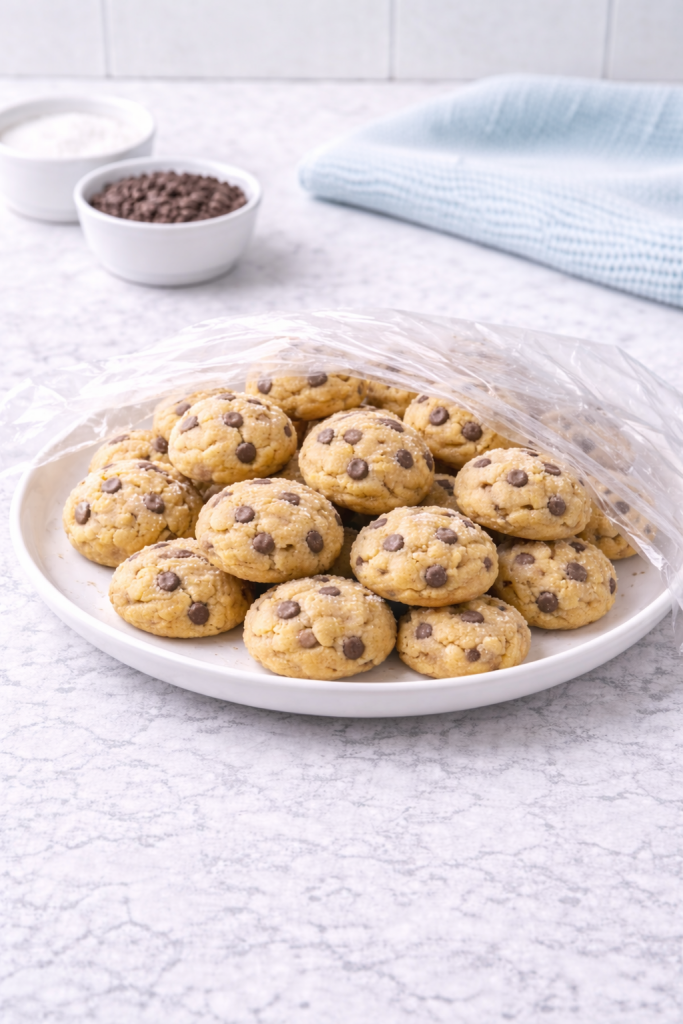
    Mini cookies thawing at room temperature on a plate

    Thawing

    • Let cookies sit at room temperature for 15–20 minutes

    Reheating (Optional)

    • Warm in a 300°F oven for 3–4 minutes
    • Or microwave for 5–8 seconds (careful not to overdo it)

    Exposure to air causes cookies to lose moisture and go stale faster, which is why airtight storage is recommended for maintaining texture.


    💡 Tips to Prevent Dry Cookies

    Overbaking is a common reason cookies dry out, especially smaller ones.

    • Store cookies once completely cooled
    • Use airtight containers only
    • Avoid overbaking (mini cookies bake fast!)
    • Freeze dough instead of baked cookies when possible

    Mini cookies bake quickly, so pulling them early helps prevent dryness after storage.

    Mini cookies bake quickly, so pulling them early helps prevent dryness after storage.

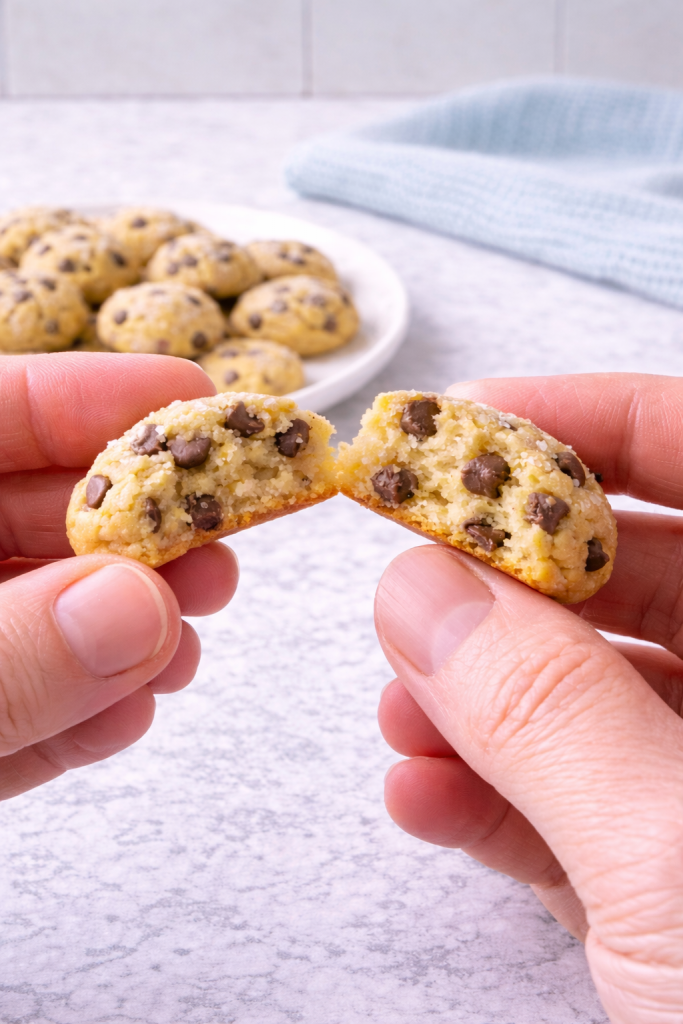
    Mini cookie broken in half showing a soft interior after freezing

    🍪 Final Thoughts

    Knowing how to store cookies properly—and mastering freezing mini cookies—makes a huge difference in texture and flavor. With these simple steps, your mini cookies can stay soft, fresh, and ready whenever a craving hits.

    Properly learning how to store and freeze mini cookies helps prevent dryness, freezer burn, and loss of texture.

    These storage tips work especially well for soft cookies like mini chocolate chip cookies.

    Cookie Tools I Use