Tag: baking basics

Essential foundational knowledge for every baker. This tag covers the core principles of the kitchen, including how to measure ingredients accurately, understanding the roles of leavening agents, and mastering fundamental techniques like creaming butter and sugar to ensure a perfect bake every time.

  • Oven Temperature & Baking Time for Mini Cookies

    Oven Temperature & Baking Time for Mini Cookies

    Oven temperature for mini cookies plays a bigger role in texture and doneness than most bakers realize.

    Mini cookies are small, but they’re unforgiving. A difference of 30 seconds or a few degrees can mean the difference between soft and chewy… or dry and crumbly.

    That’s why oven temperature and baking time matter more for mini cookies than full-size cookies. Once you understand how heat works at a smaller scale, mini cookies become easy and reliable.
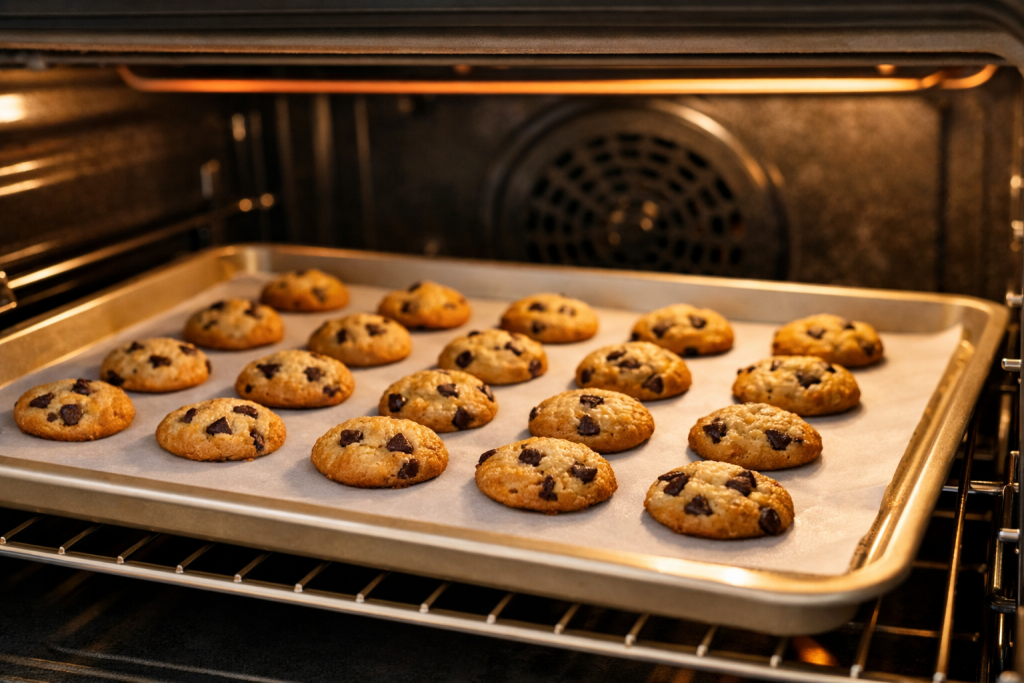
    Good oven temperature for mini cookies baking evenly on a light-colored baking sheet in an oven

    Why Mini Cookies Bake Differently

    Getting the oven temperature for mini cookies right prevents dry edges, pale centers, and uneven baking.

    Mini cookies:

    • Have less mass
    • Heat up faster
    • Finish baking quickly
    • Continue baking after leaving the oven
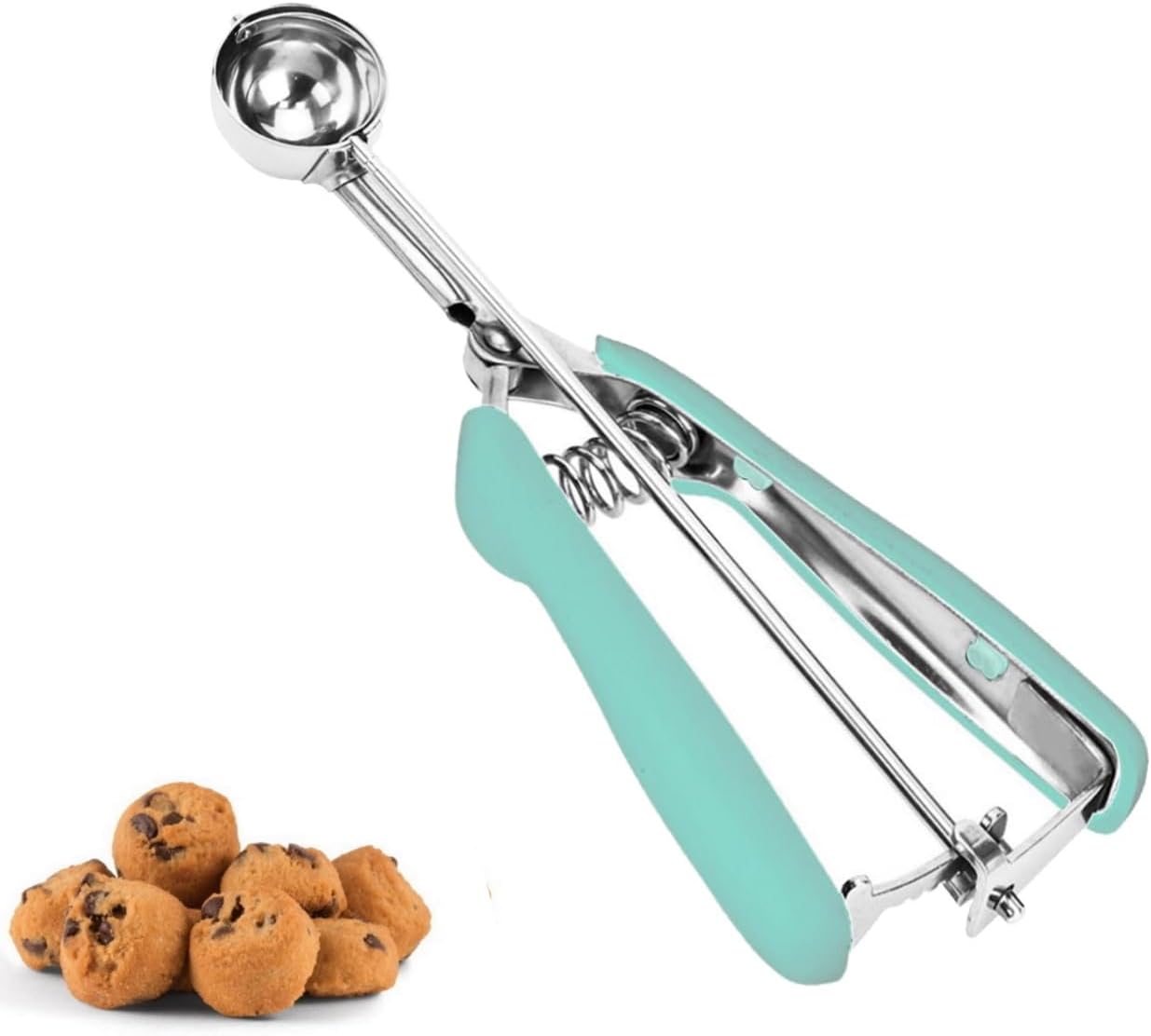
    1 tsp Extra Mini Cookie Scoop

    • The non-slip rubber handle makes it easy to grasp.
    • Just a simple squeeze makes the cookie scoop release the dough easily and neatly

    This means they don’t follow the same timing rules as standard cookies. You can’t just “bake until golden” and walk away.
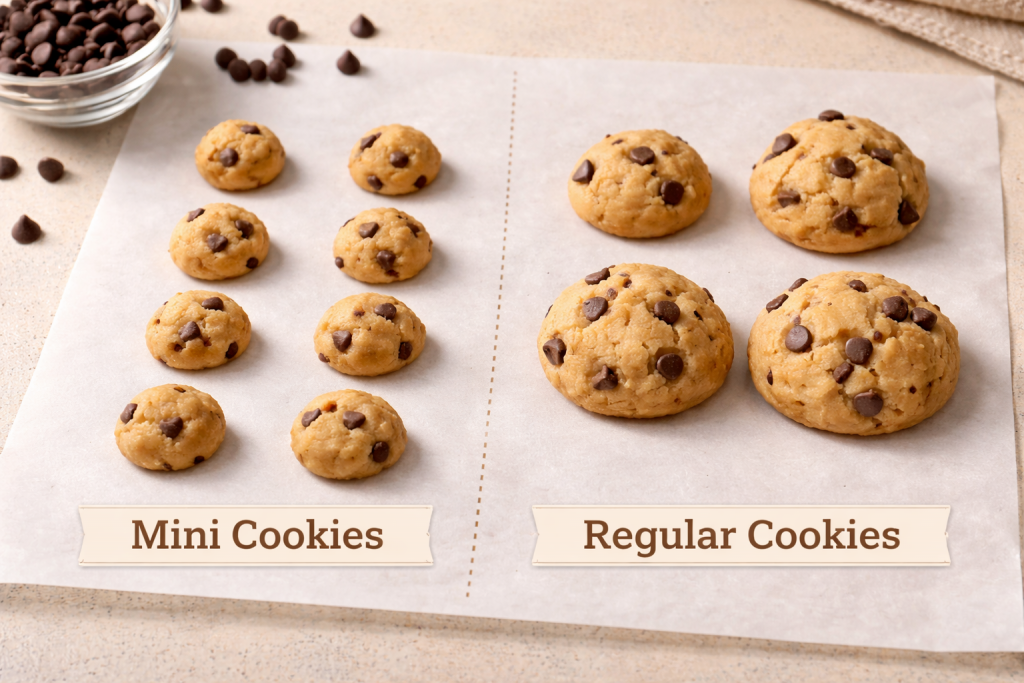
    Mini cookie dough balls compared to regular-sized cookie dough balls

    The Best Oven Temperature for Mini Cookies Explained

    350°F (175°C) is the sweet spot

    🍪 Taylor Precision Oven Thermometer

    Ensures accurate oven temperature so mini cookies don’t overbake too quickly.

    Most mini cookies bake best at 350°F, which allows:

    • Even spreading
    • Controlled browning
    • Enough time to catch doneness

    Oven Temperature & Timing is Key!

    Understanding oven temperature and timing is key to baking consistently perfect mini cookies.

    Lower temperatures can cause excess spreading. Higher temperatures can brown the bottoms too fast before the centers set.

    When to Adjust the Temperature

    • Try 325°F if your oven runs hot or cookies brown too quickly
    • Avoid 375°F+ unless a recipe specifically calls for it

    Typical Baking Time for Mini Cookies

    Perfect Batches for Mini Cookies

    Mini cookies pair perfectly with small batch baking, where timing and temperature control matter most.

    Mini cookies usually bake in 6–9 minutes, depending on:

    • Dough type
    • Cookie size
    • Pan material
    • Oven accuracy

    General Timing Guide

    • Very small (½–1 tsp dough): 6–7 minutes
    • Standard mini (1–1½ tsp): 7–9 minutes

    Always start checking early. Mini cookies don’t give much warning before overbaking.


    Why Bake Time Is Only a Guideline
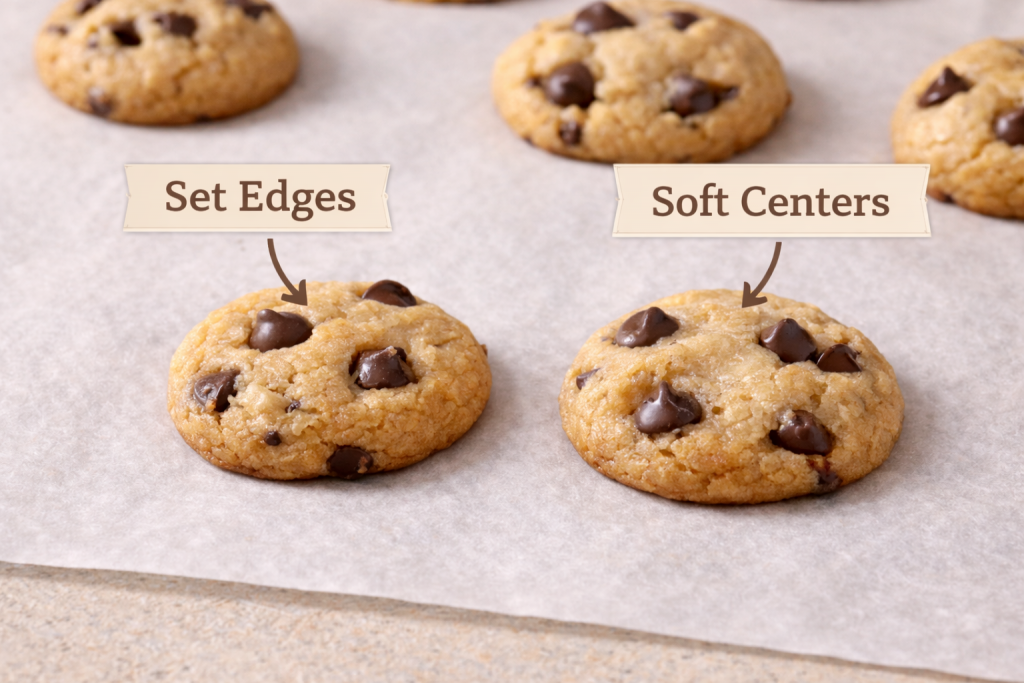
    Mini cookies showing set edges and soft centers indicating proper doneness

    Bake time is helpful — but visual cues matter more, especially with mini cookies.

    Mini cookies are usually done when:

    • The edges look set
    • The centers look slightly underbaked
    • The tops lose their raw shine

    How to Tell When Mini Cookies Are Done

    Visual cues matter more than the clock when deciding when mini cookies are done.

    They should look almost done when you pull them from the oven.


    Carryover Baking: The Step Everyone Misses
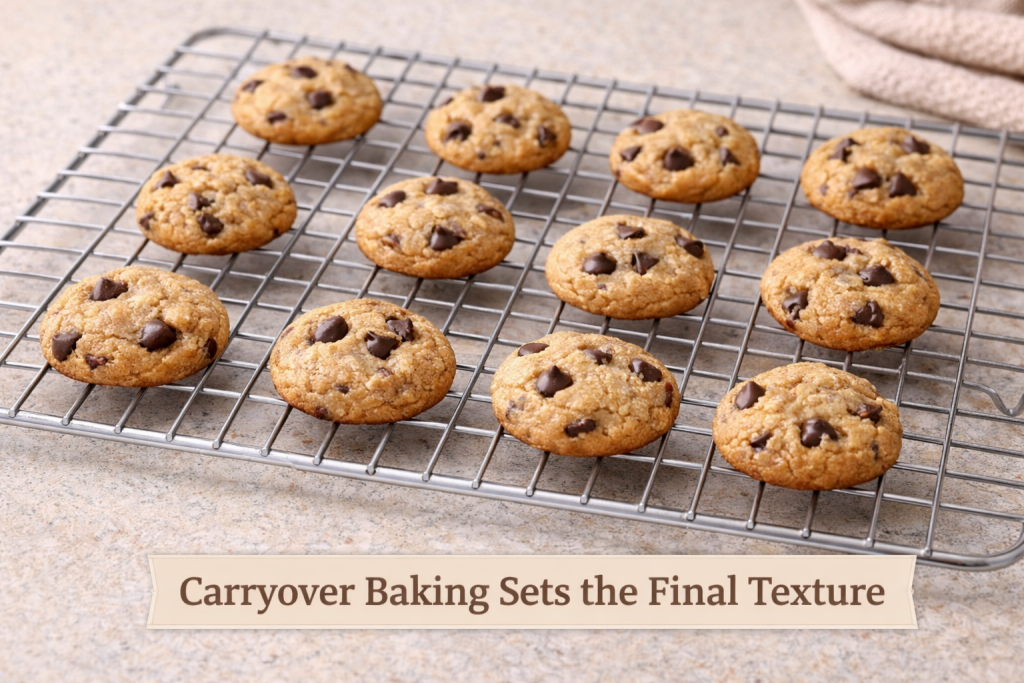
    Mini cookies cooling on a wire rack after being removed from the oven

    Mini cookies continue baking from residual heat after you remove them from the oven.

    That means:

    • Waiting until they look fully baked = overbaked cookies
    • Pulling them slightly early = soft, chewy centers

    Reduce Waste Costs

    Efficient baking processes help keep costs predictable when pricing mini desserts.

    This carryover effect is stronger in mini cookies because they’re so small. Cookies continue cooking from residual heat after being removed from the oven.


    How Pan Choice Affects Baking Time
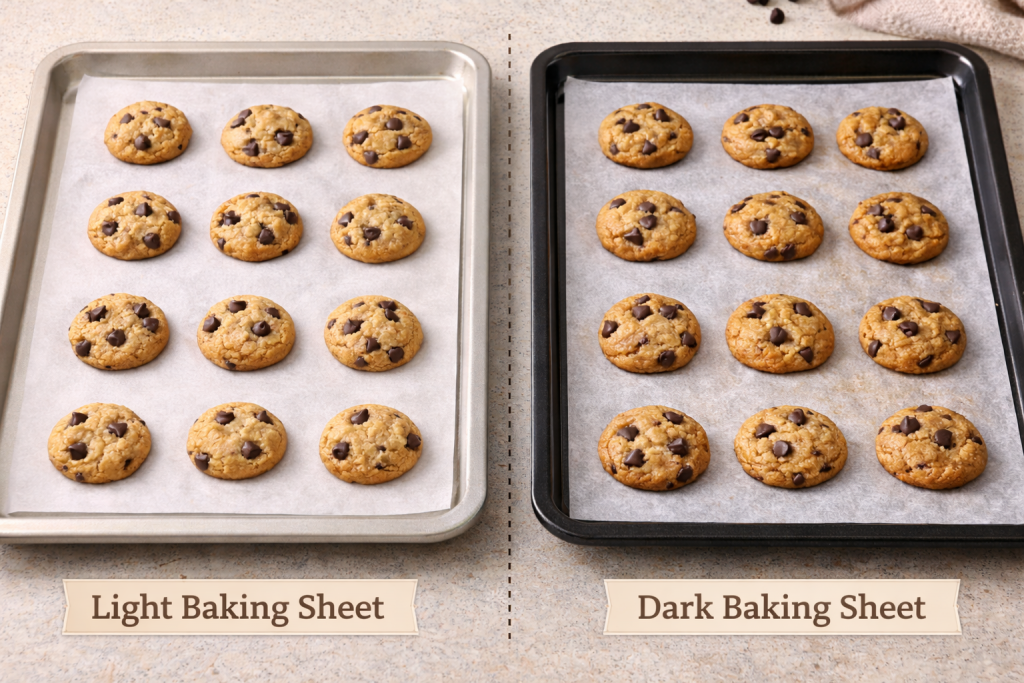
    Mini cookies baked on light and dark baking sheets showing different browning

    Your baking sheet changes how fast mini cookies bake.

    • Light-colored pans: Even baking, more forgiving
    • Dark pans: Faster browning, higher risk of overbaking
    • Thin pans: Heat up quickly
    • Insulated pans: Slow baking slightly

    Martha Stewart Gallen 3-Piece Cookie Sheet Set

    Complete bakeware set with nonstick sheets for cookies.

    If your cookies brown too fast on the bottom, your pan is likely the issue — not the recipe.


    Why Oven Accuracy Matters More for Minis
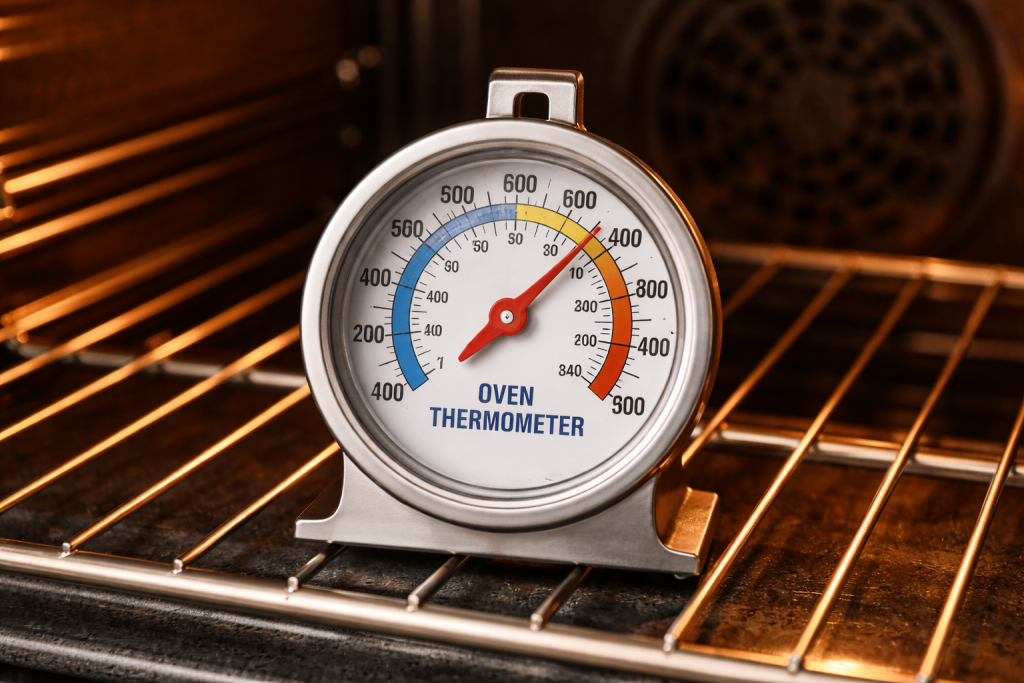
    Oven thermometer showing the true temperature inside a home oven

    Many home ovens run 10–25°F off from what the dial says.

    That difference barely matters for a 12-minute cookie… but it matters a lot for a 7-minute mini cookie.

    Best Tools for Mini Cookies

    Tools like oven thermometers and light-colored pans make mini cookie timing much easier to manage.

    An oven thermometer helps you:

    • Confirm your true temperature
    • Adjust bake time accurately
    • Avoid dry or burnt cookies

    Gluten Free?

    Gluten-free mini cookies are especially sensitive to oven temperature and baking time.

    Many home ovens run hotter or cooler than the dial indicates, which affects baking results.


    Rack Placement for Mini Cookies

    Always bake mini cookies on the center rack.

    • Too high → tops brown too fast
    • Too low → bottoms overbake

    Even small rack shifts can change results when bake times are short.


    Common Mini Cookie Timing Mistakes

    Overbaking is one of the most common mini cookie mistakes and is usually caused by timing issues.

    Avoid these:

    • Waiting for golden color
    • Baking minis as long as full-size cookies
    • Ignoring pan color
    • Trusting the oven dial blindly
    • Leaving cookies on the hot pan too long

    Most mini cookie failures come down to timing, not ingredients. Oven temperature for mini cookies affects bake time more than most bakers expect.
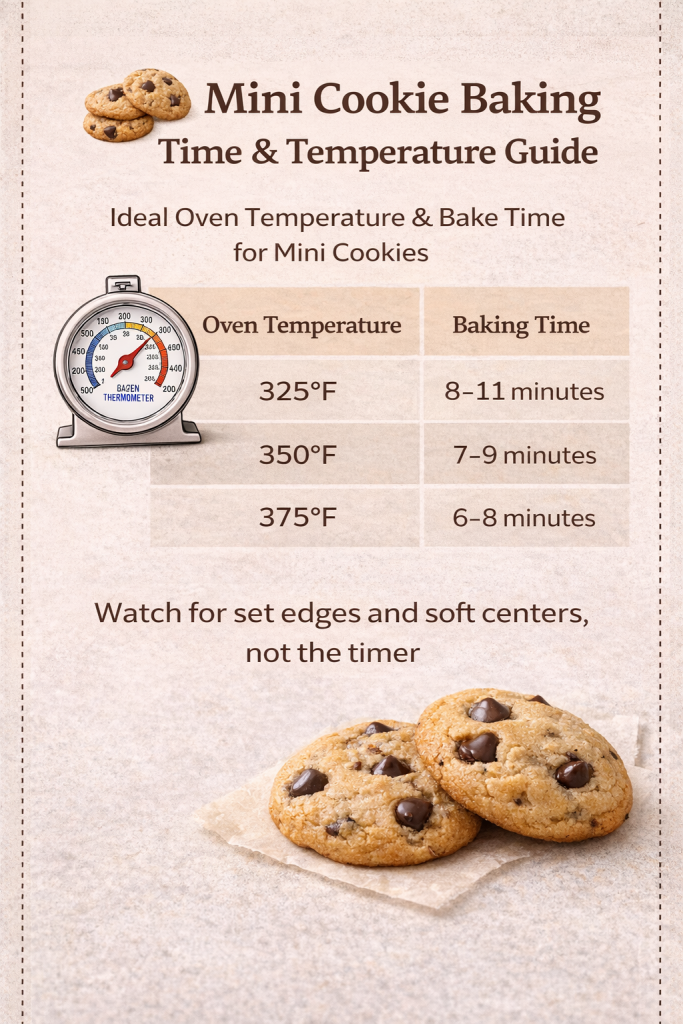
    Mini cookie baking time and temperature guide chart

    A Simple Mini Cookie Timing Routine

    For consistent results:

    1. Preheat fully to 350°F
    2. Use a light-colored pan with parchment
    3. Start checking cookies at the minimum time
    4. Pull when edges are set but centers look soft
    5. Let cool briefly on the pan, then transfer to a rack

    This routine works for most mini cookie recipes.

    Are You Baking Vegan?

    Vegan mini desserts bake quickly and benefit from careful temperature and timing control.


    The Big Takeaway

    Mastering oven temperature for mini cookies makes baking faster, easier, and more consistent. Mini cookies reward attention with their delicious taste!

    When you control oven temperature and baking time, mini cookies become:

    • Softer
    • Chewier
    • More consistent
    • Less stressful

    Once you dial this in, you’ll stop guessing — and start baking mini cookies with confidence.

    Cookie Tools I Use

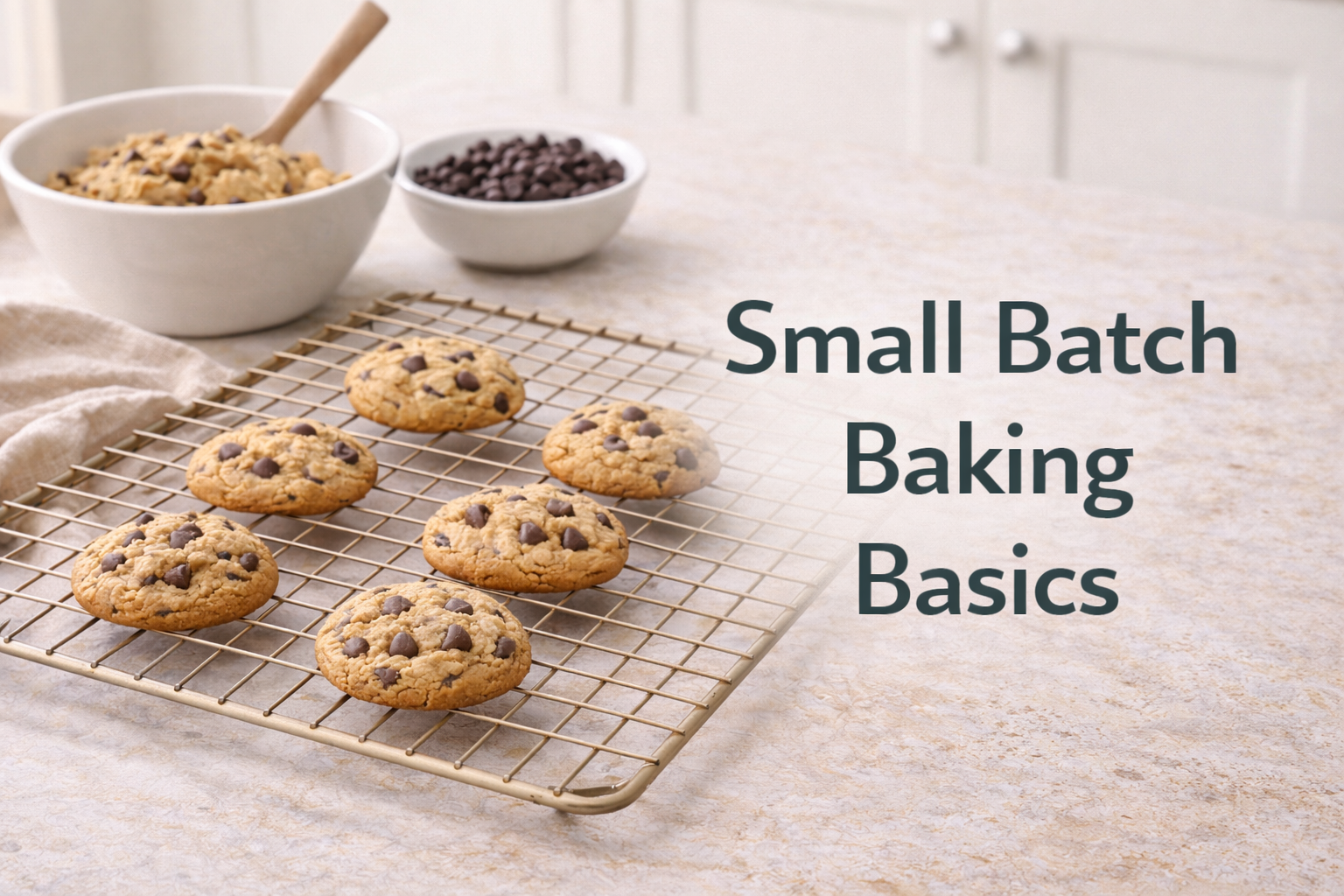
  • Small Batch Baking Basics

    Small Batch Baking Basics

    Small batch baking is exactly what it sounds like: baking fewer treats at a time — intentionally. But it’s more than just scaling down recipes. When done right, baking smaller portions leads to better texture, less waste, and more consistent results, especially for cookies and mini desserts.

    The Right Tools Matter

    Small batch baking works best when you use tools designed for precision and control.

    If you’ve ever wanted freshly baked treats without leftovers (or pressure to eat a dozen cookies), small batch baking is the solution.

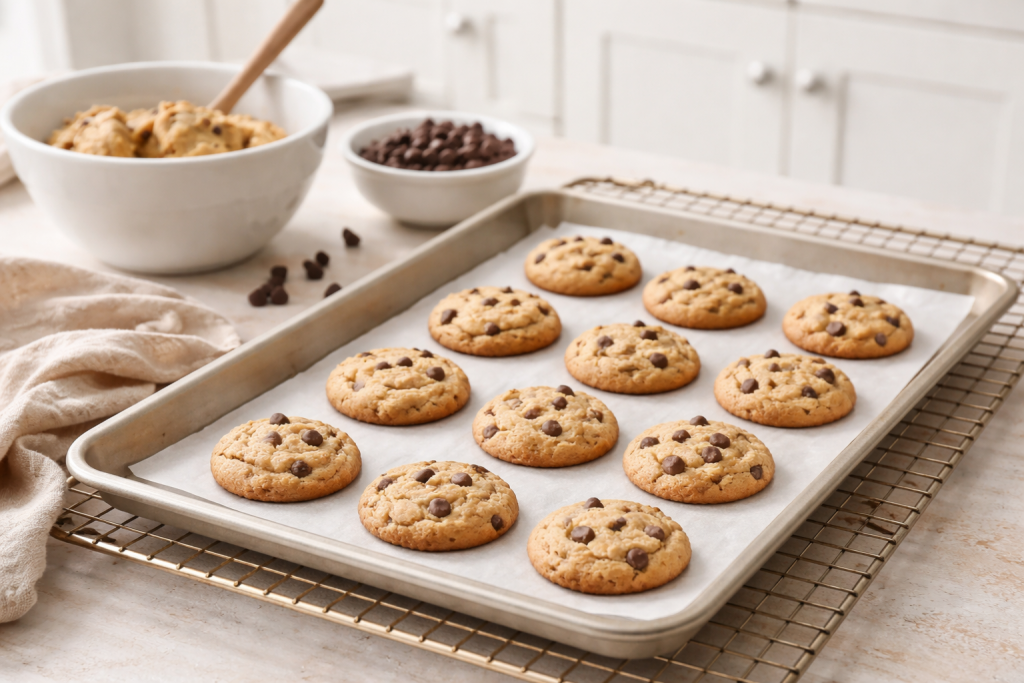
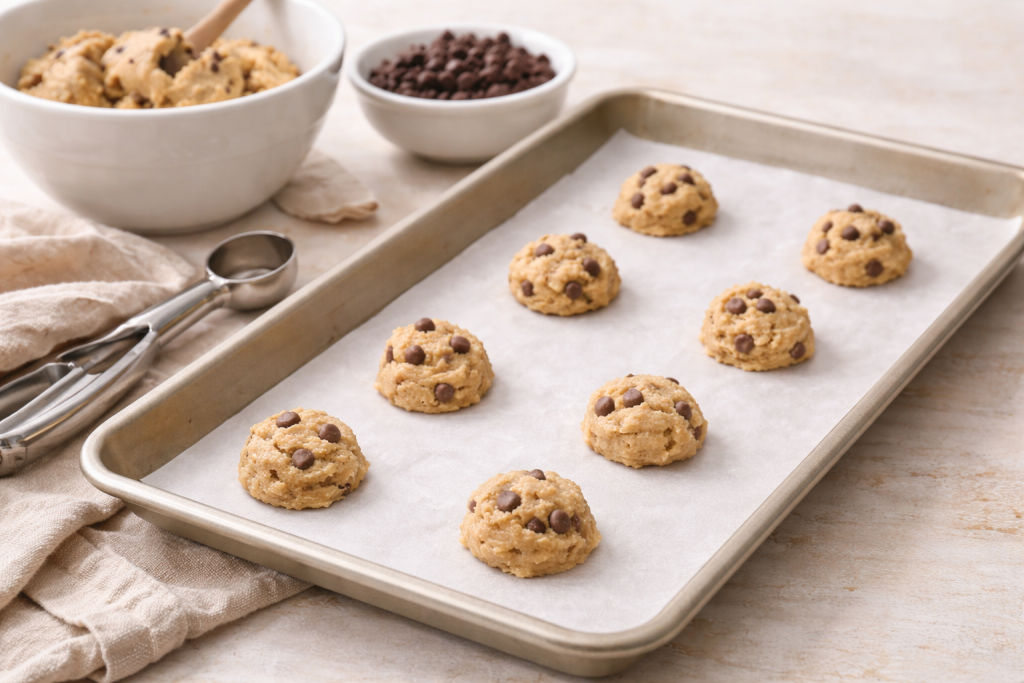
    Small batch baking setup with a few cookies cooling on a baking sheet

    What Is Small Batch Baking?

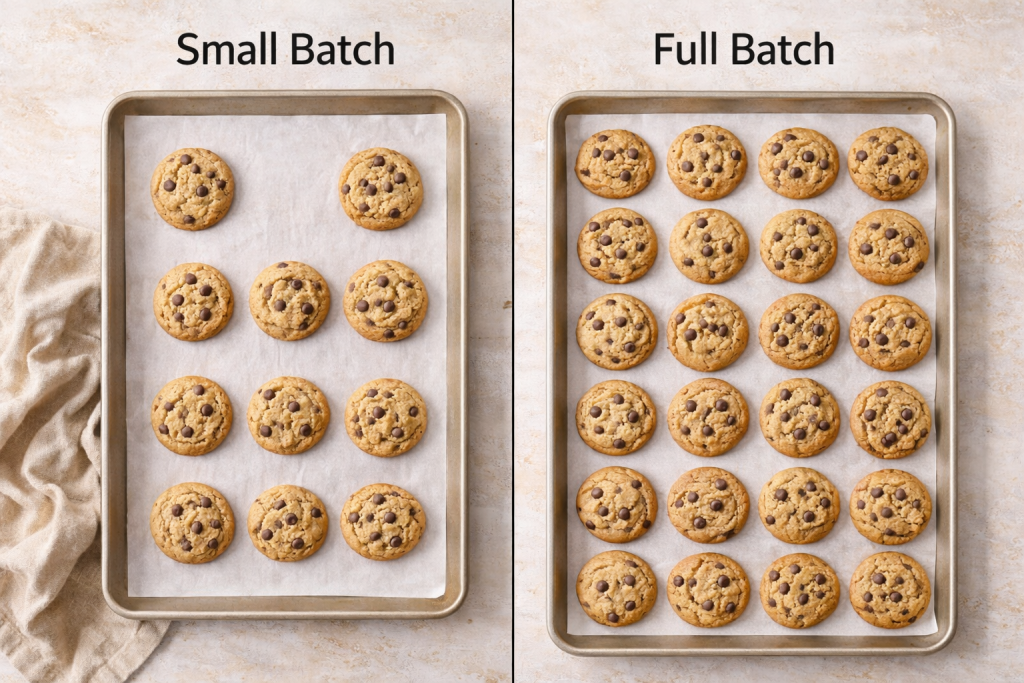
    Side-by-side comparison of a small batch of cookies versus a full batch

    Small batch baking focuses on making just enough — typically:

    • 4–8 cookies
    • A single small pan of brownies
    • A handful of mini desserts

    🍪 Smaller Batch Baking = Better Control

    Smaller batches make it easier to watch doneness, adjust timing, and avoid overbaking.

    Instead of baking for crowds, you bake for right now. The goal is freshness, control, and flexibility.

    Pricing Small Batch Baking

    Small batch baking works best when your pricing accounts for time, ingredients, and packaging.

    Panecito explains what small batch baking is and why it’s useful for home bakers.


    Why Baking in Small Amounts Works So Well

    Small batch cookie dough scooped into a few evenly sized portions

    Baking fewer treats at a time isn’t just convenient — it’s strategic. Many of the same techniques that improve small batch baking also apply when baking perfect mini cookies.

    ⏱️ Bake Time Shrinks Fast

    Small batches and mini desserts bake quicker than full recipes—start checking early.

    Benefits include:

    • Faster baking times
    • Better control over doneness
    • Easier adjustments
    • Less food waste
    • Lower ingredient cost
    • Fresher results

    Smaller batches mean you can pay closer attention to the dough, the oven, and the final texture.


    Why Baking in Small Amounts Is Perfect for Mini Desserts

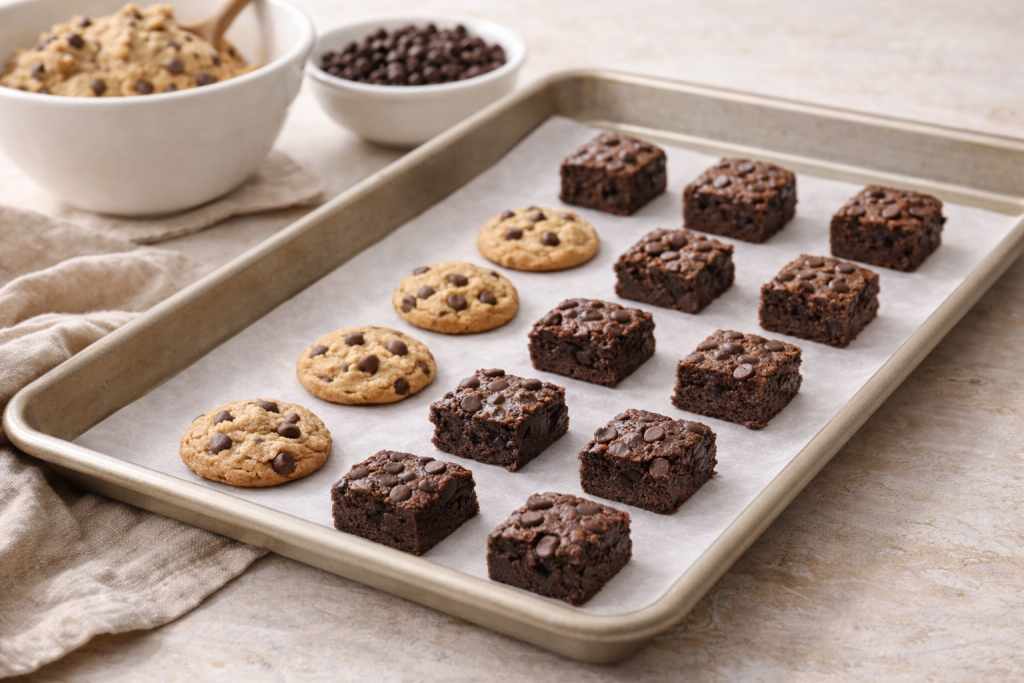
    Mini cookies and brownie bites baked in a small batch on one tray

    Mini desserts and small batch baking naturally go together.

    Oven Temp or Baking Time Off?

    Oven temperature and baking time matter even more in small batch baking, where recipes bake quickly.

    Because mini cookies and bites bake faster, small batches help you:

    • Catch doneness at the right moment
    • Avoid overbaking
    • Test recipes without committing to a full batch
    • Learn how dough behaves

    🔥 Quick Tip: Watch the Oven, Not the Clock

    Visual cues matter more than timers when baking small batches.

    This is especially helpful for beginners or anyone baking with dietary substitutions.


    How Small Batch Baking Improves Texture

    Texture is one of the biggest challenges in baking. Small batch baking helps because:

    • Dough doesn’t sit as long before baking
    • Ingredients stay at consistent temperature
    • You can adjust bake time mid-batch
    • You can pull cookies early if needed

    🧈 Key Takeaway: Freshness Improves Texture

    Baking fewer treats more often leads to softer cookies and better flavor.

    Small batches make it easier to watch doneness cues instead of relying only on bake time.

    This leads to softer cookies, fudgier brownies, and fewer dry edges.


    Common Mistakes When Baking Small Batches

    Small batch baking still has rules. Here’s what to watch for:

    • Cutting large recipes without adjusting bake time
    • Using full-size pans for tiny amounts
    • Overmixing small amounts of dough
    • Forgetting that mini portions bake faster

    Make a Test Batch

    Small batch baking helps you catch common mini cookie mistakes early, before they ruin a full batch.

    Small batch baking works best when recipes are designed to be small.

    Kitchen Supply discusses that accurate measuring is especially important when baking small batches.


    Tools That Make Small Batch Baking Easier

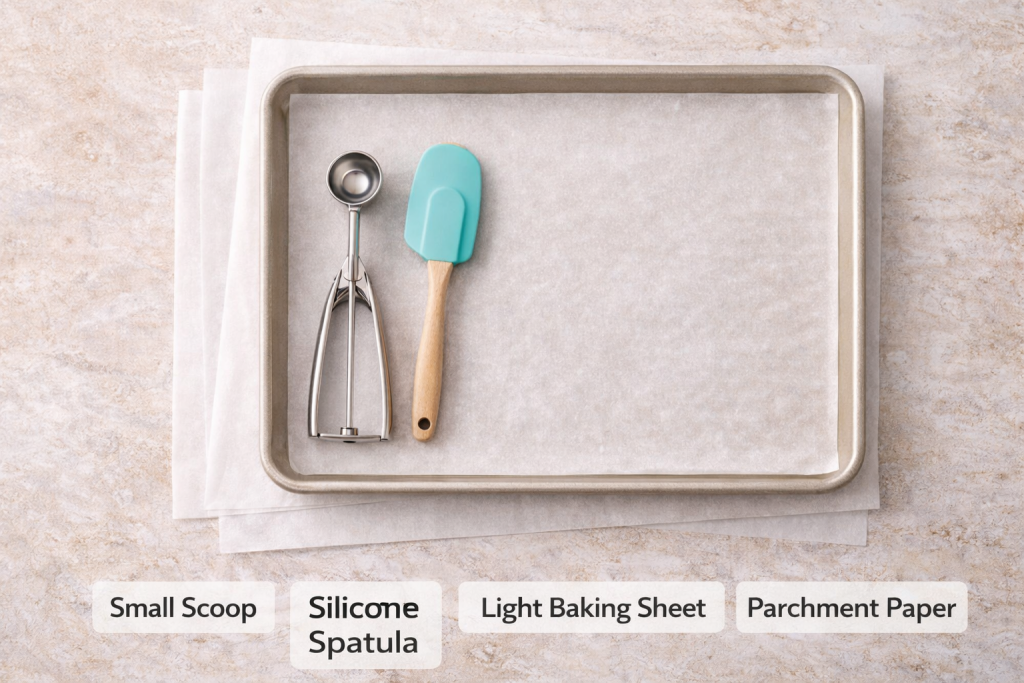
    Small baking tools including a mini cookie scoop, spatula, and baking sheet

    Using the right tools makes small batch baking more consistent, especially when working with mini cookies.

    🔧 Key Takeaway: The Right Tools Matter

    Small scoops, light-colored pans, and parchment help keep results consistent.

    You don’t need special equipment, but a few tools help:

    1 tsp Extra Mini Cookie Scoop

    • The non-slip rubber handle makes it easy to grasp.
    • Just a simple squeeze makes the cookie scoop release the dough easily and neatly

    These tools help maintain consistency when working with small amounts.


    Small Batch Baking for Dietary Needs

    Small batch baking is ideal for:

    • Gluten-free baking
    • Vegan baking
    • Allergy-friendly desserts

    Need Gluten-free?

    Small batch baking works especially well for gluten-free cookies, which benefit from closer timing control.

    When ingredients behave differently, smaller batches let you test texture and timing without waste.

    That’s why small batch baking pairs so well with mini gluten-free cookies and vegan mini desserts.

    🌱 Key Takeaway: Ideal for Dietary Baking

    Small batch baking is perfect for gluten-free or vegan recipes where timing is critical.


    Small Batch Baking vs Scaling Down Recipes

    Not every recipe can simply be divided in half.

    Small batch baking works best when:

    • Ratios are preserved
    • Eggs are adjusted carefully
    • Bake time is reduced significantly
    • Pan size matches batch size

    🧠 Quick Reminder: Don’t Just Cut Recipes in Half

    Not all recipes scale evenly—ratios, eggs, and bake times often need adjustment.

    Recipes written specifically for small batches are more reliable than scaled-down versions.

    Try Yummy Vegan Mini Desserts, too!

    Vegan desserts also benefit from small batch baking, which helps maintain moisture and texture.


    When Small Batch Baking Is the Best Choice

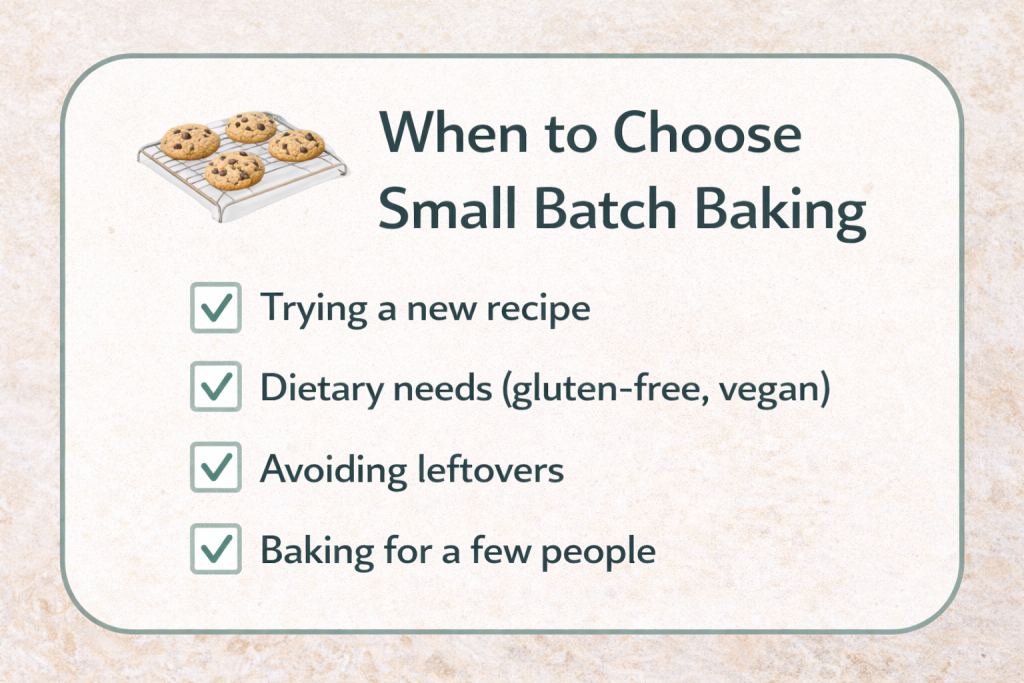
    Infographic showing when to choose small batch baking, including testing recipes and avoiding leftovers

    Small batch baking is perfect when:

    • You want fresh treats without leftovers
    • You’re testing a new recipe
    • You’re baking for one or two people
    • You’re learning new techniques
    • You want consistent results

    It’s less pressure — and often better baking.


    The Big Takeaway

    Small batch baking isn’t about baking less — it’s about baking smarter.

    🎯 Less Waste, More Learning

    Smaller batches mean fewer leftovers and faster feedback when testing recipes.

    By working in smaller amounts, you gain more control over texture, timing, and quality. That’s why small batch baking is the foundation of great mini desserts and consistently good cookies.

    Once you master the basics, you’ll find yourself baking more often — and wasting far less.

    Kitchen Tools I Use