

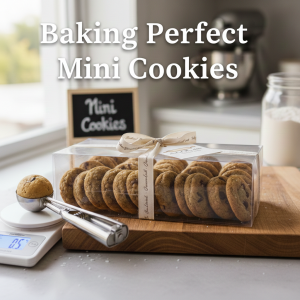
Mini cookies may be small, but they come with their own set of baking challenges. From spreading too much to overbaking in seconds, getting perfect mini cookies requires a slightly different approach than regular-sized cookies.
The good news? Once you understand a few key techniques, mini cookies become one of the most fun — and foolproof — desserts to bake.
If you’re ready to put these techniques into action, start with our Mini Chocolate Chip Cookies (Soft & Bakery-Style) — they’re soft, chewy, and perfect for small batch baking.
Why Mini Cookies Are So Popular Right Now

Mini cookies aren’t just cute — they’re practical.
- Perfect portion control
- Faster baking time
- Ideal for parties, gifting, and dessert boards
- Easier to offer variety without leftovers
They’re also incredibly shareable, which makes them perfect for Pinterest, Instagram, and events.
Cookies Not Turning Out as Expected?
If your mini cookies aren’t turning out as expected, these common mini cookie mistakes explain what usually goes wrong and how to fix it.
What Makes Mini Cookies Different From Regular Cookies
Baking mini cookies isn’t just about making smaller dough balls. Because of their size, mini cookies:
- Bake much faster
- Spread more easily
- Dry out quicker if overbaked
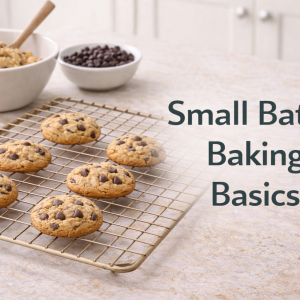
That means timing, dough temperature, and portioning matter more than ever. Many of these techniques work even better when baking smaller portions, which is why small batch baking helps improve consistency.

To make prep even easier, check out our Best Tools for Baking Mini Cookies — you don’t need much, but the right basics help.
The Best Dough for Mini Cookies
Not all cookie doughs are mini-cookie friendly.
Best dough types
- Chocolate chip cookie dough
- Sugar cookie dough
- Shortbread
- Peanut butter cookies
These doughs hold their shape well and don’t rely heavily on thick centers.
Doughs to be careful with
- Very soft doughs
- High-butter doughs
- Doughs with lots of mix-ins
If your dough feels sticky or loose, chilling it is essential (more on that below).
How Big Should Mini Cookies Be?

Consistency is key.
Ideal size:
- About 1–1½ teaspoons of dough
- Roughly 10–15 grams per cookie
The Right Stuff – Oh, Oh, Oh-oh, Oh.
Using the right tools makes it much easier to bake mini cookies consistently, especially when it comes to size and bake time.
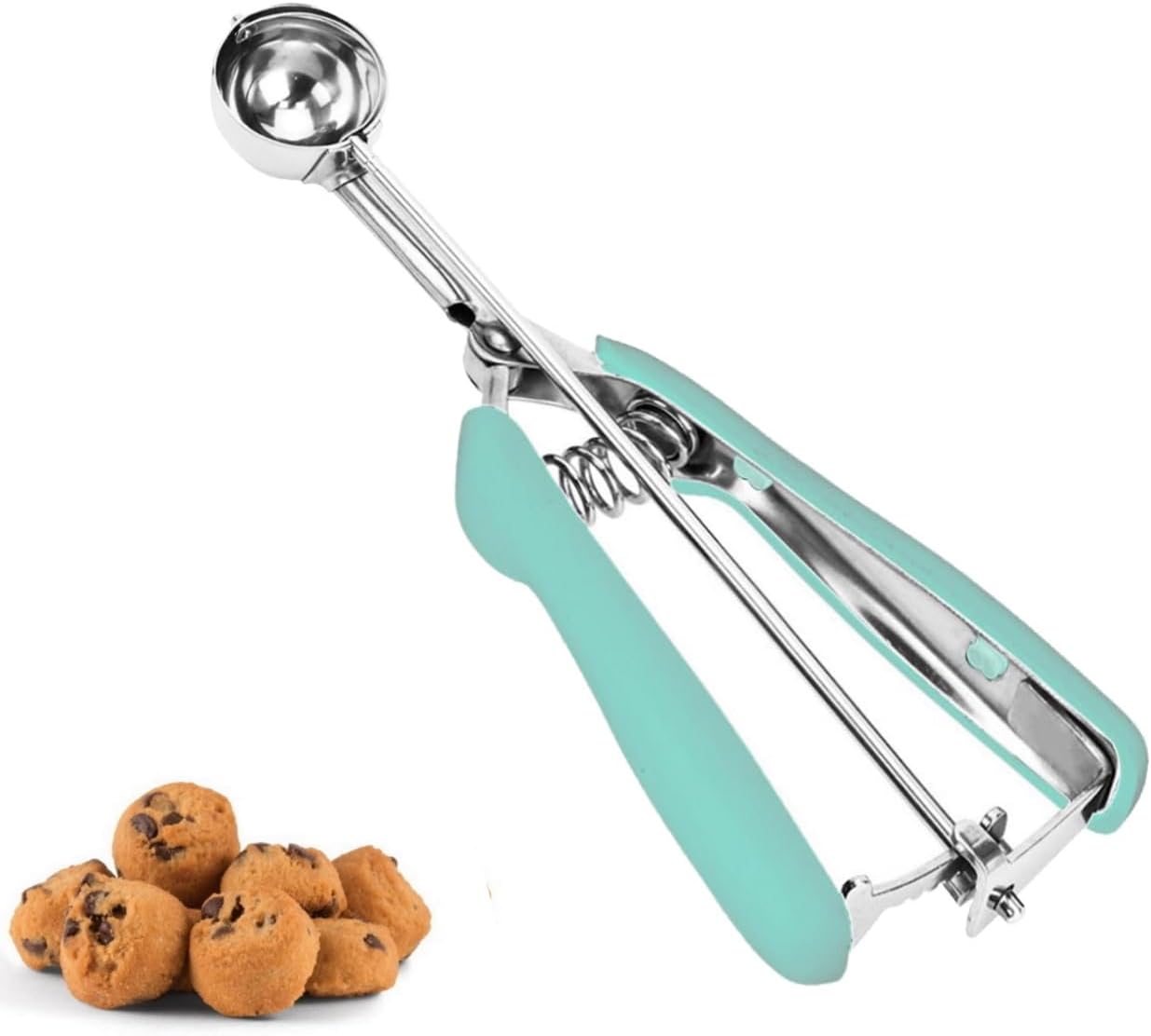
1 tsp Extra Mini Cookie Scoop
- The non-slip rubber handle makes it easy to grasp.
- Just a simple squeeze makes the cookie scoop release the dough easily and neatly
Baked Munchies earns a small commission on these links at no cost to you.
Using a small cookie scoop ensures:
- Even baking
- Uniform appearance
- Professional results
Tip: If you don’t have a scoop, use measuring spoons for consistency.
Professionals Use Premium Pricing
Consistently baking high-quality mini desserts makes it easier to justify premium pricing.
Should You Chill the Dough? (Yes!)
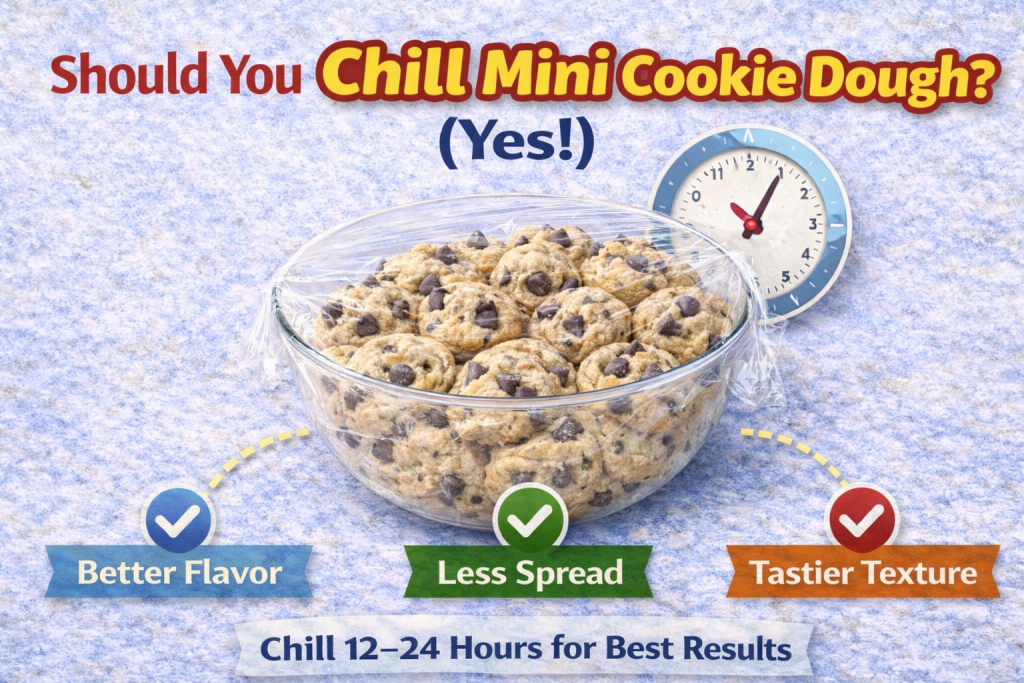
Chilling is one of the most important steps for perfect cookies.
Why chilling helps
- Prevents excessive spreading
- Improves flavor
- Creates thicker, softer cookies
Recommended chill time:
- 20–30 minutes minimum
- Up to 24 hours for best flavor
If your dough is already firm, you may be able to bake right away — but chilling is almost always worth it.
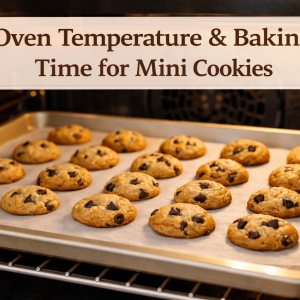
Oven Temperature & Baking Time
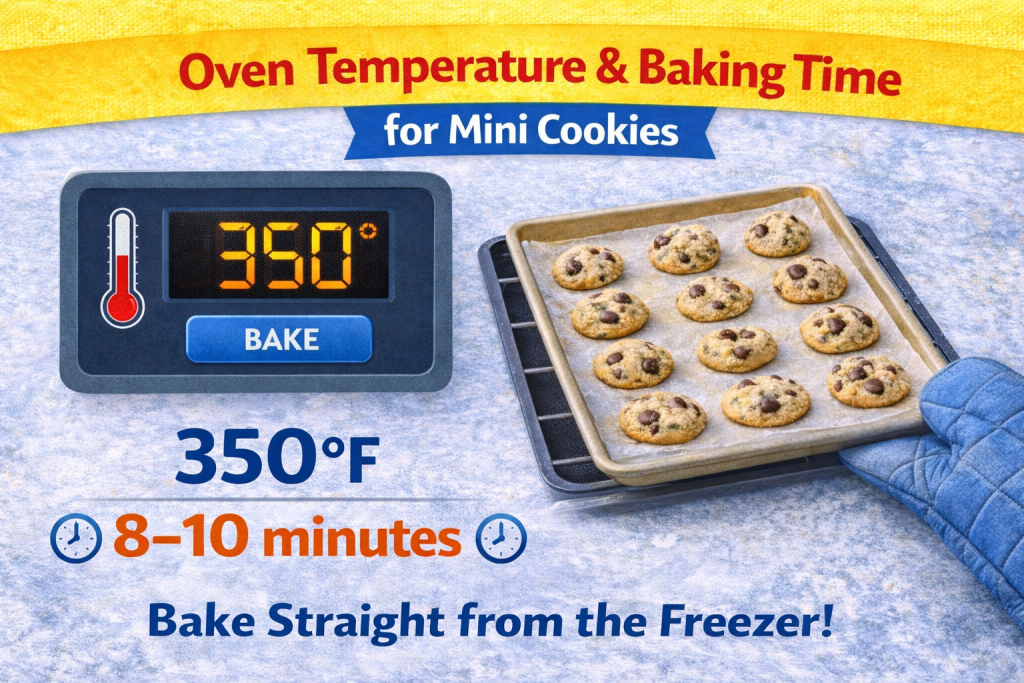
Bite-sized cookies bake fast — sometimes very fast.
For exact oven temperatures and how they affect small cookies, see our Oven Temperature & Baking Time for Mini Cookies guide.
Best temperature
- 350°F (175°C) for most recipes
Typical bake time
- 6–9 minutes, depending on size and dough
Perfect Mini Cookies, Every Time 🍪
Tiny cookies. Big baking mistakes — unless you have the right guide.
This printable Mini Cookie Baking Cheat Sheet shows you exactly when mini cookies are done, how long to bake them, and how to fix common issues.
Tape it inside a cabinet. Save it forever. Bake with confidence.
No spam. Just baking tips and mini dessert goodness.
How to know they’re done
According to USDA cooking and food safety basics, using correct oven temperatures and food handling practices helps ensure safe and consistent baking results.
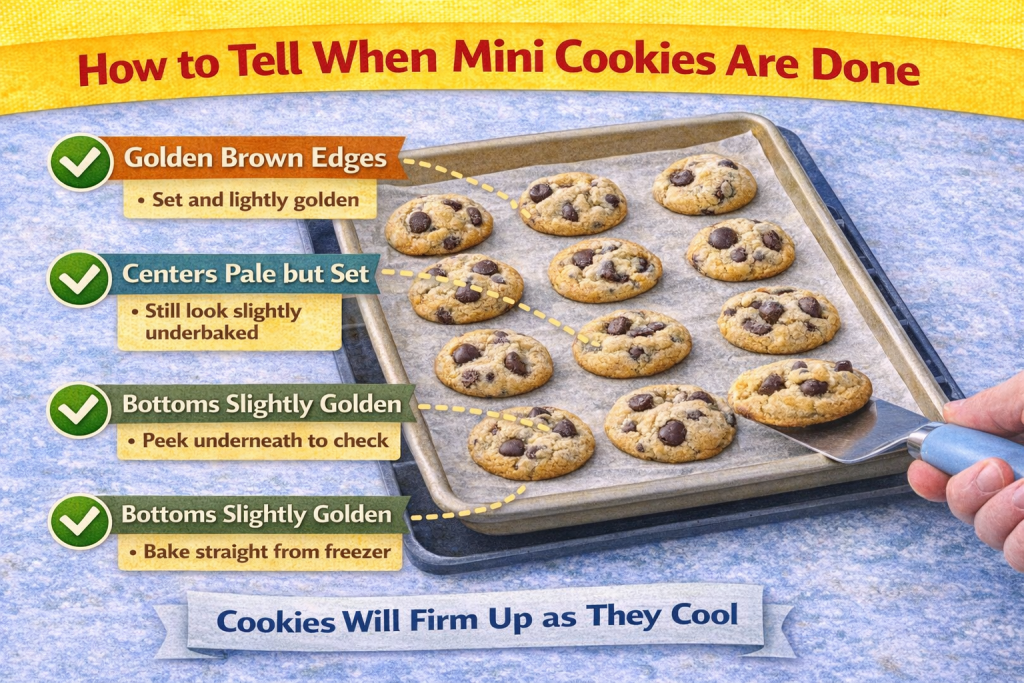
- Edges are just set
- Centers still look slightly soft
- Bottoms are lightly golden
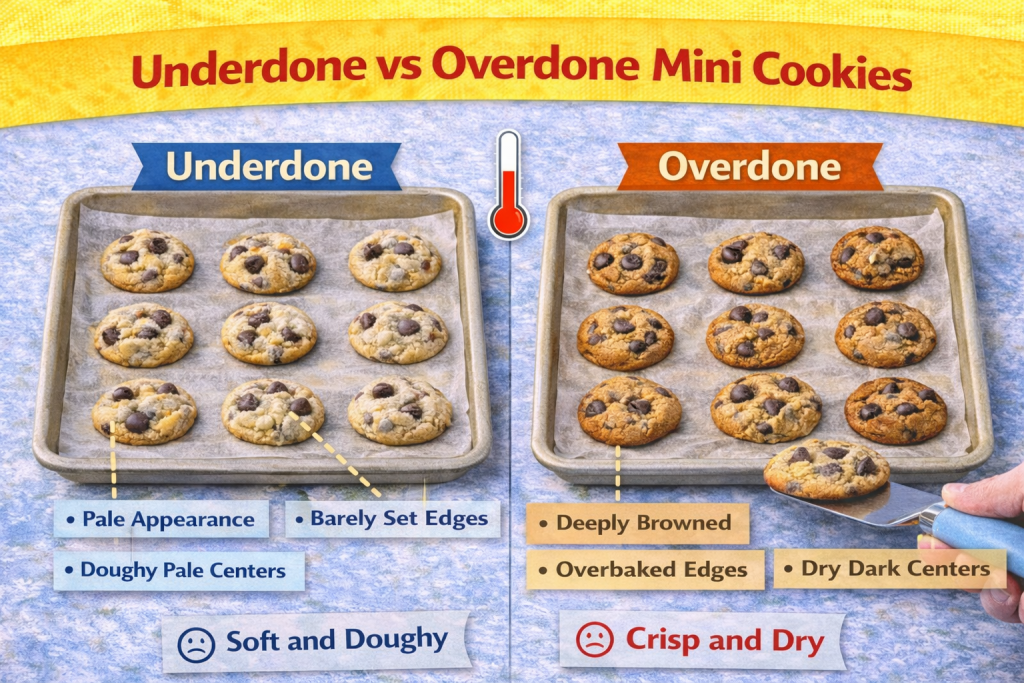
⚠️ Do not wait for browning on top — mini cookies will overbake quickly.
Want to bake ahead? Learn how to freeze cookie dough in our Can You Freeze Mini Cookie Dough? (Yes — and You Should) section.
Can You Freeze the Dough? (Yes — and You Should)
Freezing cookie dough is one of the easiest ways to make mini cookies even more convenient. Because mini cookies bake so quickly, having pre-portioned dough in the freezer means fresh cookies anytime — without mixing a full batch.
Why Freezing Cookie Dough Works So Well
- Prevents dough from spreading too much
- Improves flavor as the dough rests
- Makes small-batch baking fast and easy
- Perfect for parties, gifting, and last-minute treats
How to Freeze Cookie Dough
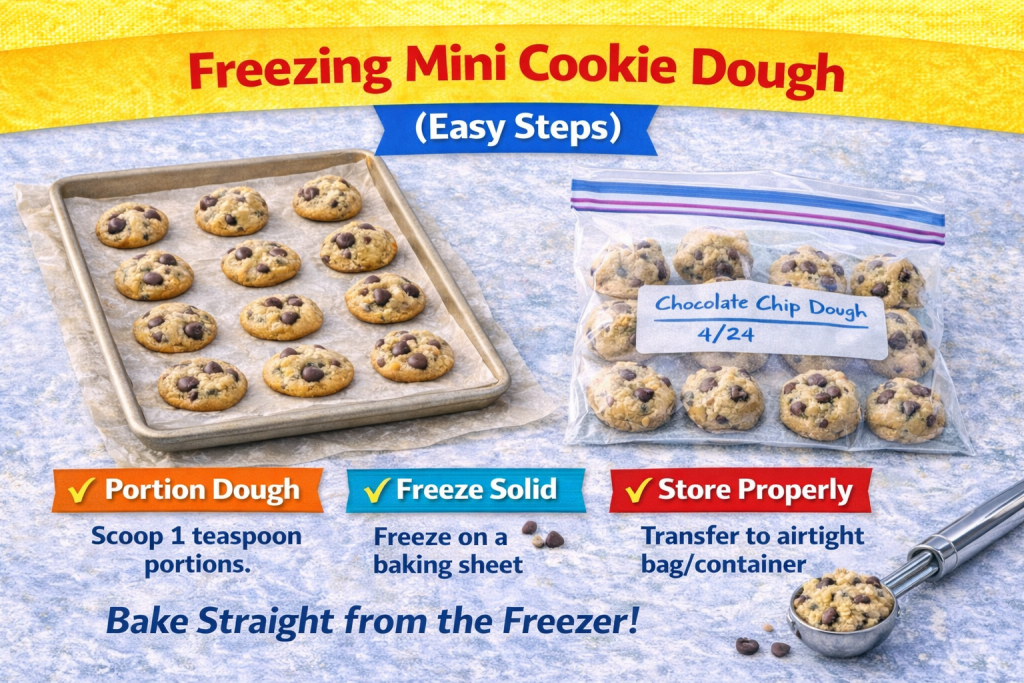
1. Portion the Dough First
Scoop dough into 1 teaspoon portions and place them on a parchment-lined baking sheet. Don’t let the dough balls touch.
2. Freeze Until Solid
Freeze the dough balls for 1–2 hours, or until completely firm.
3. Store Properly
Transfer frozen dough balls to an airtight container or freezer bag. Label with the dough type and date.

Rubbermaid Brilliance Large Food Storage Container
- The Brilliance Food Storage Container from Rubbermaid is a convenient way to store
- Stackable for optimal fridge or freezer organization
Baked Munchies earns a small commission on these links at no cost to you.
Frozen cookie dough keeps for up to 2 months.
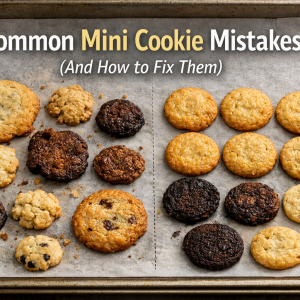
If your cookies are acting up, look at our Common Mini Cookie Mistakes (And How to Fix Them) to troubleshoot common issues.
How to Bake Cookies From Frozen Dough
You can bake the bite-sized cookies straight from the freezer — no thawing needed.
- Preheat oven to 350°F (175°C)
- Place frozen dough balls on a lined baking sheet
- Add 1–2 extra minutes to the normal bake time
- Bake until edges are set and centers look slightly soft
This method helps mini cookies hold their shape and stay soft inside.
Tips for the Best Frozen Cookies
- Freeze dough after mixing in add-ins
- Avoid overloading dough with mix-ins
- Always freeze in single layers before storing
- Bake only what you need
When Freezing Dough Is Better Than Freezing Baked Cookies
Freezing dough is ideal when:
- You want fresh cookies on demand
- You’re baking for multiple events
- You want the softest texture possible
Need Gluten-free?
If you’re baking with dietary restrictions, mini gluten-free cookies benefit even more from these same sizing and timing techniques.
Freezing baked cookies works too — but freezing dough gives you the best results for mini cookies.
Spacing the Cookies on the Baking Sheet
Mini cookies still spread!
- Leave 1½–2 inches between cookies
- Use parchment paper or a silicone baking mat
- Bake one tray at a time for even heat
Crowding the pan leads to uneven shapes and textures.
How to Keep Mini Cookies Soft
Because of their size, mini cookies can dry out faster than regular cookies.
Tips for soft mini cookies
- Slightly underbake them
- Use brown sugar in your dough
- Store with a slice of bread (it works!)
- Cool completely before storing
Common Mistakes (And How to Fix Them)
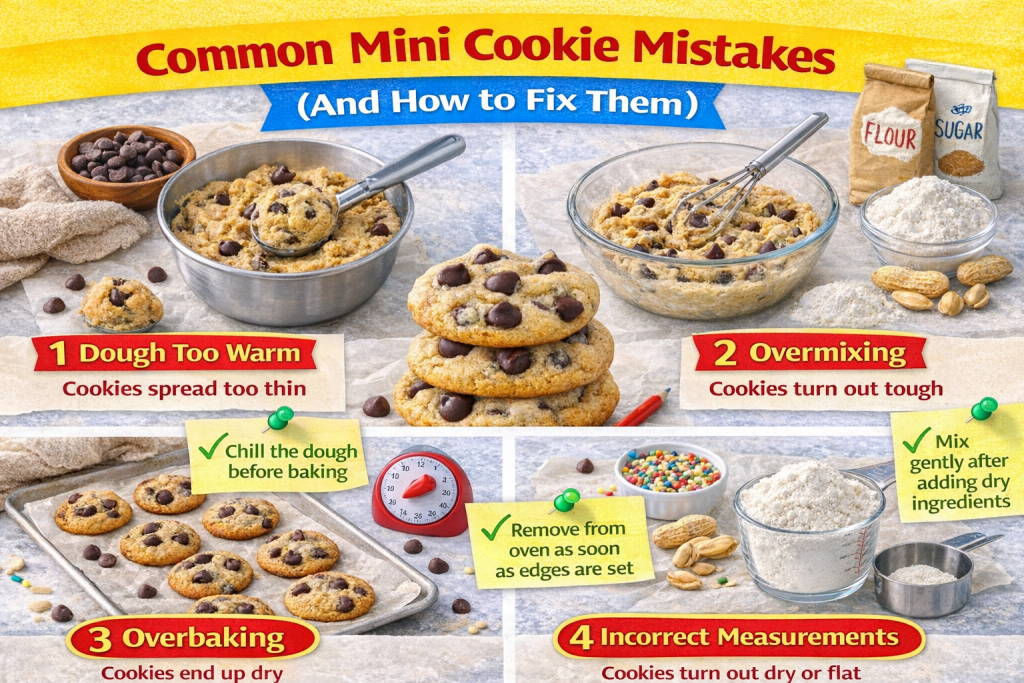
Cookies spreading too much
- Chill the dough longer
- Reduce butter slightly
- Check oven temperature
Cookies overbaking
- Start checking at 6 minutes
- Remove when centers look soft
Uneven sizes
- Use a cookie scoop or measuring spoon
Best Tools for Baking Mini Cookies
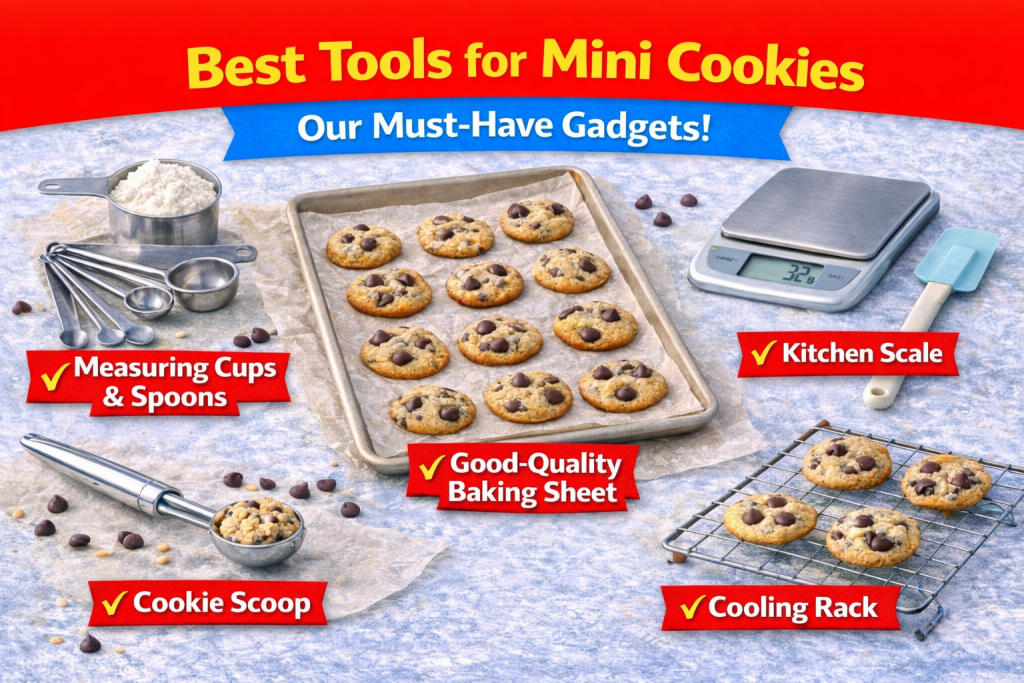
You don’t need special equipment, but these tools help:
- Small cookie scoop (1 tsp)
- Kitchen Scale
- Measuring Cups and Spoons
- Light-colored baking sheets
- Parchment paper
- Cooling rack
These are the tools I reach for every time I bake mini cookies. You don’t need anything fancy — just a few reliable basics that make the process easier and the results better.
Final Thoughts: Mini Cookies Are Worth It
Mini cookies may require a little extra attention, but once you master them, they become one of the most versatile desserts you can bake.
They’re perfect for:
- Parties
- Dessert boards
- Gift boxes
- Portion-controlled treats
Once you get the hang of baking mini cookies, you’ll never want to go back.
Up Next
👉 Mini Chocolate Chip Cookies (Soft & Bakery-Style) — a perfect recipe to put these tips into action.






Leave a Reply