
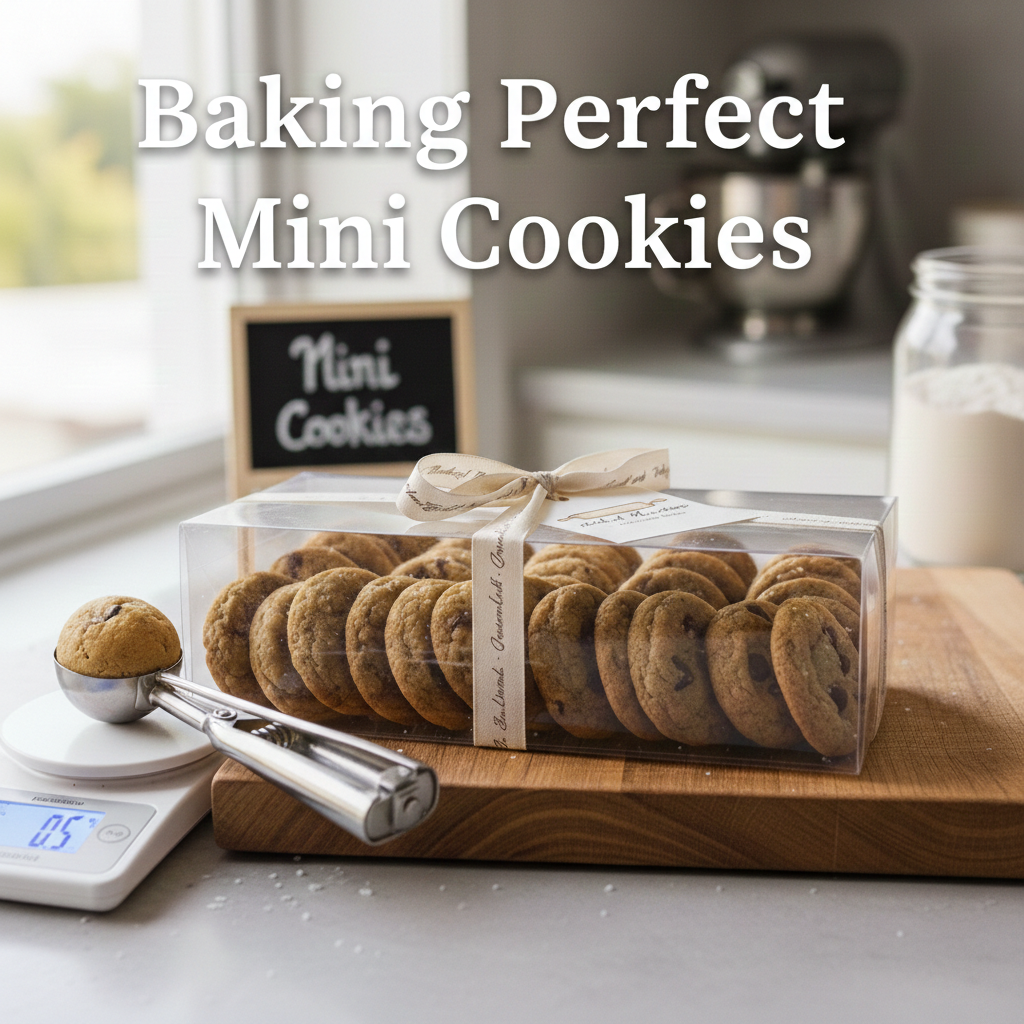
Baking perfect mini cookies is more than just a hobby—it’s a game of precision, timing, and the right equipment. If you’ve ever pulled a tray of “bite-sized” treats out of the oven only to find they’ve spread into flat pancakes or turned into hard rocks, you know that smaller dough doesn’t always mean simpler baking.
To achieve that perfect balance of a soft center and crisp edge in a smaller format, you need to adjust your timing, temperature, and technique. Here is how to master the art of the mini cookie.
1. Adjusting Your Oven Temperature
When you reduce the size of the dough ball, the surface area changes relative to the volume. Most standard cookie recipes call for 350°F, but for mini cookies, this can lead to over-browning before the center is set.
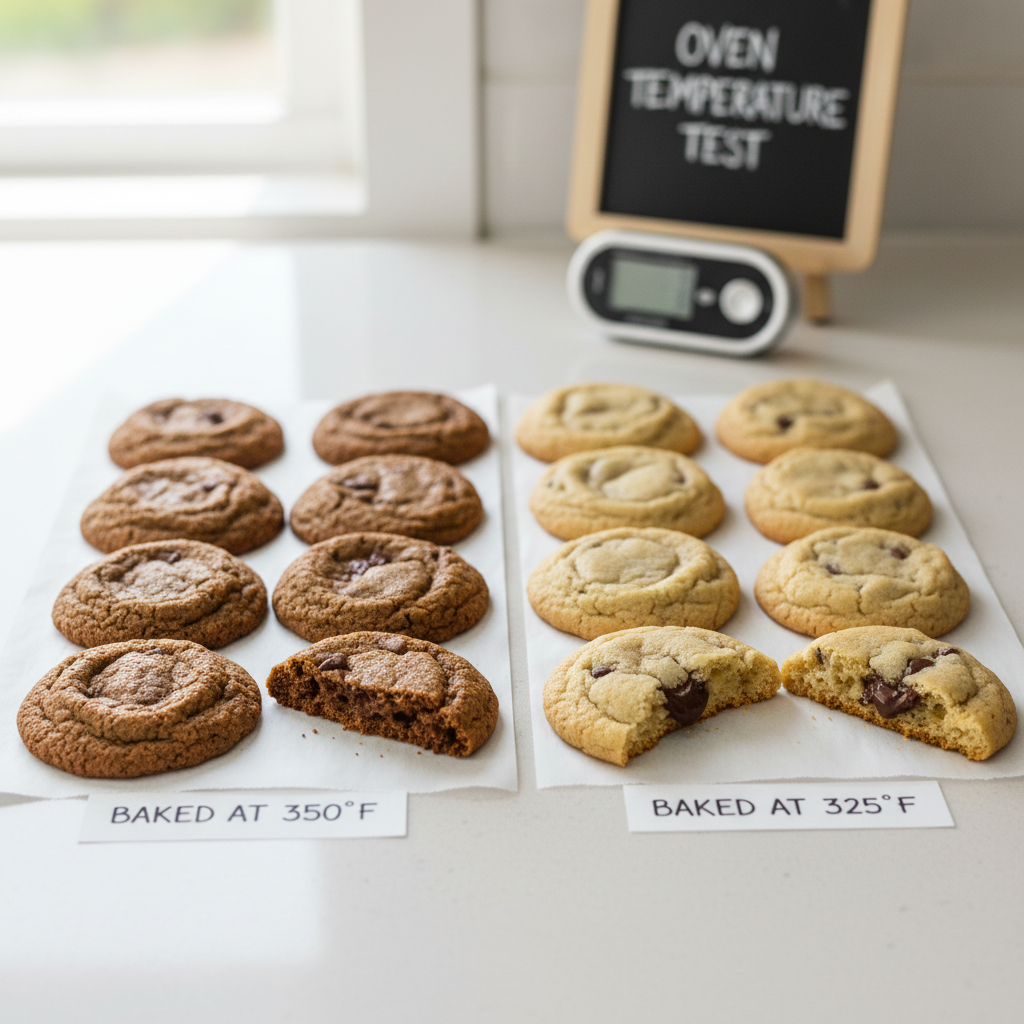
- Lower the Heat: Try dropping your oven to 325°F. This slower bake allows the small amount of dough to rise and set without burning the bottoms.
- Center Rack Only: Always bake minis on the center rack to ensure even heat distribution.

🍪 Taylor Precision Oven Thermometer
Ensures accurate oven temperature so mini cookies don’t overbake too quickly.
Baked Munchies earns a small commission on these links at no cost to you.
2. Timing is Everything
A standard cookie might take 10 to 12 minutes. A mini cookie often reaches perfection in just 5 to 7 minutes.
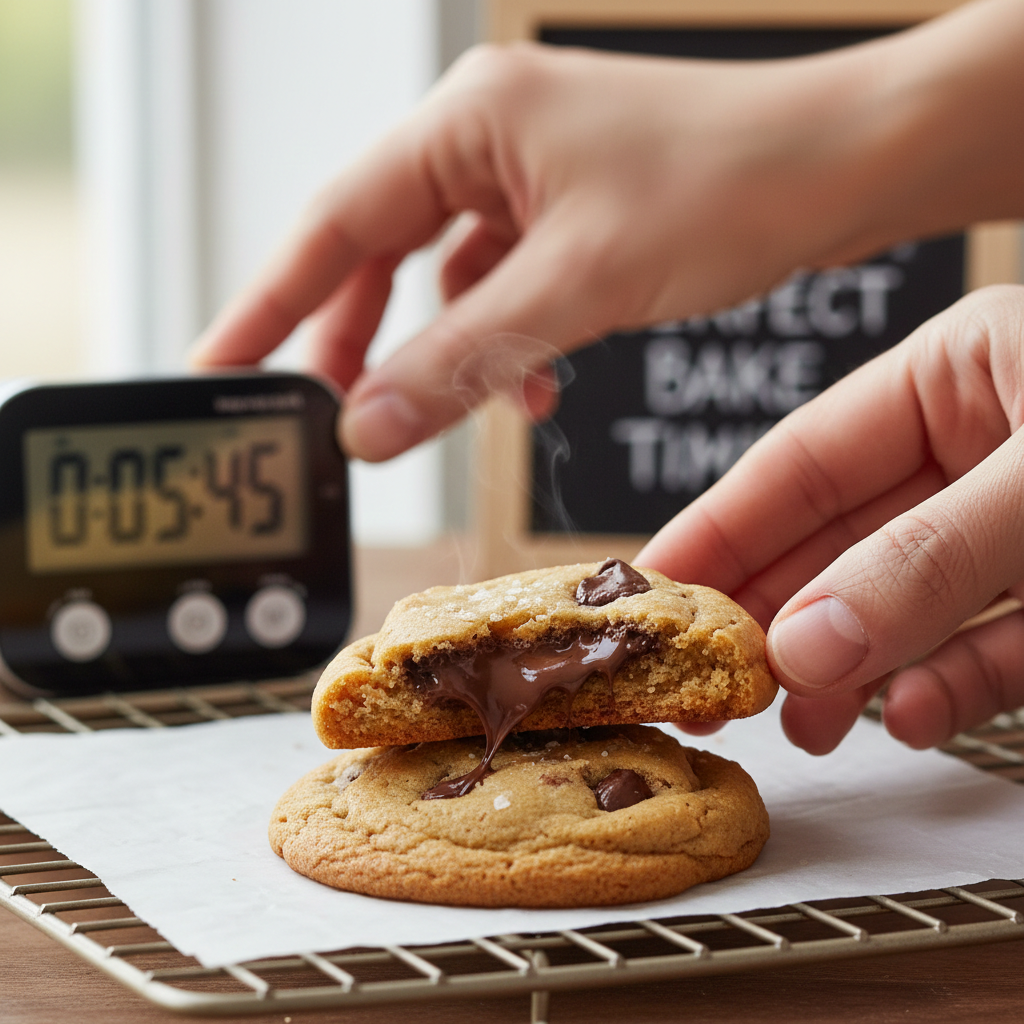
- The “Carry-Over” Rule: Take them out when the edges are just barely golden and the centers still look slightly underdone. They will continue to firm up on the hot baking sheet.
- Use a Timer: When a bake is only 6 minutes long, every 30 seconds counts. Use a digital timer to avoid accidental “crunchy” disasters.
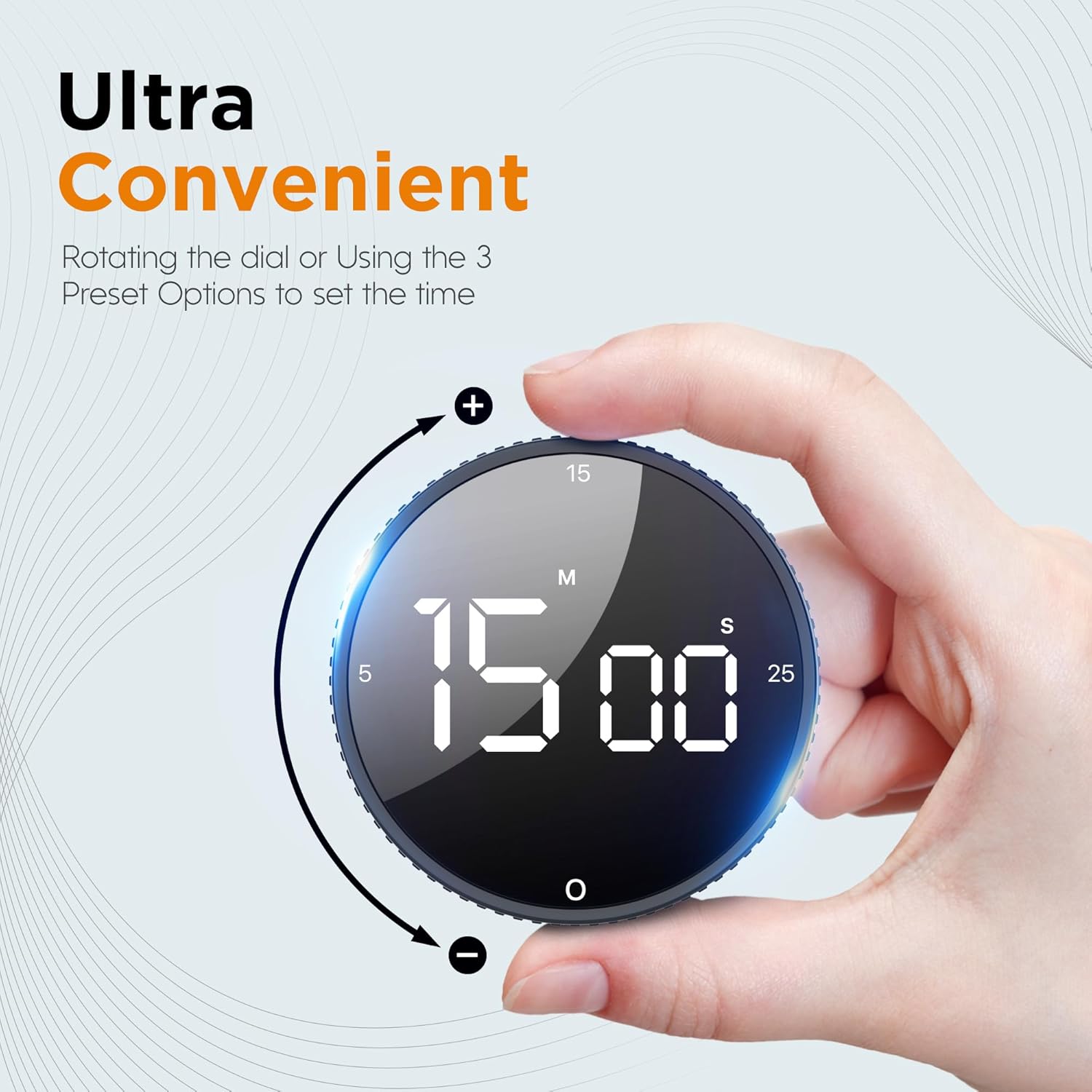
Digital Kitchen Timer
This easy-to-read digital timer features a bright and clear LED display, making it perfect for quick glances while you’re busy baking in the kitchen
Baked Munchies earns a small commission on these links at no cost to you.
3. Tooling for Consistency
In a mini dessert, inconsistency stands out. If one cookie is 0.5 ounces and the other is 0.7 ounces, they will bake at different rates.
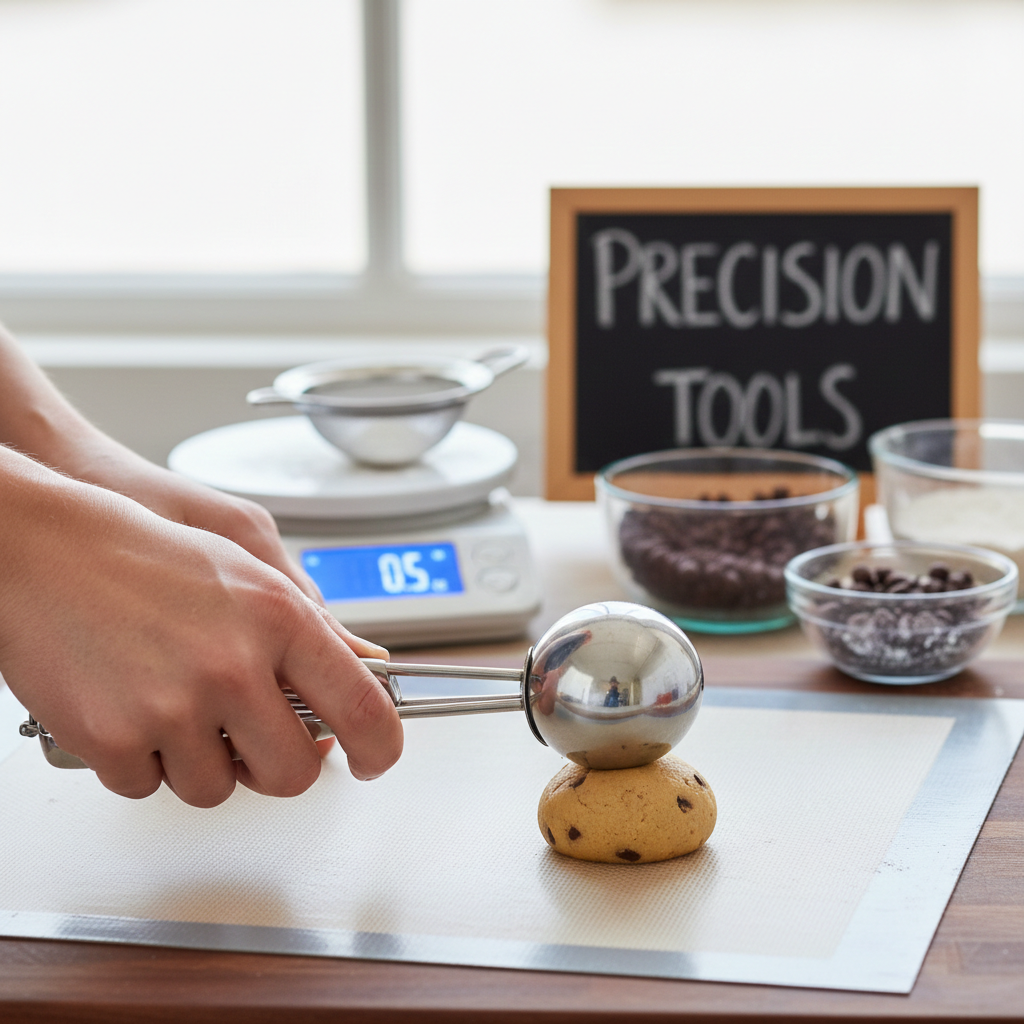
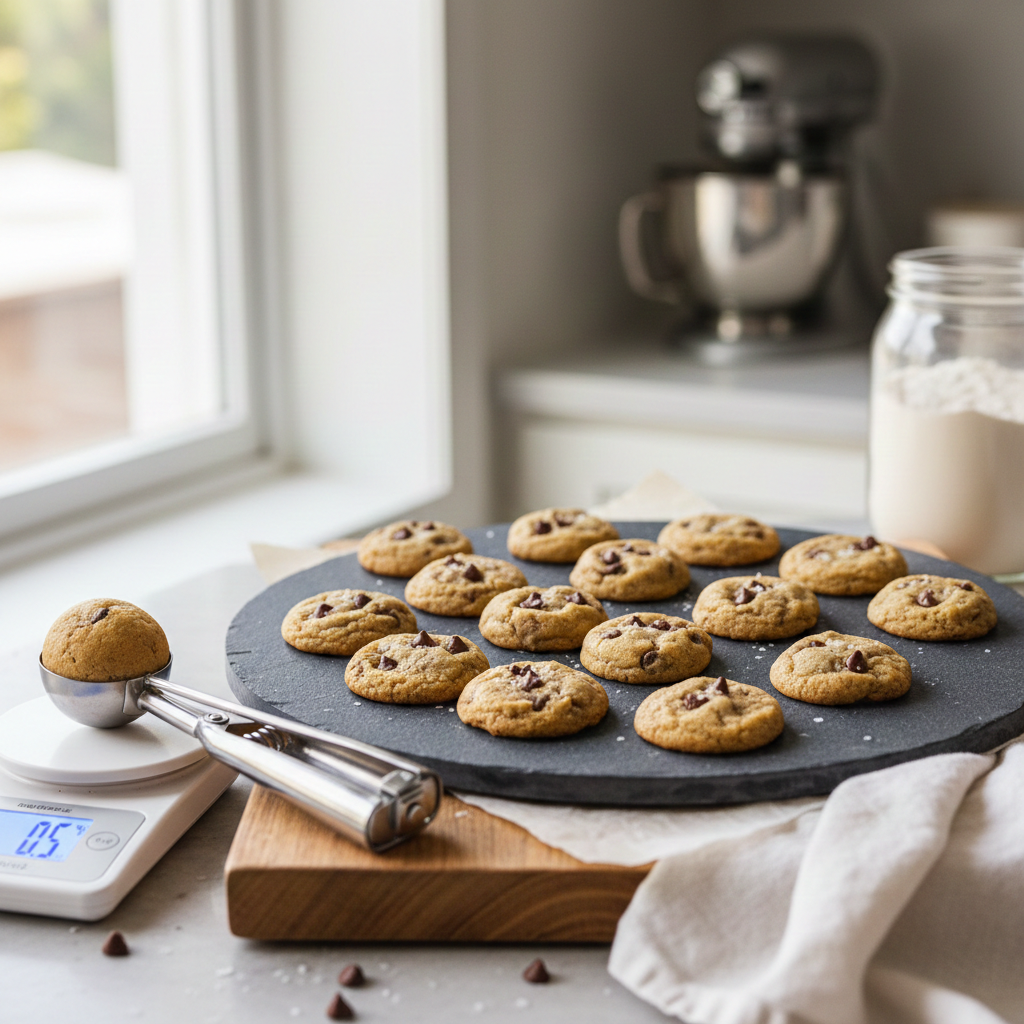
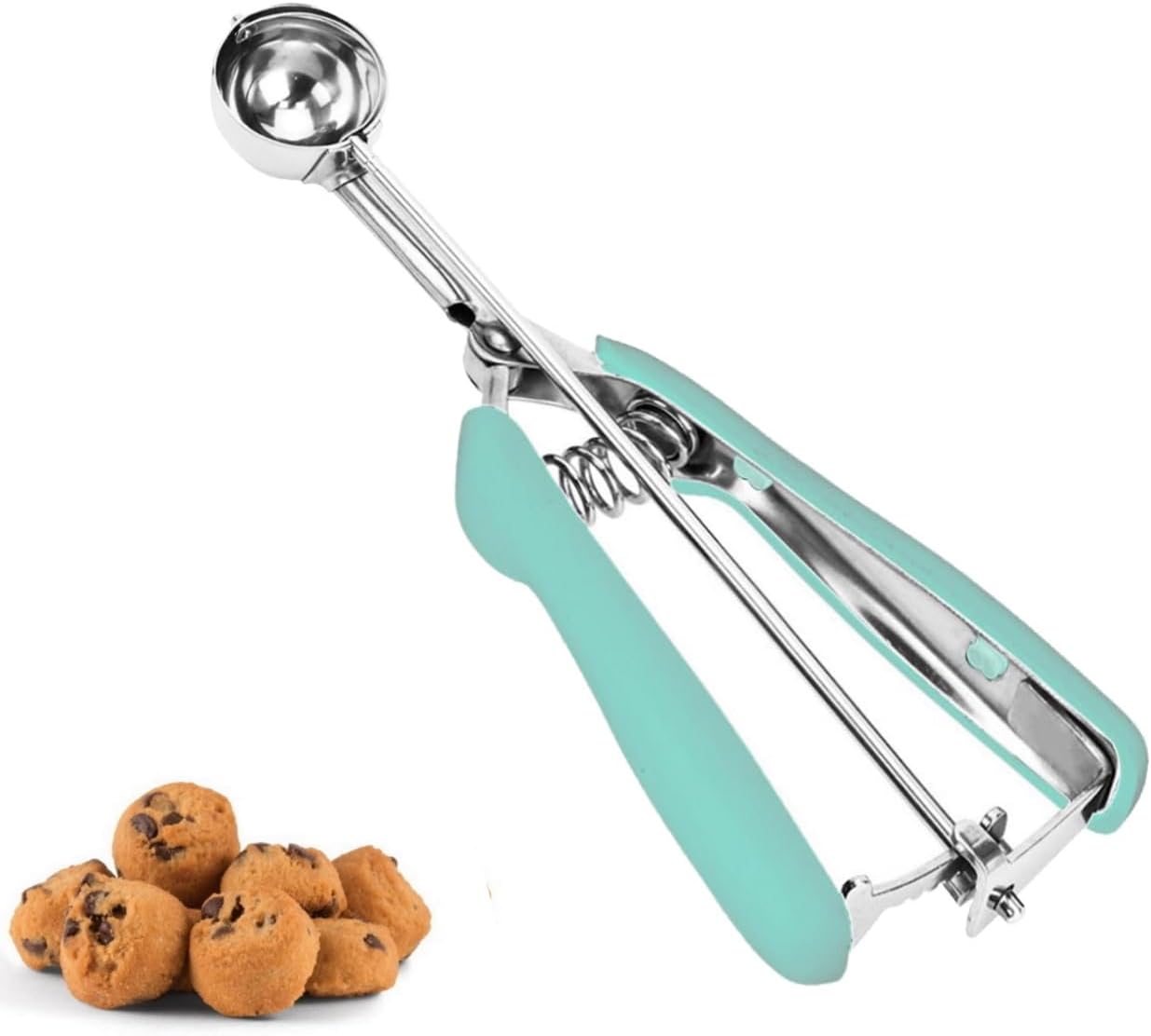
- Use a #100 Scoop: This is the industry standard for “mini” cookies, yielding about 2 teaspoons of dough.
- Weigh Your Dough: For the most professional results, use a kitchen scale to ensure every single cookie is identical.
While the tools might seem small, they are the secret weapon for anyone serious about baking perfect mini cookies at scale.
4. Flavor and Texture Tweaks
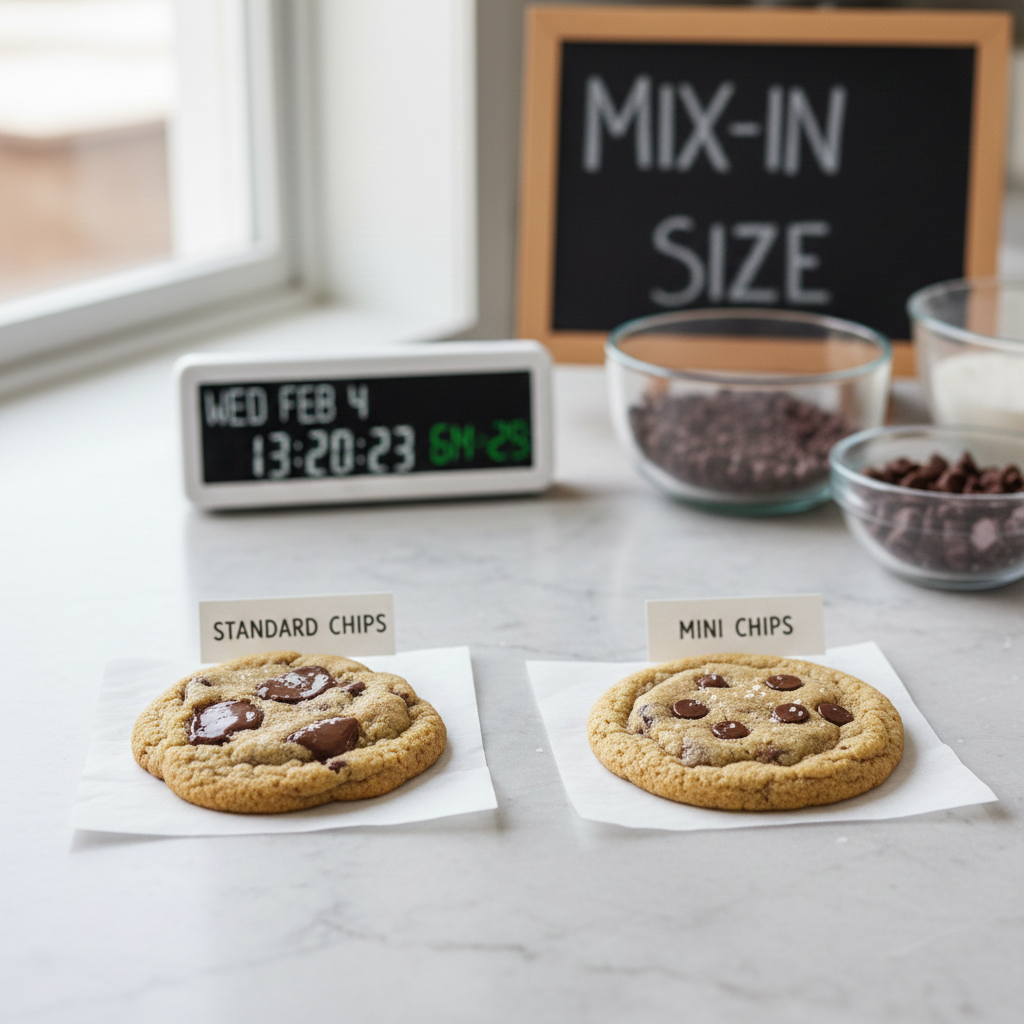
Because the cookie is smaller, the ratio of “edge” to “center” is much higher.
- Mix-in Size: Swap standard chocolate chips for mini chips or finely chopped chocolate. Large chunks can cause a mini cookie to lose its shape or fall apart.
- Salt Balance: Since each bite is smaller, be mindful of flaky salt toppings. A little goes a long way on a 1-inch surface.
Final Thoughts on baking perfect mini cookies
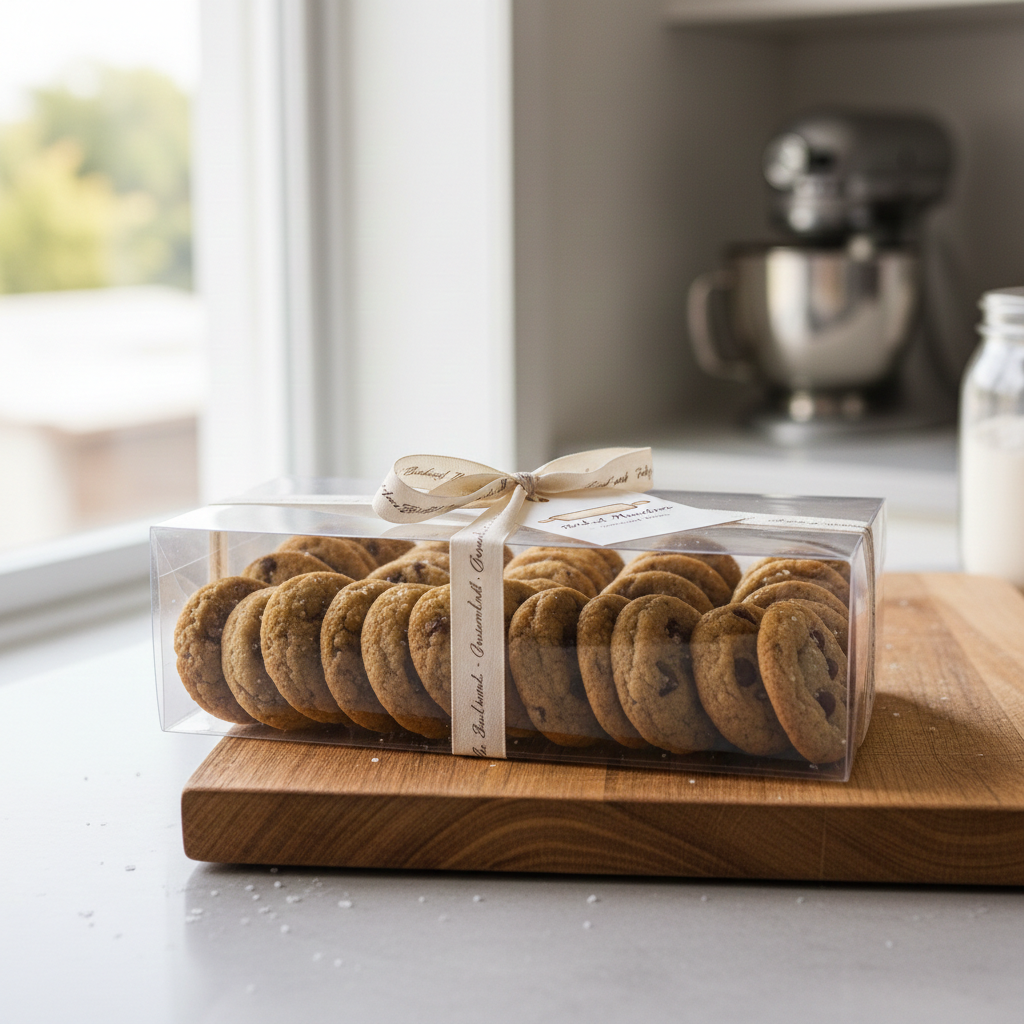
Baking perfect mini cookies is a skill that pays off. Whether you are building a dessert charcuterie board or offering “snack packs” for local delivery, mastering the small-scale bake ensures your customers get the same gourmet experience in every tiny bite.
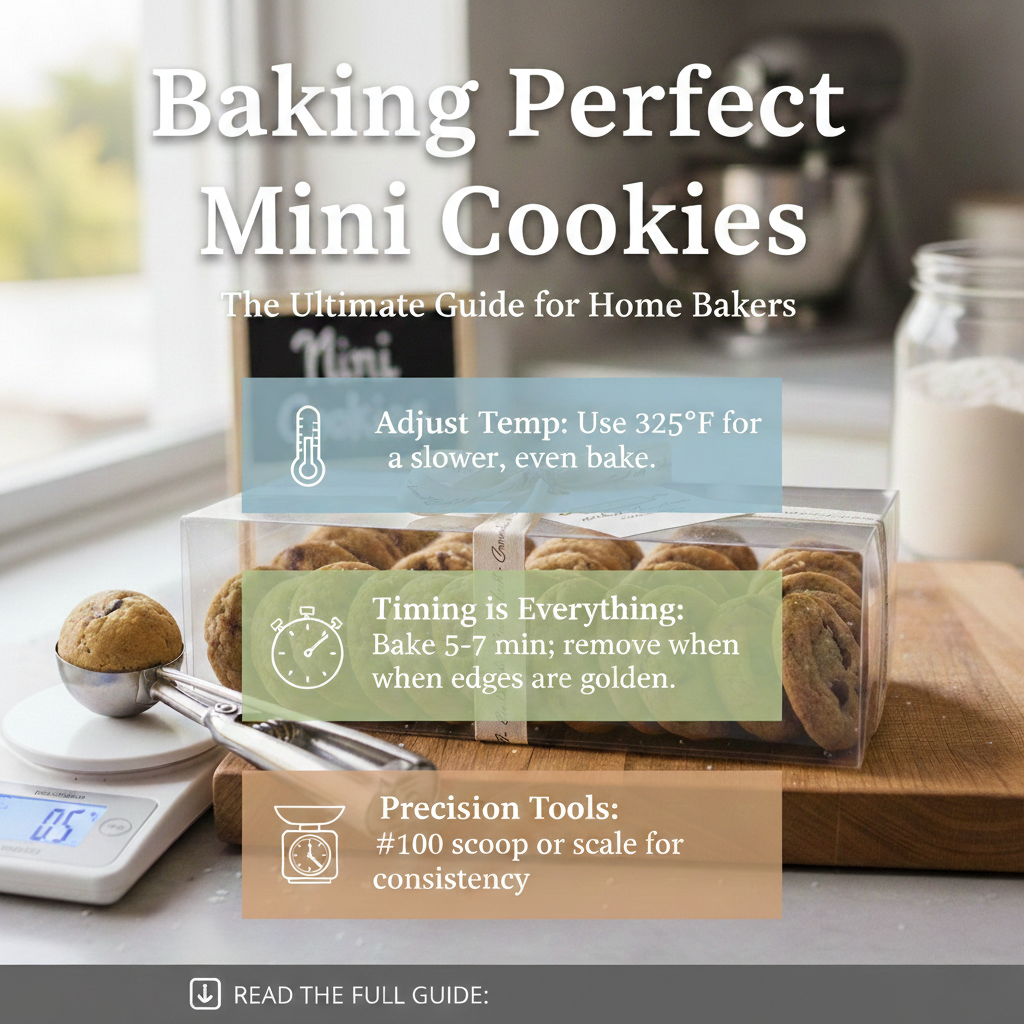
Once you master these three pillars—temp, time, and tools—baking perfect mini cookies becomes a repeatable win for your home bakery or your next event.
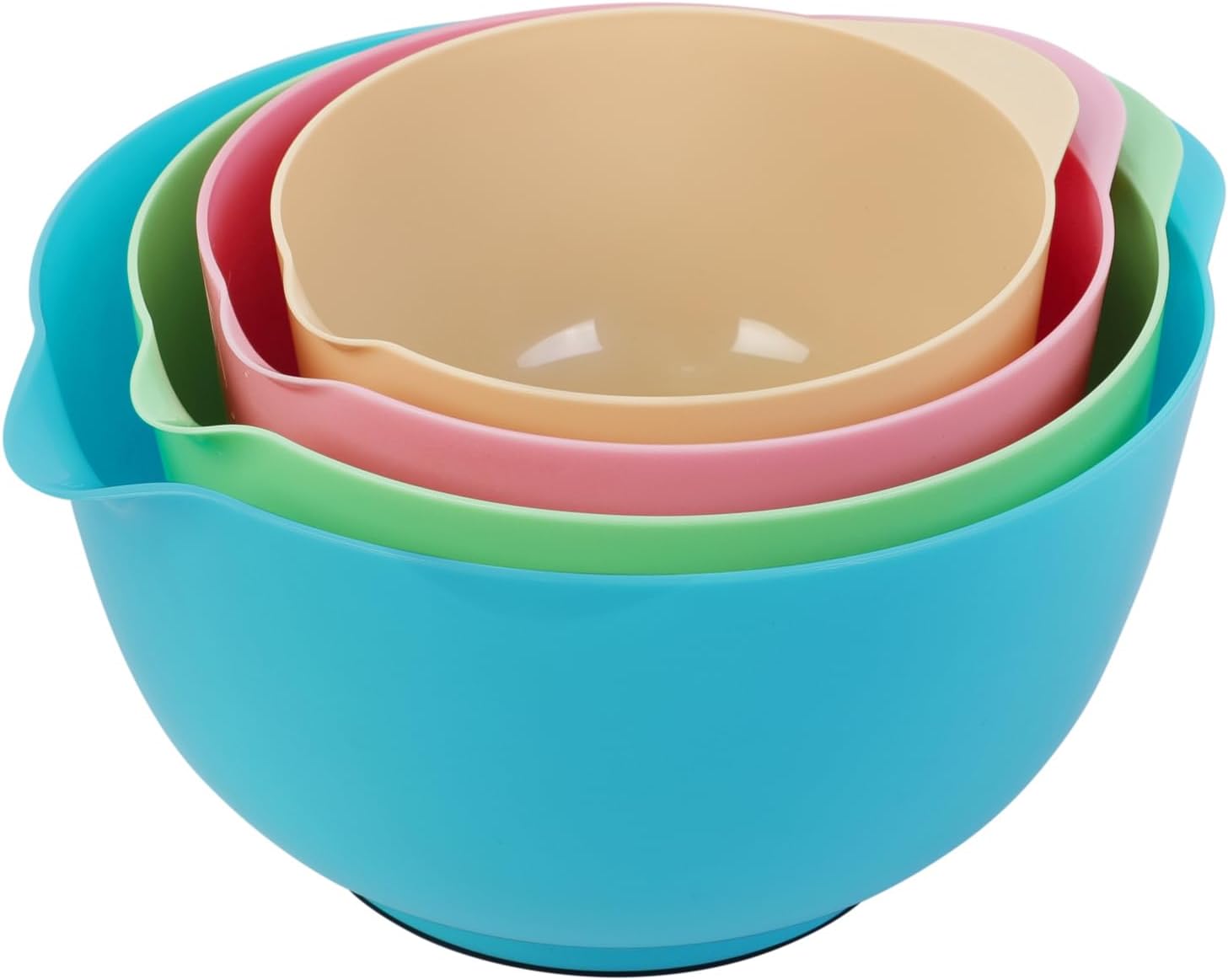
Cookie Tools I Use


Baked Munchies earns a small commission on these links at no cost to you.